

Ohio River ferries played a crucial role in connecting farmers to markets and supporting regional trade. They allowed you to move crops, livestock, equipment, and labor across the river quickly and efficiently, helping you reach distant markets and avoid difficult land routes. These ferries helped towns grow and created economic opportunities for farmers like you. To understand how these routes transformed farm trade and growth, keep exploring what made them so essential.
Key Takeaways
- Ohio River Ferries served as vital transportation links, enabling farmers to access distant markets efficiently.
- They allowed quick crossing, reducing spoilage and improving produce quality for sale.
- Ferries supported the movement of equipment, livestock, and laborers, enhancing farming productivity.
- Reliable ferry routes spurred settlement growth and fostered towns centered on agricultural trade.
- Their legacy transformed the river into a trade corridor, boosting regional economic development.
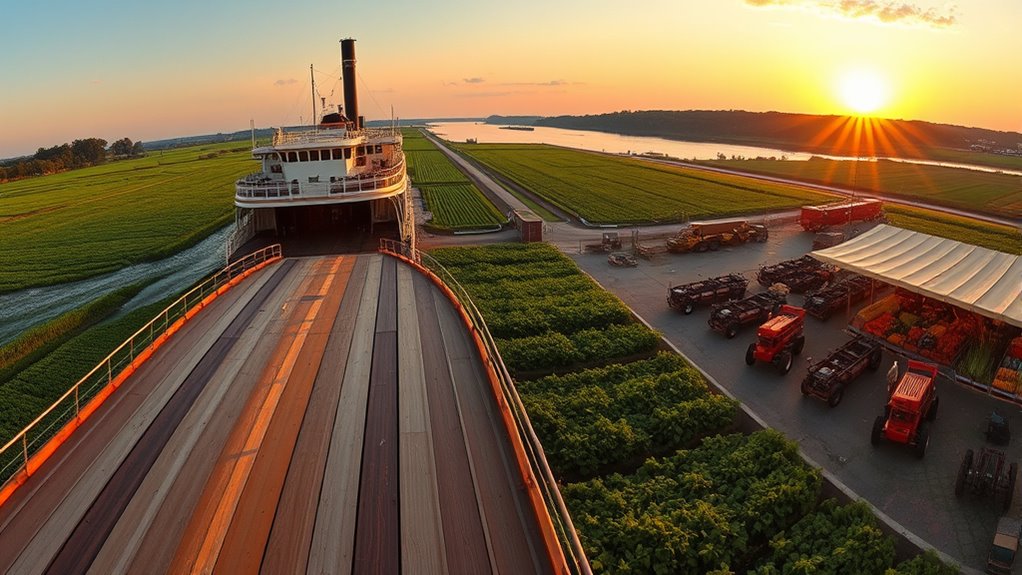
Have you ever wondered how Ohio River ferries have played an essential role in connecting farmers with markets? These ferries have long served as crucial links in the region’s transportation network, enabling farmers to move their crops and livestock efficiently across the river. Before the development of extensive roadways and railroads, river transportation was the primary means for transporting goods, making ferries indispensable for farmers seeking to get their products to market. This mode of transport wasn’t just about convenience; it was a lifeline that directly supported the agricultural economy of the Ohio River Valley.
Ohio River ferries linked farmers to markets, vital before roads and railroads transformed transportation.
By providing a reliable route across the river, ferries helped farmers avoid long, arduous land routes that could be delayed or blocked by weather or rough terrain. Instead, they could load their produce onto boats and cross quickly, preserving freshness and reducing spoilage. This efficient movement of goods meant farmers could sell their crops at better prices, contributing to a more vibrant and profitable agricultural economy. The ferries also facilitated the exchange of goods between different communities along the river, fostering regional trade and economic growth.
The importance of river transportation in supporting farm trade becomes even clearer when you consider how it shaped the development of towns and markets along the Ohio River. As ferries became more reliable, settlements grew into thriving centers of commerce centered around agriculture. Farmers could access distant markets, and merchants could bring in supplies, creating a dynamic flow of commerce that sustained local economies. This interconnected system made it possible for farmers to expand their operations, diversify crops, and increase yields, knowing they had dependable transportation options.
Furthermore, the role of ferries in the agricultural economy extended beyond just moving crops. They transported equipment, livestock, and even laborers, making the entire farming process more efficient. This accessibility helped small-scale farmers compete with larger operations, leveling the playing field and encouraging diverse agricultural practices. Additionally, innovative transportation methods have continued to evolve, further supporting the region’s economic resilience. Over time, ferry routes evolved into critical arteries that supported not just local trade but also the broader economic development of the Ohio River region.
In essence, Ohio River ferries helped shape the agricultural landscape by ensuring that farmers could connect with markets efficiently. They turned the river from a barrier into a bridge, fostering economic resilience and growth. Without these ferries, the region’s farm trade would have faced significant obstacles, limiting prosperity and development. Today, their legacy endures as a tribute to how river transportation has historically underpinned the region’s thriving agricultural economy.
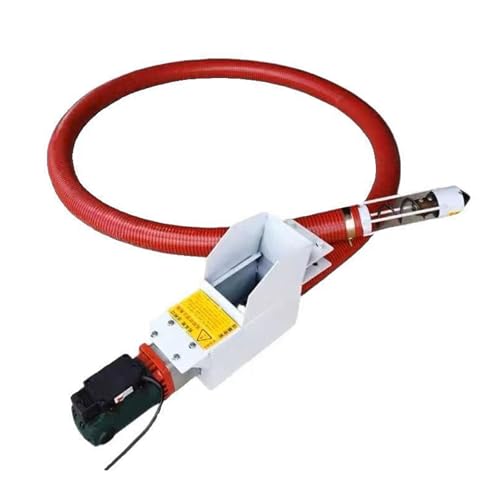
Grain Pumping Machine Small Granule Conveyor Grain Portable Suction Auger Screw Conveyor Suitable Various Particles of Cement,Grain,Fertilizer,Gravel,Fine Powder 300CM (4m)
【High-quality pipes, superior performance】The 4500W professional-grade grain conveyor is equipped with thickened cowhide pipes for cold resistance. They...
As an affiliate, we earn on qualifying purchases.
Frequently Asked Questions
How Did Ferries Influence Early Ohio River Settlements?
You see, ferries revolutionized early Ohio River settlements by providing essential river crossing innovations. They made transportation easier, allowing people to move goods and settle on both sides of the river more efficiently. This boosted settlement development, attracting farmers, traders, and settlers. Without ferries, crossing would’ve been difficult, slowing growth and economic progress. They truly played a vital role in shaping the development and expansion of early communities along the Ohio River.
What Crops Were Most Commonly Traded via River Routes?
Did you know that corn and wheat made up over 60% of crops transported along trade routes? These staples dominated crop transportation, fueling early economies. You’ll find that farmers relied heavily on river routes to move these crops efficiently, ensuring markets stayed stocked and trade thrived. The river’s natural flow facilitated quick, reliable trade routes, making corn and wheat the most commonly traded crops in the region’s bustling commerce.
Were There Any Notable Ferry Accidents Historically?
Yes, there have been notable ferry accidents in history. You should know that ferry safety varied over time, and some tragic incidents highlight the importance of strict safety regulations. Accident history shows that collisions and capsizing sometimes occurred due to weather, mechanical failure, or human error. These events led to improved safety measures, but it’s essential to stay informed and cautious whenever you use a ferry service.
How Did Ferry Technology Evolve Over Time?
You see, ferry technology evolved considerably over time. Initially, ferries relied on simple boat designs, but with steam propulsion, you experienced faster, more reliable crossings. During ferry construction, engineers improved materials and techniques to enhance safety and capacity. Steam engines revolutionized how ferries operated, allowing consistent schedules and heavier loads. Today, modern ferries incorporate advanced propulsion systems, but the shift from manual to steam-powered designs marked a pivotal milestone in ferry technology.
What Was the Economic Impact of River Trade on Local Farms?
River commerce acted as a lifeline, transforming your farm economy by boosting trade and market access. You benefit from more reliable transportation, which lowers costs and increases sales. This vibrant trade network attracts merchants and consumers, expanding your reach beyond local markets. As a result, your farm prospers, and the regional economy flourishes, demonstrating how river trade fuels growth and prosperity for farmers and communities alike.
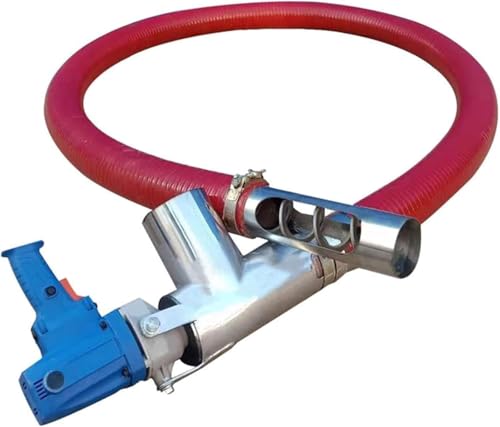
Grain Suction Auger Pump - Portable Grain Conveyor Auger Small Household Car Grain Suction Machine Screw Conveyor- High Suction for Small Particles of Cement, Grain, Fertilizer, Gravel(276in)
HEAVY-DUTY WEAR-RESISTANT HOSE STRUCTURE: This grain suction pump features a thickened rubber wire wear-resistant layer built into the...
As an affiliate, we earn on qualifying purchases.
Conclusion
As you cross the Ohio River by ferry, imagine the bustling farms on either side, their harvests spilling over into trade routes. The steady flow of boats mirrors the rhythm of rural life, where tradition and commerce meet. Just like the river connects distant lands, these ferries link your daily life to the rich farm heritage. Together, they create a vibrant tapestry of movement, growth, and enduring community spirit.

Grain Pumping Portable Grain Suction Auger Screw Conveyor Small Grain Suction Suitable for Various Small Particles of Cement, Grain, Fertilizer, Gravel,5 m (5 m)
Strengthened rubber wire wear-resistant layer: The small grain straw has a built-in thickened rubber wire, which significantly improves...
As an affiliate, we earn on qualifying purchases.
Grain Pumping Portable Grain Suction Auger Screw Conveyor Small Grain Suction Suitable for Various Small Particles of Cement, Grain, Fertilizer, Gravel,5 m (3 m)
Strengthened rubber wire wear-resistant layer: The small grain straw has a built-in thickened rubber wire, which significantly improves...
As an affiliate, we earn on qualifying purchases.