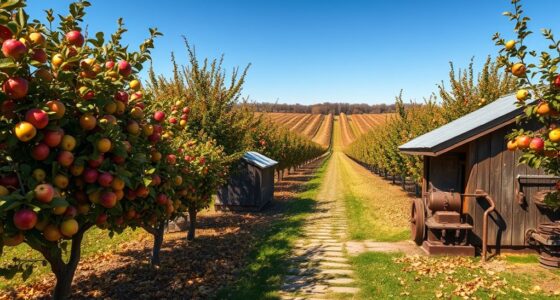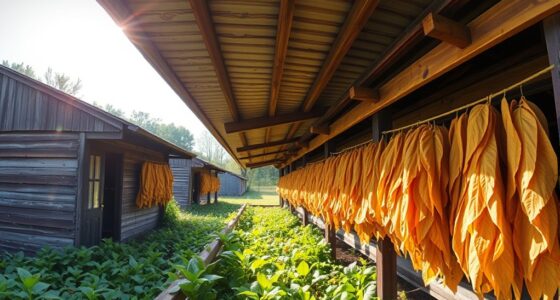
During the Ohio Canal Era, farms grew along canal routes to take advantage of the transportation benefits, with towpaths serving as crucial passageways for moving labor and goods. These canals transformed Ohio from a frontier into a busy commercial region, making farms more productive and connected to markets. Maintaining canal infrastructure like towpaths, levees, and dams was essential to keep traffic flowing smoothly. If you explore further, you’ll discover how infrastructure and agriculture worked together to shape Ohio’s growth.
Key Takeaways
- Farms expanded along canal routes to utilize transportation advantages for shipping crops and livestock.
- Towpaths served as vital corridors for horses and mules pulling barges, supporting trade and farm access.
- Canal infrastructure, including levees and dredging, was maintained to ensure reliable navigation for farm produce.
- The canal system facilitated regional economic growth by connecting farms to markets and urban centers.
- Infrastructure and agriculture worked together, with ongoing maintenance supporting Ohio’s transformation from frontier to developed region.
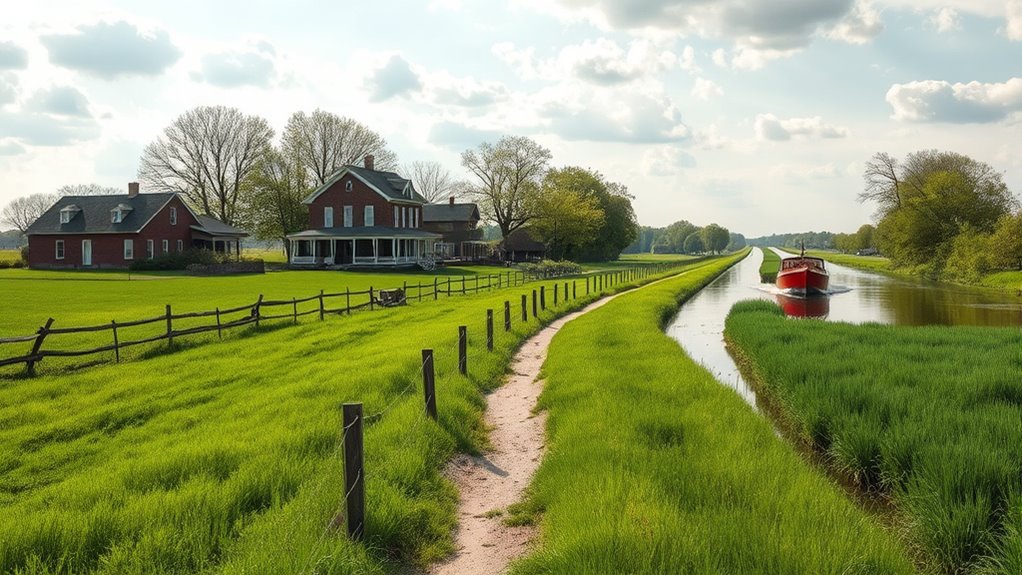
During the Ohio Canal Era, farms and towpaths played a pivotal role in shaping the region’s economy and landscape. As you explore this period, you’ll see how historical agriculture thrived alongside the development of canal systems, transforming Ohio from a frontier into a bustling hub of commerce. Farms expanded along the canal routes, taking advantage of the easy transportation to move crops and livestock to markets further away. This integration of agriculture and canal infrastructure fostered economic growth and increased the region’s productivity. You’ll notice that farms sometimes relied heavily on the canal for shipping their goods, making it easier to reach urban centers and ports, which in turn boosted local economies.
The towpaths, running alongside the canals, are more than just dirt tracks—they were essential arteries for movement and labor. These paths allowed teams of horses and mules to pull barges loaded with crops, raw materials, and manufactured goods. As you walk along a towpath, you’re walking in the footsteps of those who maintained the critical link between farms and markets. Canal maintenance became a fundamental task for local communities, requiring consistent effort to keep the waterways navigable. Dams, sluices, and dredging operations were common, and you’d see workers diligently clearing debris and repairing levees to prevent flooding or silt buildup. These efforts ensured that the canal remained a dependable transportation route, which was essential for the success of the farms that depended on it.
Historical agriculture during this era wasn’t just about planting crops; it was about adapting to the new transportation infrastructure. Farmers learned to produce surplus crops, knowing they could now send their produce farther afield. The canal system encouraged diversification—grain, vegetables, and even dairy products found new markets beyond Ohio’s borders. As you consider the landscape, you’ll observe how farmsteads grew larger and more organized, reflecting a shift towards commercial agriculture driven by canal trade. The canal’s presence also prompted changes in farming practices, with farmers investing in better tools and techniques to increase yields, knowing that they had a dependable route to sell their goods.
In essence, the Ohio Canal Era was a period where farms and towpaths worked together, fueling economic development and shaping the region’s growth. The success of this era depended on the continuous effort put into canal maintenance, which kept these transportation routes open and efficient. Without these combined efforts, the agricultural prosperity and regional expansion wouldn’t have been possible. Additionally, canal infrastructure played a crucial role in supporting the evolving agricultural landscape and regional development during this transformative period. Your understanding of this time reveals how infrastructure and agriculture intertwined to forge a resilient, thriving Ohio.
historical canal towpath walking shoes
As an affiliate, we earn on qualifying purchases.
As an affiliate, we earn on qualifying purchases.
Frequently Asked Questions
How Did Canal Construction Impact Local Native American Communities?
When canal construction occurred, you caused Native displacement and cultural disruption. As workers built canals, Native communities lost land, which fractured their traditional ways of life. You might have seen their villages uprooted, ceremonies interrupted, and their cultural practices diminished. The construction process often ignored Native rights, leading to lasting impacts on their communities, identities, and connections to the land, fundamentally reshaping their lives during that era.
What Crops Were Most Commonly Grown on Canal-Era Farms?
During the canal era, you’d find crop diversity on farms, with common crops like corn, wheat, oats, and vegetables. Farmers used new farming techniques, such as crop rotation and improved plowing methods, to increase yields. These techniques helped them adjust to the fertile land along the canals. Growing a variety of crops guaranteed food security and economic stability, making farms more resilient and productive during this period.
How Did Towpaths Influence the Development of Nearby Towns?
You see that towpaths played a vital role in town expansion because they enabled easier movement of goods and people along the waterways. As river commerce flourished, towns sprouted up near towpaths to capitalize on trade. These paths facilitated transportation, attracting merchants, settlers, and industries, which boosted economic growth. Ultimately, towpaths helped turn small settlements into bustling towns by connecting communities and supporting regional commerce.
Were There Any Notable Accidents or Incidents During Canal Construction?
Construction of the canal was like traversing a minefield, with hazards lurking at every turn. You’d hear about accidents caused by construction hazards, like sudden collapses or equipment failures, and engineering failures that led to delays or even injuries. These incidents remind you that building such a grand project wasn’t without danger, and despite careful planning, unforeseen accidents could change everything in an instant.
How Did Canal Transportation Affect Regional Trade Networks?
You see that canal transportation drove trade expansion by making it easier and faster to move goods between regions. As a result, regional trade networks became more interconnected, boosting economic integration. You’ll notice that markets grew, prices lowered, and new opportunities emerged for farmers and merchants. This improved infrastructure transformed local economies, fostering cooperation and growth, and setting the stage for even broader regional development.

Spring's Gentle Promise (Seasons of the Heart, Book 4)
As an affiliate, we earn on qualifying purchases.
As an affiliate, we earn on qualifying purchases.
Conclusion
As you stroll along these historic towpaths, you can almost hear the whispers of bygone days. The gentle hum of watercraft and rustling leaves tell a story of hardworking farmers and bustling trade. These quiet remnants invite you to imagine a time when progress flowed like the canal waters, shaping Ohio’s past. By exploring these peaceful paths, you keep the spirit of history alive, blending the past’s charm with the present’s gentle embrace.

Thorness Wooden Mallard Model Canal narrowboat Barge
A wooden model boat based on the working narrowboats of yesteryear.
As an affiliate, we earn on qualifying purchases.
As an affiliate, we earn on qualifying purchases.

JMU 5 Pack Dental Gutta Percha Points .04 Taper, #20, Spill-Proof Box, 60pcs/Pack
Widely Use: Gutta percha points are a specialized root canal cleaning material for all types of pulpitis, pulp…
As an affiliate, we earn on qualifying purchases.
As an affiliate, we earn on qualifying purchases.