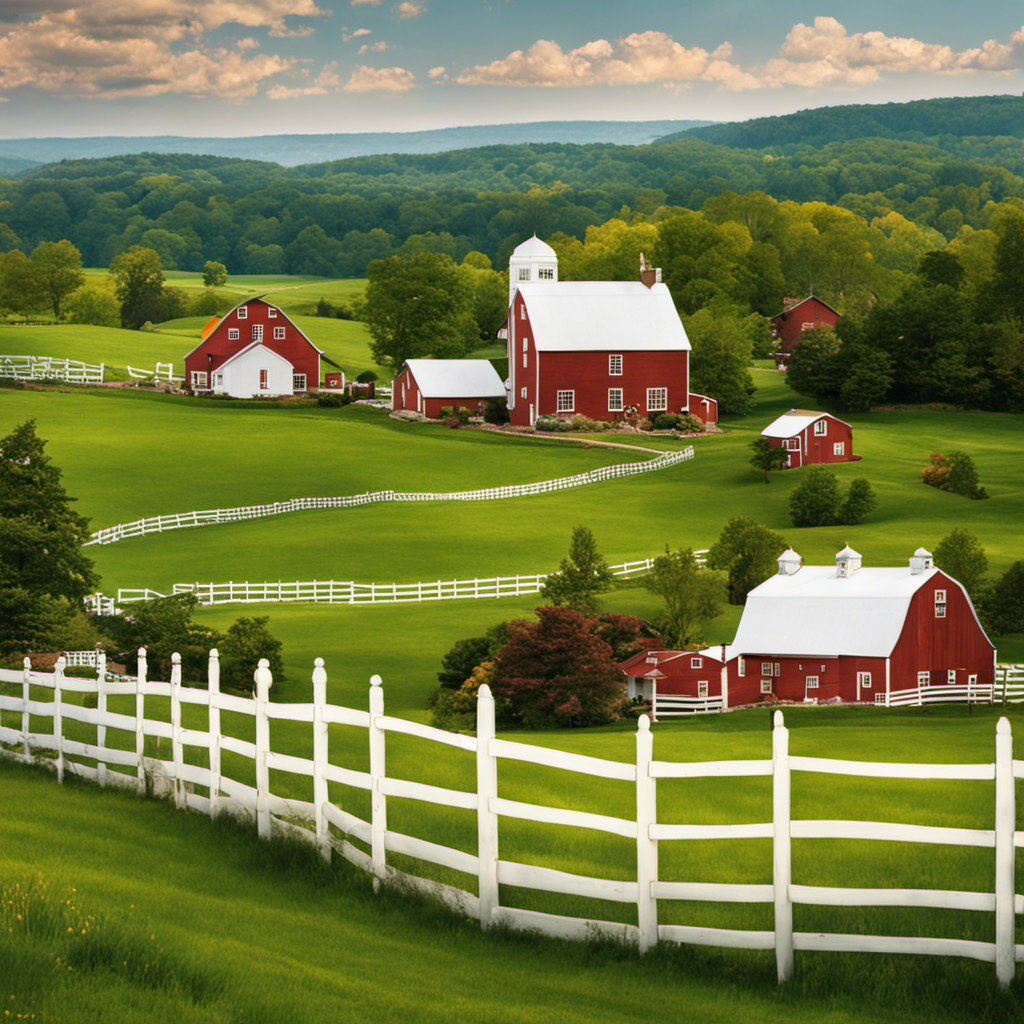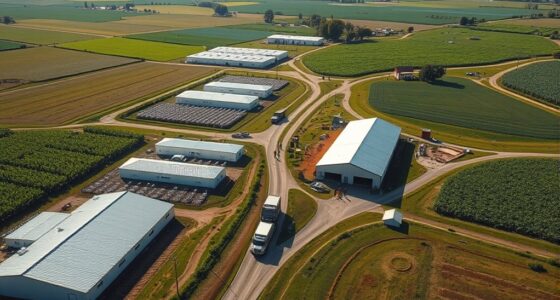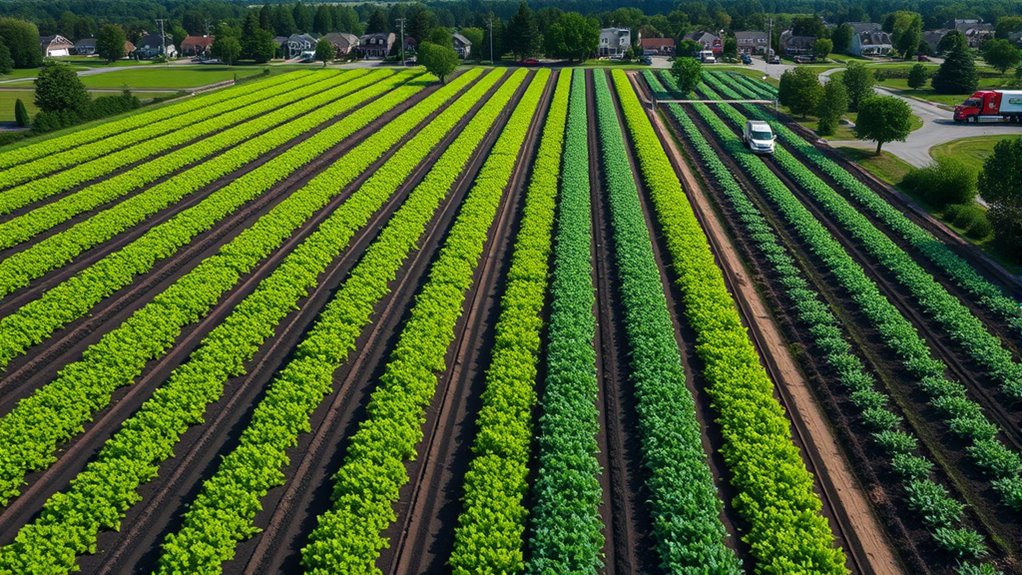

New Jersey truck farms have played a crucial role in delivering fresh, high-quality produce directly to suburban markets for over a century. You’ll find seasonal vegetables, berries, and herbs harvested at their peak, ensuring maximum freshness and flavor. These farms support local economies, promote sustainable practices, and offer organic options for health-conscious consumers. By connecting rural growers with urban neighborhoods, they keep your local markets stocked with farm-fresh food. Keep exploring to learn more about this and its lasting impact.
Key Takeaways
- New Jersey truck farms historically supply fresh, high-quality produce directly to suburban markets and urban centers.
- They enable quick harvest-to-market delivery, preserving produce freshness and flavor.
- Strategically located near cities, they reduce transportation costs and extend shelf life.
- These farms support local economies by providing seasonal employment and promoting sustainable practices.
- They offer diverse, organic, and heirloom options catering to changing consumer preferences.

New Jersey truck farms have played a pivotal role in the state’s agricultural landscape for over a century. These farms have long supplied fresh, high-quality produce to urban and suburban markets, bridging the gap between rural fields and city streets. As you explore the vibrant markets and grocery stores across the state, you’ll notice that many of the fruits and vegetables come directly from these truck farms. Their ability to deliver farm-fresh, often organic produce quickly and efficiently makes them an essential part of New Jersey’s food system. This direct connection from farm to market guarantees that consumers receive produce at its peak freshness, often with minimal handling and transportation time.
New Jersey truck farms supply fresh, high-quality produce directly to markets, ensuring peak freshness and supporting local agriculture.
You might be surprised to learn how these truck farms sustain the local economy. They provide seasonal employment and support local businesses by offering a steady supply of fresh produce that appeals to health-conscious consumers. Since many farms embrace organic practices, you’re likely to find vegetables and fruits grown without synthetic pesticides or fertilizers, meeting the rising demand for organic produce. This focus on organic farming not only benefits your health but also helps preserve the environment by reducing chemical runoff and promoting sustainable practices. When you buy produce directly from these farms, you’re participating in a sustainable cycle that benefits both your community and the planet.
The efficiency of the farm-to-market system is what makes New Jersey truck farms stand out. They are strategically located near urban centers, allowing for quick harvest-to-market delivery. This means you get fresher, tastier produce with a longer shelf life, whether you’re shopping at a local farmers’ market or a supermarket. The direct sales model also reduces costs, often translating to better prices for consumers. As a result, you have access to high-quality, fresh produce that’s grown with care and delivered promptly, which is increasingly important in today’s fast-paced world.
Moreover, these farms adapt to changing consumer preferences by offering a variety of organic and heirloom options. You can choose from a range of colorful vegetables, sweet berries, and fragrant herbs, all harvested at their peak. This variety not only enhances your meals but also supports small-scale farmers committed to sustainable practices. Whether you’re shopping seasonally or year-round, the farm-to-market connection ensures you’re getting the freshest produce possible. In addition, many of these farms are implementing sustainable farming practices, which help reduce their environmental impact and promote long-term viability. This commitment to sustainability reinforces the importance of supporting local agriculture and enjoying the benefits of organic, farm-fresh food every day.
Frequently Asked Questions
How Did Truck Farming Originate in New Jersey?
You might find that truck farming in New Jersey originated through a history of evolution driven by crop diversification. Farmers adapted to changing market demands by growing a variety of produce, which allowed them to maximize profits and supply suburban markets efficiently. This shift was influenced by transportation improvements, making it easier to distribute fresh vegetables and fruits, ultimately establishing New Jersey as a key hub for truck farming.
What Are the Main Crops Grown in New Jersey Truck Farms?
Think of New Jersey truck farms as a vibrant garden orchestra, with a variety of seasonal crop varieties playing their part. You’ll find tomatoes, lettuce, peppers, and melons leading the symphony. To keep this harmony, farmers use pest management techniques to protect crops and guarantee quality. These main crops thrive thanks to careful planning and adaptation to seasonal changes, making New Jersey’s truck farms a essential source for fresh produce in suburban markets.
How Do Truck Farms Impact Local Economies?
You see that truck farms boost local economies by supplying fresh produce to suburban markets, which supports jobs and small businesses. They adapt to changing consumer preferences for fresh, local food, encouraging urban development and reducing transportation costs. This growth helps strengthen community ties, increases tax revenue, and promotes sustainable farming practices. Overall, truck farms play a crucial role in fostering economic resilience and meeting the demands of modern consumers.
What Transportation Methods Are Used to Deliver Produce?
You use trucks equipped with cold storage to deliver produce efficiently. This method helps maintain a cool climate during transit, preserving freshness and quality. Trucks are essential for transporting perishable items quickly from farm to market, ensuring produce stays fresh and safe for consumers. The cold storage compartments inside trucks regulate temperature, enabling you to deliver produce over longer distances without spoilage, making sure your customers get top-quality products every time.
Are There Sustainable Farming Practices Adopted in These Farms?
Think of these farms as green symphonies, where sustainable practices play the melody. You’ll find many adopting organic certification, ensuring their soil is nourished naturally, not artificially. Water conservation acts as their steady drumbeat, reducing waste and protecting resources. By blending these eco-friendly methods, they create a harmonious balance, nurturing the land while delivering fresh produce—proof that farming can be both fruitful and gentle on the Earth.
Conclusion
So, next time you savor that perfectly ripe tomato from your local market, remember the humble truck farms that made it possible. Thanks to those bustling fields, you can enjoy fresh produce without venturing into the wilds of faraway farms. Who knew that behind every juicy bite lies a traffic jam-filled journey from suburban farms to your kitchen? Truly, modern agriculture’s greatest feat is turning farmland into a suburban supermarket maze—bon appétit!