

Town meetings give you a platform to directly influence farm by-laws and local agricultural rules. By participating, you can discuss, propose, and amend policies related to land use, water management, and conservation efforts. Your involvement guarantees that regulations are responsive to community needs and reflect shared values. Active engagement fosters transparency, trust, and sustainable farming practices. To understand how your voice can shape local farming, explore the ways town meetings impact farm by-law decisions.
Key Takeaways
- Town meetings enable residents to discuss, amend, and approve farm by-laws reflecting community farming priorities.
- Participation ensures farm regulations address local land use, water management, and sustainability concerns.
- Active involvement fosters transparency, accountability, and responsiveness in developing agricultural policies.
- Town meetings serve as educational platforms for understanding and improving existing farm by-laws.
- Community engagement at these meetings promotes shared responsibility and resilient agricultural governance.
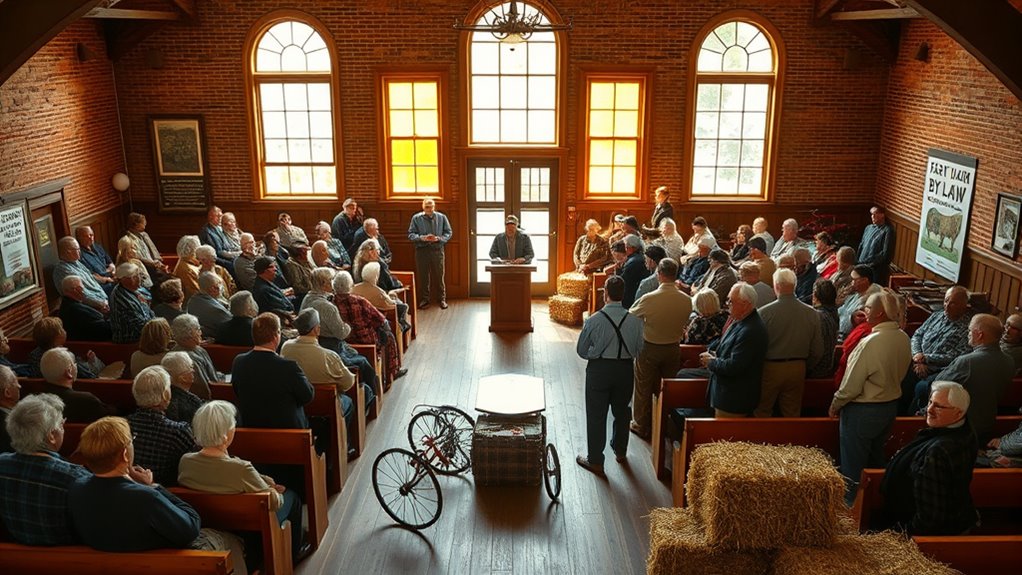
Have you ever wondered how local communities shape their farming policies and governance? The answer often lies in town meetings, where residents come together to discuss and decide on issues that directly impact their agricultural practices. These gatherings are the heart of local governance, giving community members a real voice in shaping farm-related laws and regulations. By participating in town meetings, you’re not just a spectator—you become an active stakeholder in your community’s agricultural future. Community participation is vital because it guarantees that the policies reflect the needs and values of those who live and work on the land. When residents gather to debate and vote on farm by-laws, they’re exercising their right to influence decisions that can affect everything from land use and zoning to pesticide regulations and conservation efforts.
Participating in town meetings gives residents a direct voice in shaping local farming policies and regulations.
In these meetings, you’ll find that local governance isn’t just about issuing rules but fostering a sense of collective responsibility. It’s an opportunity for farmers, residents, and local officials to collaborate on solutions that promote sustainable farming practices while balancing economic growth. Your input can sway decisions about how land can be used or conserved, what types of crops are encouraged, or how to support small-scale farmers. The process is transparent, and each voice counts, making it more than just a procedural event—it’s a community-driven effort to craft policies that serve everyone’s interests. Additionally, understanding the importance of attention to detail helps ensure that regulations are thoroughly considered and properly implemented.
Town meetings also serve as an educational platform, where you can learn about existing farm by-laws and propose changes that better suit current challenges. This can include regulations on manure management, water usage, or the preservation of open space. When you participate actively, you help guarantee that governance remains responsive and adaptable. The more engaged you are, the more likely it is that policies will align with local needs rather than external pressures or outdated rules. Furthermore, community participation fosters trust and accountability, encouraging ongoing dialogue between residents and local officials.
Ultimately, local governance through town meetings empowers you to have a say in how farming is conducted in your area. It’s a direct way to influence the development of farm by-laws, ensuring they reflect your experiences and aspirations. By participating, you help build resilient, sustainable agricultural communities where everyone’s voice is heard and respected. This collective approach to decision-making creates policies that are more effective and enduring, rooted in the shared commitment of those who understand the land best—farmers and residents alike.
Frequently Asked Questions
How Are Voting Procedures Conducted During Town Meetings?
During town meetings, you cast your vote using specific voting methods like voice votes, hand raises, or ballots. If a secret vote is needed, ballot procedures are followed, allowing you to mark your choice privately. The moderator announces the results based on the voting methods used, guaranteeing transparency. You should listen carefully to instructions, as the procedures ensure everyone’s voice is counted fairly and accurately.
Who Can Propose Amendments to Farm By-Laws?
Like a river flowing freely, anyone interested in changing farm by-laws can propose amendments. You typically submit a proposal during the amendment process, and it must follow specific rules. Usually, residents, landowners, or authorized representatives can make these proposals. After submission, the town meeting discusses and votes on the amendments. Your involvement in the proposal submission process guarantees your voice helps shape the farm by-laws effectively.
What Is the Quorum Required for Town Meetings?
You need to know that the quorum requirements for town meetings typically involve a specific number or percentage of registered voters attending to conduct official business. Usually, a majority or a set number, like 50 or 100 participants, is required. This quorum guarantees voting thresholds are met, making decisions valid. Always check local bylaws, as quorum requirements can vary depending on the town’s rules or the type of meeting.
How Are Disputes Over By-Law Interpretations Resolved?
Did you know that about 60% of disputes over by-law interpretations get resolved through mediation processes? When disagreements arise, you should first explore mediation to clarify intentions and reach agreement. If that doesn’t work, enforcement mechanisms like municipal courts are employed to settle the dispute. This approach helps ensure that by-law issues are handled fairly and efficiently, preventing minor conflicts from escalating into larger legal battles.
Can Non-Residents Participate in Farm By-Law Discussions?
Non-residents generally can’t participate in farm by-law discussions, as resident participation is typically limited to those living within the community. Your involvement in local government is usually confined to residents, ensuring decisions reflect the community’s needs. However, some towns may allow non-residents to observe or provide input during public comment periods. Check your local regulations to understand the specific rules about non-resident involvement in farm by-law discussions.
Conclusion
Attending town meetings and understanding farm by-laws might seem small, but your voice truly shapes your community. Every decision you make could be as impactful as moving mountains—no exaggeration! By staying informed and involved, you guarantee your farm and town thrive for generations. So, don’t underestimate the power of your presence; it’s your chance to create lasting change. Get involved today, and watch your community grow stronger than you ever imagined!