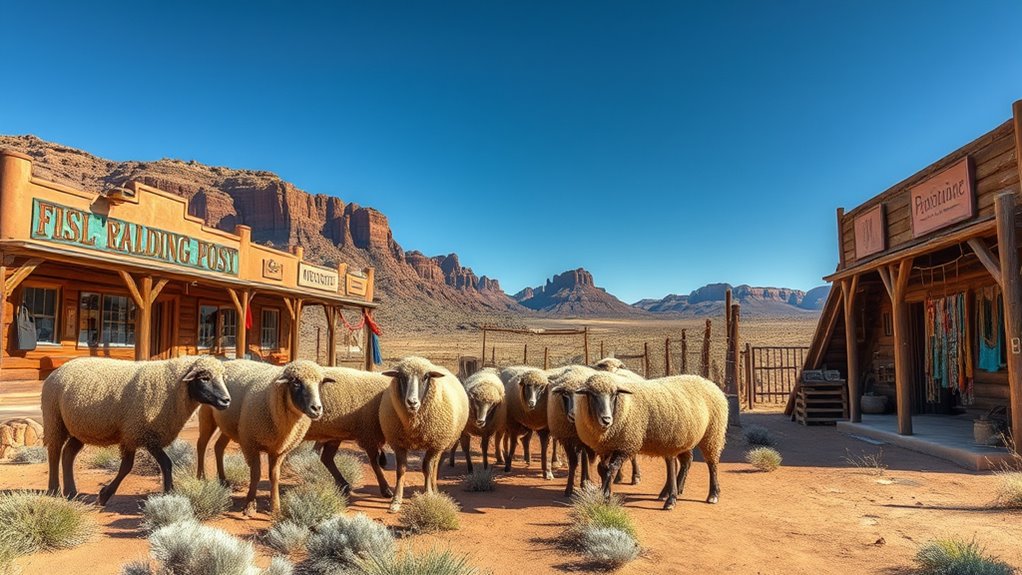

Navajo sheep and trading posts are essential to the Navajo Nation’s economy and cultural identity. They support traditional wool weaving, livestock management, and community trade. By raising healthy sheep and carefully managing grazing land, Navajo artisans produce high-quality wool for their textiles, which carry cultural stories and symbolize resilience. Trading posts serve as hubs for exchanging goods, strengthening community ties, and preserving traditions. Exploring more reveals how these practices sustain Navajo heritage and economic stability.
Key Takeaways
- Navajo sheep provide wool essential for traditional textiles that symbolize Navajo cultural identity.
- Proper livestock management ensures healthy sheep and high-quality wool for weaving.
- Trading posts serve as marketplaces connecting Navajo artisans with broader markets for textiles and wool.
- Wool production supports Navajo economic stability and preserves weaving traditions passed through generations.
- The health of sheep herds and land management practices sustain cultural practices and community livelihoods.
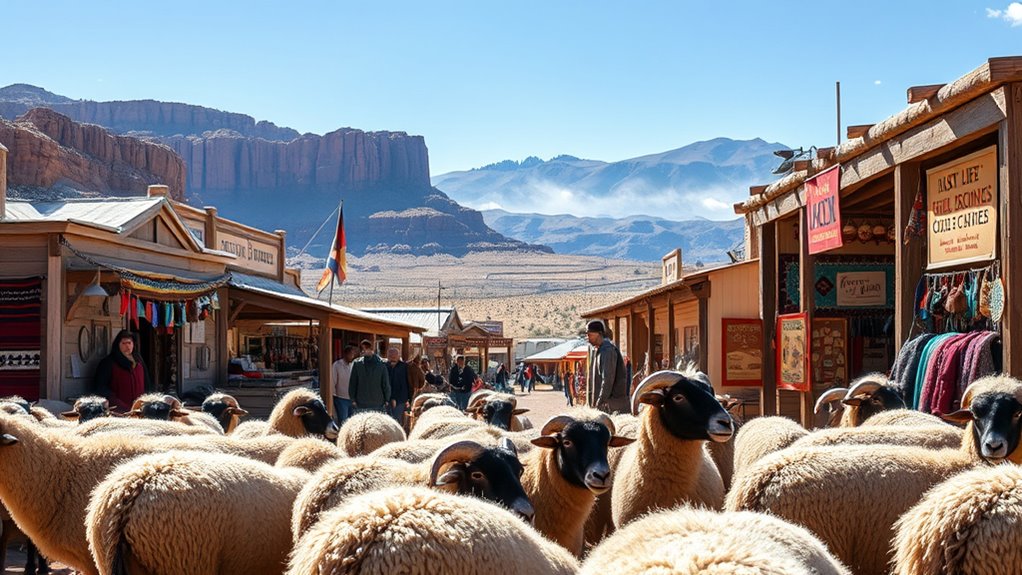
Navajo sheep have long played an essential role in the culture and economy of the Navajo Nation, providing wool, meat, and income. As you learn about their significance, you’ll see how woven textiles and livestock management are deeply intertwined with Navajo traditions. The sheep’s wool forms the foundation of many iconic woven textiles, which aren’t just beautiful; they carry cultural stories and symbolize Navajo identity. These textiles are crafted with skill, passed down through generations, and often sold at trading posts, where tradition meets commerce. When managing livestock, you realize it’s more than just keeping sheep; it’s about maintaining a sustainable practice that supports the community’s livelihood. Proper livestock management involves selecting the right sheep breeds, guaranteeing they have enough grazing land, and protecting them from predators, all of which are essential for steady wool production. Livestock management practices** also influence the overall health and productivity of the herd, ensuring the continuity of cultural traditions. Your role in understanding this process reveals how closely woven textiles are linked to livestock management. The quality of the wool depends on the health of the sheep and the care they receive. You might notice that Navajo herders rotate grazing areas to prevent overgrazing, guaranteeing the land remains productive for future generations. This careful management guarantees a consistent supply of high-quality wool, which is indispensable for creating traditional textiles that are both functional and artistic. These textiles are often sold at trading posts, serving as a vital link between Navajo artisans and the wider world. When you visit a trading post, you see firsthand how these woven pieces are more than crafts; they are cultural expressions and economic assets. Additionally, you’ll observe how livestock management practices influence the community’s economy. The wool produced from well-managed sheep fetches better prices, supporting local families and sustaining cultural practices. Trading posts act as hubs where Navajo weavers and herders exchange goods, knowledge, and stories, strengthening communal ties. You realize that maintaining healthy sheep herds isn’t just about economic gain but also about preserving a way of life rooted in tradition. The process of raising sheep, managing grazing lands, and producing woven textiles demonstrates the resilience and ingenuity of Navajo culture. Through these practices, you see how each element—livestock management, wool production, and textile weaving—plays a vital role in sustaining the cultural identity and economic stability** of the Navajo Nation.

Navajo Weaving Way
Great product!
As an affiliate, we earn on qualifying purchases.
As an affiliate, we earn on qualifying purchases.
Frequently Asked Questions
How Are Navajo Sheep Breeds Different From Other Sheep?
You’ll notice Navajo sheep breeds differ from others because of their unique sheep breed diversity, specially adapted to arid environments. Their wool quality is prized for its softness and durability, making it ideal for traditional textiles. Unlike commercial breeds, Navajo sheep often have a mix of traits that enhance resilience and produce distinctive, high-quality wool, which reflects their cultural and environmental significance.
What Is the Significance of Trading Posts in Navajo Culture?
Trading posts hold deep significance in Navajo culture, serving as essential centers for cultural preservation and community unity. They’re more than just marketplaces; they connect generations, allowing Navajo people to share traditions, craftwork, and stories. By visiting these posts, you help support Navajo artisans and keep cultural practices alive. These spaces foster a sense of belonging, strengthening community bonds and ensuring Navajo heritage remains vibrant for future generations.
Are Navajo Sheep Raised Sustainably and Ethically?
You might think they’re just sheep, but Navajo sheep are raised with sustainability in mind. They focus on sustainable grazing practices and ethical wool production, ensuring the land stays healthy and traditions thrive. While challenges remain, many Navajo farmers work hard to balance tradition with modern standards, proving that doing right by the environment and animals isn’t just talk—it’s a way of life. You can support their efforts by choosing ethically sourced wool.
How Do Trading Posts Impact Navajo Economic Development?
Trading posts markedly boost Navajo economic development by fostering cultural exchange and supporting local businesses. You benefit by engaging with these vibrant hubs that promote economic growth through sales, tourism, and community connections. As a result, trading posts help preserve Navajo traditions while providing economic stability. By visiting and supporting these centers, you contribute to sustainable growth that respects Navajo culture and enhances their economic resilience.
What Are the Main Challenges Facing Navajo Sheep Herding Today?
You face significant challenges in Navajo sheep herding today, mainly due to climate change and land access issues. Rising temperatures and unpredictable weather harm pasture quality and sheep health. Additionally, land restrictions limit grazing areas, making it harder to sustain herds. These obstacles threaten your ability to maintain traditional practices and economic stability, requiring adaptive strategies and support to overcome environmental and regulatory hurdles.
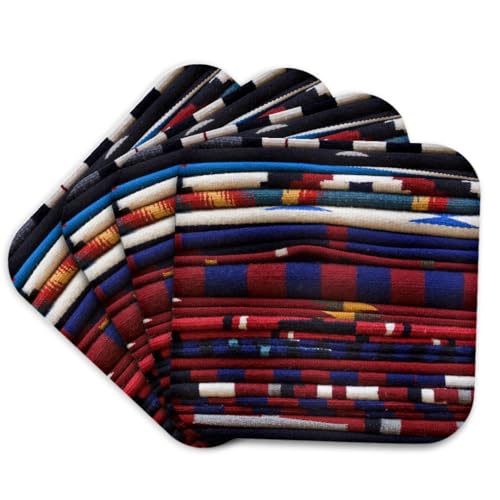
3dRose New Mexico, Gallup, Handmade Navajo Rugs, Textile – US32 RTI0048 – Rob Tilley Set of 4 Coasters – Cork
Lightweight yet durable design – Natural cork is surprisingly strong and long-lasting despite its light weight. Resists cracking,…
As an affiliate, we earn on qualifying purchases.
As an affiliate, we earn on qualifying purchases.
Conclusion
As you explore the Navajo sheep and trading posts, you’ll see how they’re the heartbeat of the community, weaving tradition and commerce together like threads in a vibrant rug. These trading posts are more than just shops—they’re a gateway to understanding Navajo culture and resilience. So, step in and let yourself be carried by their story, like a gentle breeze guiding you through a tapestry of history and hope.
Navajo Weaving Way
Great product!
As an affiliate, we earn on qualifying purchases.
As an affiliate, we earn on qualifying purchases.
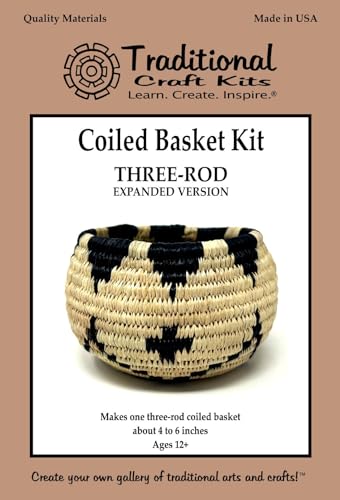
Traditional Craft Kits Coiled Basket Weaving Kit (Three-Rod, Expanded Version) – Weave Kit for Kids and Adults Complete with Basket Weaving Supplies and Instructional Booklets
Learn to Make Baskets: Create your own gallery of traditional arts & crafts! Learn the technique of three-rod…
As an affiliate, we earn on qualifying purchases.
As an affiliate, we earn on qualifying purchases.