
Building a root cellar in rocky or clay-rich soil requires careful planning to tackle excavation, moisture control, and insulation. You’ll need to reinforce walls against shifting soil, use waterproof barriers, and ensure proper drainage to prevent rot and mold. Insulating and sealing cracks helps regulate temperature, while building partially above ground or into a hillside can reduce digging effort. Curious how to overcome these challenges effectively? Keep exploring for practical tips to create a durable, efficient cellar in tough soils.
Key Takeaways
- Build partially above ground or into hillside to reduce excavation in rocky or dense soils.
- Incorporate drainage layers like gravel or crushed stone beneath the foundation to prevent moisture buildup.
- Use waterproof barriers and seal cracks to protect against water seepage in clay-rich soils.
- Insulate interior and exterior walls with materials like foam or straw to regulate temperature and humidity.
- Ensure proper ventilation and moisture control to prevent mold, rot, and spoilage in challenging soil conditions.
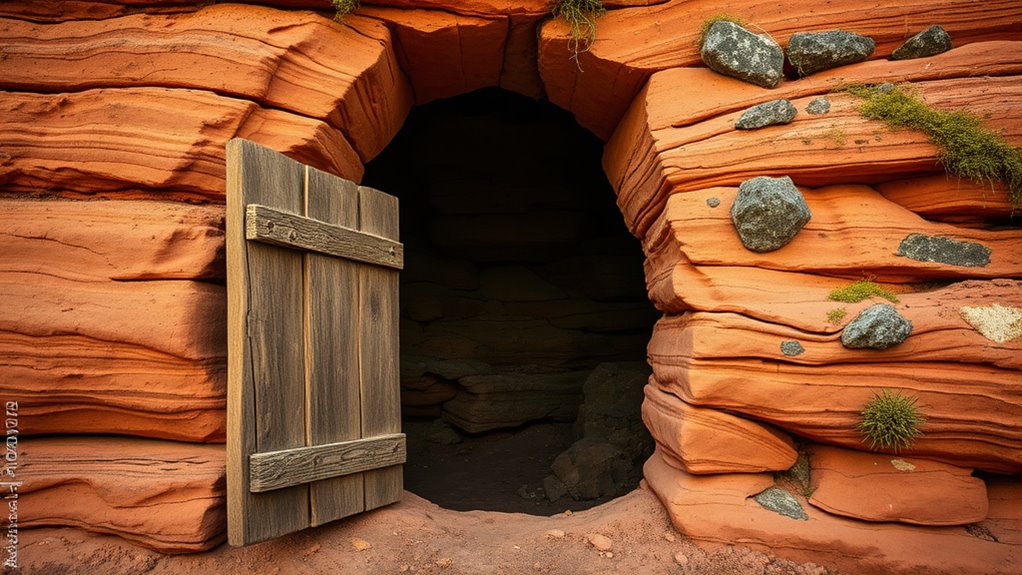
Building a root cellar in rocky or clay-rich soil can be challenging, but with proper planning, it offers a reliable way to store produce naturally. The key is understanding how to adapt your construction to these tough soils. Rocky terrain often means you’ll need to excavate carefully, ensuring the walls are stable and secure. Clay-rich soil tends to retain moisture, which can lead to spoilage, so moisture control becomes a top priority. When designing your cellar, you must think about effective underground insulation. Proper insulation helps maintain a consistent temperature, preventing the interior from fluctuating with the weather outside. This can be achieved by lining the interior walls with insulating materials like straw, foam, or even old newspapers, which are pressed tightly between the soil and the walls. These materials help guarantee that warmth stays inside during winter and heat escapes during the summer, stabilizing conditions for your stored produce.
Moisture control is equally vital, especially in clay-rich soils that tend to hold water. Excess moisture can cause mold, rot, and spoilage of root vegetables and other perishables. To combat this, you should incorporate drainage solutions around your cellar. Installing gravel or crushed stone beneath the foundation allows water to drain away, reducing the risk of flooding or dampness. Additionally, lining the interior walls with waterproof barriers like heavy-duty plastic prevents moisture from seeping through the soil and into your stored crops. Ventilation also plays a vital role; by installing vents at the top and bottom of the cellar, you promote air circulation, which helps regulate humidity levels. Proper airflow prevents condensation buildup that could lead to mold or rot.
In rocky or clay-rich soils, you might also consider building your root cellar partially above ground or into a hillside. This reduces the amount of excavation needed and can make insulation and moisture regulation easier to manage. When you do this, you should still focus on sealing cracks and insulating the exposed walls to maintain consistent temperatures. Remember, a well-sealed, insulated, and ventilated root cellar can last for many years, providing a natural storage solution that saves energy and preserves your harvest.

West Bay 20ft x 24in x 60mil Tree Root Barrier, Heavy-Duty Bamboo Root Barrier Weed Blocker for Landscape Tree Ring Edging Garden Borders Driveway and Sidewalk Protection Roads
TREE ROOT BARRIER: Our tree root barrier measures 20ft long x 24in deep x 60mil thick, offering stronger…
As an affiliate, we earn on qualifying purchases.
As an affiliate, we earn on qualifying purchases.
Frequently Asked Questions
How Do I Prevent Moisture Buildup in Clay Root Cellars?
To prevent moisture buildup in clay root cellars, guarantee proper drainage solutions are in place to direct water away from the structure. Install moisture barriers like plastic sheeting or waterproof paint on interior walls to reduce dampness. You should also vent the cellar to promote airflow, and regularly check for leaks or cracks. These steps will help keep your root cellar dry and protect your stored produce effectively.
What Are the Best Materials for Sealing Rock Cellar Entrances?
You should use durable materials like heavy-duty rubber or polyethylene for sealing rock cellar entrances. Combine this with effective sealing methods such as weatherstripping and caulking around edges to prevent drafts and moisture intrusion. Insulation techniques like foam board or spray foam can also help maintain temperature and humidity levels. Make certain all gaps are tightly sealed to keep moisture out and preserve your cellar’s conditions.
Can Root Cellars Be Built in Areas With High Groundwater Levels?
Yes, you can build root cellars in areas with high groundwater levels. To do so, focus on effective groundwater mitigation by installing proper drainage systems and waterproof barriers. Use excavation techniques that incorporate gravel beds or sump pumps to prevent water seepage. Sealing the cellar with durable materials like concrete or waterproof membranes also assists. Proper planning ensures your root cellar stays dry and functional, even in challenging high groundwater conditions.
How Do I Regulate Temperature and Humidity Naturally?
Ever wonder how to keep your root cellar perfectly temped and humid without gadgets? You can use natural insulation like straw or hay to stabilize temperature and moisture. Incorporate ventilation strategies such as vents or small windows to promote airflow, preventing excess humidity or dryness. By tweaking these elements, you’ll create an ideal environment for your stored produce, ensuring freshness and longevity all year round.
What Safety Precautions Are Necessary When Excavating Rock or Clay?
When excavating rock or clay, prioritize safety by wearing personal protective gear like helmets, gloves, and sturdy boots. Guarantee the excavation site is stable by checking for loose materials and proper shoring. Keep the area clear of unnecessary personnel, and be cautious of potential cave-ins or falling debris. Follow all site safety protocols, and communicate clearly with your team to prevent accidents and maintain a safe excavation environment.

JLXJYS Skylights & Roof Windows, Flat Roof Skylight Cover Attic Sun Room Underground Lighting Well Window with Double-Layer Insulating Glass, for Attic/Sun Room(18x22in/46x56cm)
All-Weather Defense Roof Hatch System: Crafted with aluminum alloy frame and 5MM + 12A + 5MM double insulated…
As an affiliate, we earn on qualifying purchases.
As an affiliate, we earn on qualifying purchases.
Conclusion
Just like the ancient Egyptians relied on the Nile’s natural coolness, you can harness rock and clay to keep your food fresh. These root cellars are timeless, echoing the ingenuity of our ancestors who understood the land’s secrets. Embrace this natural method, and you’ll preserve your harvest with simplicity and sustainability. As the past teaches us, sometimes the best solutions are buried right beneath our feet—waiting to be rediscovered by those willing to dig a little deeper.

Arqlite Smart Gravel 1 Gallon Eco Friendly for Drainage, Hydroponics, Plant Drainage, Plant Gravel, Planter, or Gardening (Pack of 2)
You will receive 2 bags per order
As an affiliate, we earn on qualifying purchases.
As an affiliate, we earn on qualifying purchases.

Weiworld 4 Inch Square Passive Air Vent, Adjustable Airflow Ventilation Kit with Extendable Duct – Natural Fresh Air Exchange for Home, Bedroom, Attic (No Motor)
Passive Fresh Air Ventilation – Save energy and cost, because it does not need electricity and has no…
As an affiliate, we earn on qualifying purchases.
As an affiliate, we earn on qualifying purchases.