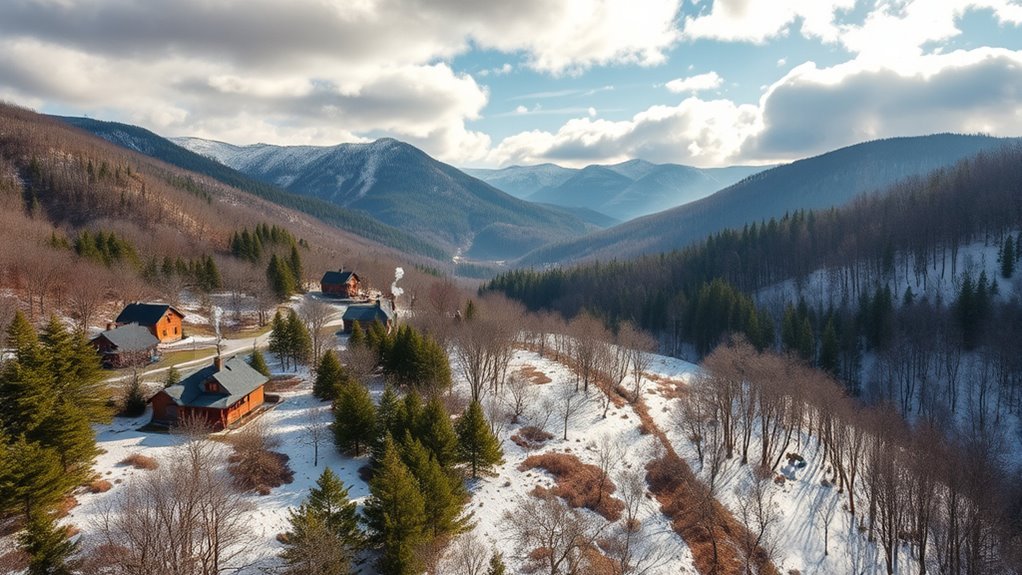
Maple sugar camps on the ridges are lively spots where communities gather in spring to harvest sap from sugar maples. You’ll see folks drilling small holes, collecting sap, and boiling it down into syrup. These camps connect you to land, seasons, and long-standing traditions. As you watch the process unfold, you’ll notice the patience and skill involved. Keep exploring to discover more about this time-honored practice and its cultural significance.
Key Takeaways
- Maple sugar camps are traditionally set up in ridge areas or sugarbushes for optimal sap collection.
- Ridges provide better drainage and temperature regulation, enhancing sap flow during the season.
- Camps on the ridges involve tapping sugar maples and boiling sap to produce syrup.
- The location on ridges connects the practice to land, seasons, and cultural heritage.
- Ridges are key sites for community gatherings and celebrations during the syrup-making season.
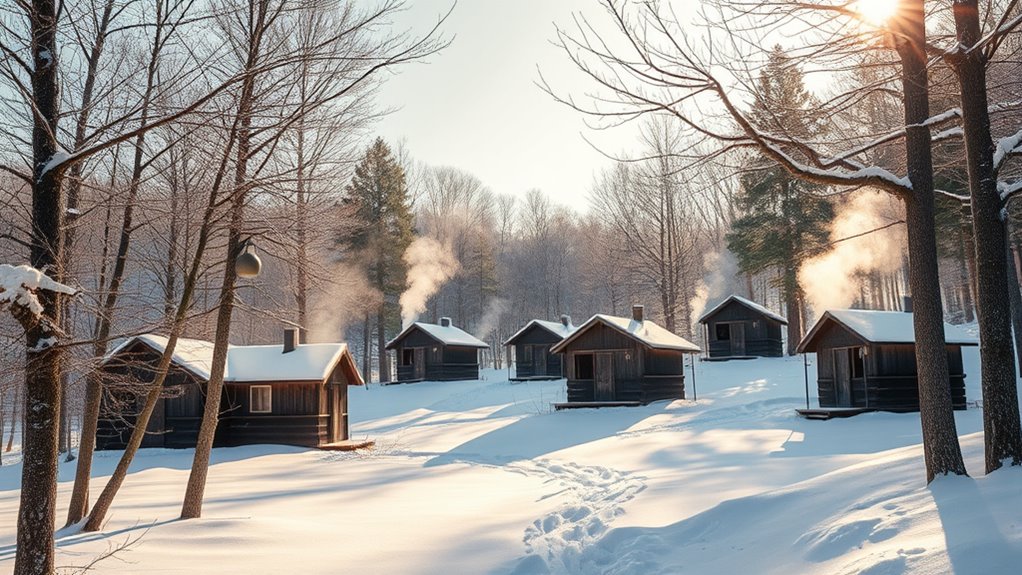
Maple sugar camps are a essential part of traditional syrup-making in many northern communities, where the arrival of spring signals the start of the tapping season. As the weather warms and nights stay above freezing, you head out to the sugarbushes on the ridges, ready to begin the process of turning sap into syrup. Your first task is sap collection, which requires patience and careful attention. You drill small holes into the sugar maples, insert spouts, and hang buckets or connect tubing systems. As the sap begins to flow, you keep a close eye on the collection containers, making sure they stay clean and free of debris. This step is key because the quality of your sap directly impacts the final product.
Once you gather enough sap, you move to the next stage: syrup boiling. This process is both an art and a science, demanding focus and precision. You pour the fresh sap into a large boiling vat, where heat is applied to evaporate water and concentrate the sugars. You monitor the boiling process carefully, adjusting the fire to maintain a steady simmer. As the sap thickens, it’s important to keep stirring to prevent burning and make certain of even evaporation. The boiling continues until the syrup reaches the right density and temperature, typically around 219°F (104°C) at sea level. During this phase, you also skim off any foam or foam-like impurities that form on the surface, which helps improve the clarity and purity of the final syrup. Additionally, understanding the seasonal rhythms of sap flow enhances the efficiency of your work.
Throughout the sap collection and syrup boiling, you develop an intimate understanding of the rhythm of the season. You learn to read the signs of the weather and the trees, knowing when sap flow will peak. You keep your equipment in top shape, making sure that spouts are clean and that the boiling setup is efficient. The process can take several hours, but the reward is in the aroma that fills the air—sweet, warm, and inviting. When the syrup reaches the perfect consistency, you carefully filter it to remove any remaining impurities, then ladle it into bottles or containers for storage. This tradition, rooted in centuries of practice, connects you to the land and the seasons, making every drop of syrup a proof of patience, skill, and respect for nature’s rhythms.

6pcs Maple Syrup Hydrometer Kit,Maple Syrup Density Kit,Stainless Steel Maple Syrup Hydrometer Test Cup Kit,Maple Syrup Supplies for Measuring Sugar Content in Syrup Sap
Maple syrup hydrometer kit: Hydrometer for maple syrup making include:1 x maple syrup hydrometer, 1 x hydrometer storage…
As an affiliate, we earn on qualifying purchases.
As an affiliate, we earn on qualifying purchases.
Frequently Asked Questions
When Is the Best Time to Visit Maple Sugar Camps?
The best visiting time for maple sugar camps is during the peak sugaring season, which typically occurs from late February to early April. During this period, you’ll experience the most active sap flow and see the sugaring process at its best. Planning your visit around these months guarantees you get to enjoy fresh syrup, traditional demonstrations, and festive activities, making it an unforgettable experience.
How Do Maple Sugar Camps Operate During Inclement Weather?
You might think inclement weather halts sugar camp operations, but they adapt with weather contingency plans. When snow or rain threaten, camp workers prioritize equipment maintenance, ensuring sap collection remains efficient. They use covered setups and insulated tools to protect equipment, keeping the process smooth despite the storm. This resilience guarantees you still experience the magic of syrup-making, even when weather conditions aren’t ideal.
Are There Guided Tours Available at the Sugar Camps?
Yes, guided tour options are available at the sugar camps. You can schedule your camp visit in advance to guarantee you get a thorough experience. During the tour, you’ll learn about the maple sugaring process, see the equipment, and enjoy tastings. It’s a great way to deepen your understanding of the tradition and enjoy a hands-on visit, all organized to fit your preferred timing.
Can Visitors Participate in the Tapping Process?
Absolutely, you can participate in the tapping process; it’s like stepping into a live storybook where your involvement makes it real. Visitors are encouraged to take part in tapping, giving you a hands-on experience that brings the sweet tradition to life. Your tapping participation offers a unique chance for visitor involvement, letting you connect with the process and deepen your appreciation for this time-honored craft.
What Safety Precautions Are in Place at the Camps?
You’ll find strict safety protocols at the camps, ensuring everyone stays safe. Staff are trained in emergency procedures and keep first aid kits readily available. Clear signs and guidelines are posted to prevent accidents, especially around boiling sap or equipment. You’re encouraged to follow all safety instructions carefully, and if you see something unsafe, alert staff immediately. These precautions help create a safe environment for everyone enjoying the sugar camp experience.

Liberty Supply 3-Pack of Plastic Sap Buckets with Lids – for Making Maple Syrup
Includes 3 buckets and 3 lids
As an affiliate, we earn on qualifying purchases.
As an affiliate, we earn on qualifying purchases.
Conclusion
As you wander through the snow-covered ridges, you realize maple sugar camps aren’t just about tradition—they’re about connecting with nature’s rhythm. The sweetness of the syrup mirrors the hard work and patience it takes to harvest it. Remember, “Patience is a virtue,” especially when waiting for the sap to flow. Embrace these moments, for they remind us that some of life’s sweetest rewards come from persistence and respect for the land.

Maple Syrup Filter Set, (1) Maple Syrup Making Heavy Duty Synthetic Filter – (6) Syrup Pre Filters for Maple Syrup Production
Complete Maple Syrup Filtration Kit: Includes one maple syrup heavy-duty synthetic filter and six 1 Qt.pre-filters, ensuring efficient…
As an affiliate, we earn on qualifying purchases.
As an affiliate, we earn on qualifying purchases.

North Mountain Supply 8 Ounce Glass Maple Syrup Bottles with Loop Handle & Gold Metal Lids & Shrink Bands – Case of 12
Maple Syrup Bottles with Loop Handle – Case of 12 – Made in the USA
As an affiliate, we earn on qualifying purchases.
As an affiliate, we earn on qualifying purchases.