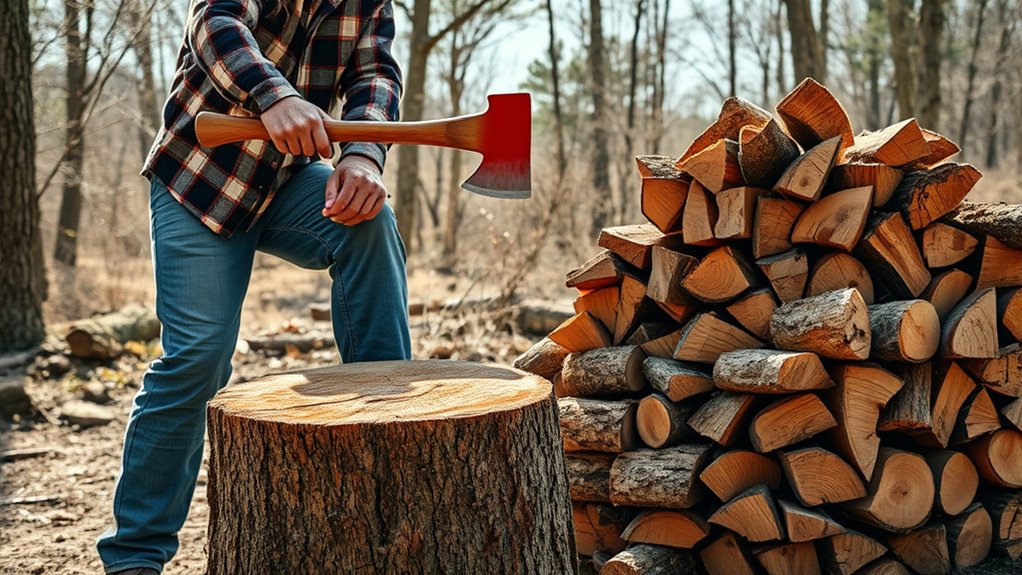

Log splitting and stacking are timeless traditions that connect you to nature, craftsmanship, and seasonal cycles. These rituals involve using traditional tools like mauls and wedges to carefully split wood, transforming chaos into organized, drying piles. They symbolize preparation and patience, honoring generations of outdoor enthusiasts. Engaging in these routines offers a mindful connection to heritage and sustainability. Keep exploring to discover how these practices reflect deeper cultural significance and seasonal rhythms.
Key Takeaways
- These traditions connect generations through seasonal rituals of preparing firewood.
- Use of traditional tools like mauls and wedges emphasizes craftsmanship and cultural heritage.
- Splitting wood involves skillful techniques, symbolizing readiness for colder months.
- Proper stacking ensures efficient drying, safety, and easy access, reflecting patience and effort.
- These routines symbolize preparation, continuity, and a deep connection to nature and heritage.
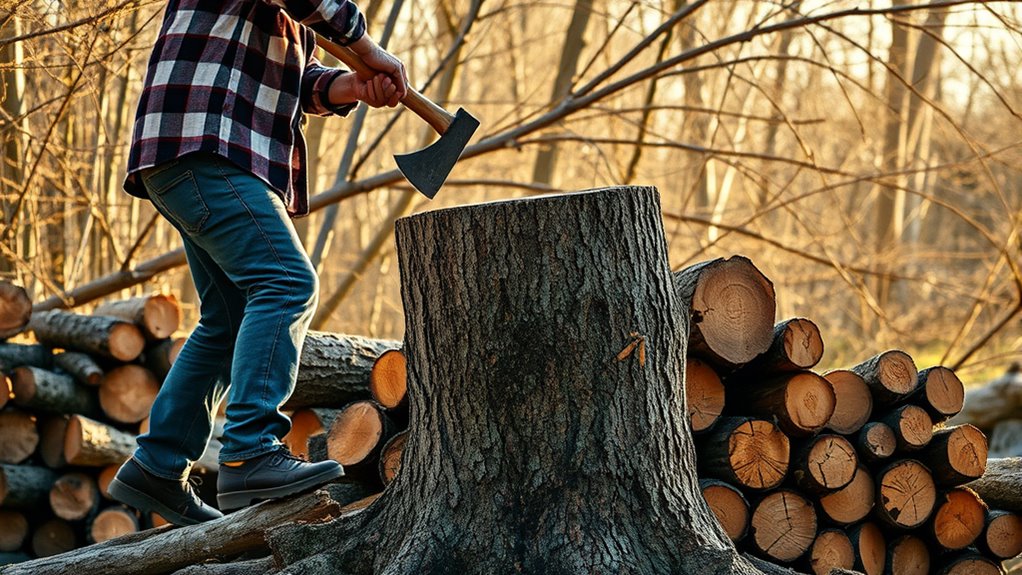
Log splitting and stacking are more than just chores—they’re time-honored traditions that connect you to generations of outdoor enthusiasts. You may see it as a necessary task, but it’s also a ritual rooted in history and craftsmanship. Using wooden tools, like traditional splitting mauls and wedges, adds a tactile, authentic feel to each task. These tools, crafted from sturdy wood and steel, aren’t just functional—they carry a sense of heritage. As you swing your maul, you’re participating in a seasonal ritual that marks the changing of seasons and prepares you for the colder months ahead. This process isn’t just about gathering firewood; it’s about connecting with a rhythm that has persisted for centuries. Incorporating the traditional tools into your routine fosters a deeper appreciation for craftsmanship and sustainability. When you choose to split and stack logs, you’re engaging in a practice that’s deeply embedded in outdoor traditions. The act of splitting wood involves more than brute force; it’s a skill passed down through generations. You learn to read the grain of the wood, choosing the right spot to strike for maximum efficiency. Wooden tools, often handmade or passed down, remind you of a simpler time when craftsmanship mattered. These tools require maintenance and care, adding another layer to the seasonal rituals. Each swing becomes a mindful act, a moment to focus and slow down amid modern distractions. You can feel the satisfaction of splitting logs cleanly and neatly, knowing you’re preparing for the comfort and warmth that the wood will provide. Stacking logs is equally important, transforming a chaotic pile into an organized, accessible supply. You learn to stack logs with care, ensuring good airflow and proper moisture control. This step is a ritual in itself—stacking logs correctly means your firewood will dry properly, igniting easily when needed. The process becomes a meditative routine, a way to mark the passage of time and the end of a season’s work. As you build your woodpile, you’re creating a visual record of effort and patience. This ritual often coincides with seasonal changes, making it a symbolic act of preparation and anticipation. It’s a tradition that connects you to past generations, who relied on these same practices to sustain their homes and families. In essence, log splitting and stacking aren’t just chores—they’re a way to honor the past, embrace tradition, and participate in seasonal rituals that bring a sense of purpose and continuity to your outdoor life.
Top picks for "splitt stack tradition"
Open Amazon search results for this keyword.
As an affiliate, we earn on qualifying purchases.
Frequently Asked Questions
How Do Cultural Differences Influence Log Stacking Methods?
Cultural practices markedly influence your log stacking methods, as regional techniques are shaped by local traditions and environmental conditions. You might stack logs differently based on cultural preferences for stability, aesthetics, or ease of access. These regional techniques reflect values and resource availability, guiding how you organize and store firewood. Embracing these diverse methods helps you appreciate cultural diversity and adapt your stacking style to suit your community’s unique practices.
What Safety Gear Is Recommended for Traditional Log Splitting?
Think of safety gear as your armor in the battlefield of log splitting. Always wear protective gloves to shield your hands from splinters and potential slips. Don’t forget safety goggles; they’re your window to avoid flying debris and wood chips. These essentials keep you safe from unexpected surprises, turning a risky task into a controlled, confident strike. Gear up properly, and let safety be your guiding light in every swing.
Are There Environmental Benefits to Traditional Stacking Techniques?
Yes, traditional stacking techniques offer environmental benefits by promoting sustainable forestry practices. When you stack logs properly, it enhances airflow, speeding up drying and reducing the need for chemical treatments. This helps maintain healthy forests and encourages carbon sequestration, as trees absorb more CO2. Your careful stacking supports eco-friendly wood use, minimizes waste, and contributes to overall forest conservation efforts.
How Has Modern Technology Impacted Traditional Log Stacking Practices?
Modern technology has profoundly impacted traditional log stacking practices by introducing chain saws and mechanical loggers, which make cutting and handling logs faster and more efficient. You can now process large amounts of wood with less physical effort, reducing time and labor costs. However, this shift also means less manual involvement and a move away from time-honored techniques, changing how you approach stacking and processing wood in the modern era.
What Are the Historical Origins of Specific Log Splitting Tools?
You’ll find that historical tools like the axe, wedge, and maul originated from regional techniques developed over centuries. In North America, the splitting axe became essential for large logs, while in Europe, specialized wedges helped break tougher woods. These tools evolved based on available materials and local traditions, shaping regional splitting methods. Understanding these origins helps you appreciate how history influenced your current log splitting practices.
Conclusion
Ultimately, embracing tradition transforms timber handling into a timeless task. By blending best practices with bold, balanced movements, you’ll build a better, brighter bonfire. Respect the rhythm of splitting and stacking, and your efforts will echo through generations. Remember, patience and precision prevail. So stay steadfast, stay skilled, and savor the satisfying symmetry of skilled stacking. With dedication and discipline, your woodwork will not only warm your home but also weave a wonderful, worthwhile legacy.