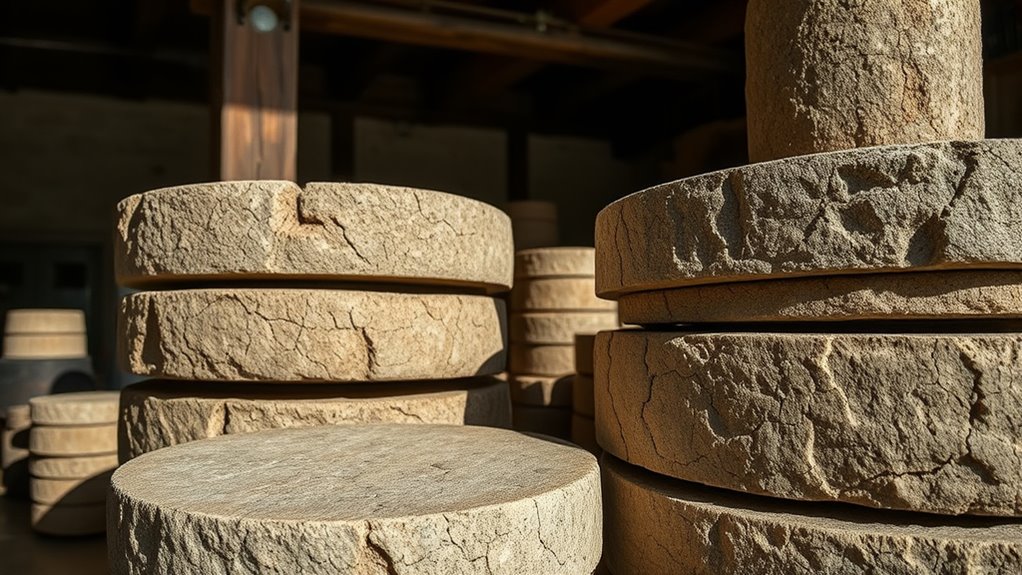

In the Mohawk Valley, grain harvesting plays a crucial role in local traditions, with farmers gathering crops like wheat, corn, oats, and barley during harvest season. Millstones, crafted from granite or sandstone, have been passed down through generations to grind grains for flour, supporting community food needs. This enduring craftsmanship reflects regional culture and sustainability. To discover how these historical practices shaped the region’s economy and identity, keep exploring the rich history behind Mohawk Valley’s grain and millstones.
Key Takeaways
- Mohawk Valley’s traditional harvests feature local grains like wheat, corn, oats, and barley, vital to regional economy and community identity.
- Millstones crafted from quarried granite and sandstone are hand-shaped, reflecting skilled craftsmanship and geological knowledge.
- These millstones powered local mills, essential for grinding grains into flour and meal for food production.
- Harvesting and milling practices are deeply rooted cultural traditions that support sustainability and regional prosperity.
- The craftsmanship of millstones embodies artistry, patience, and engineering, preserving historical food processing methods.
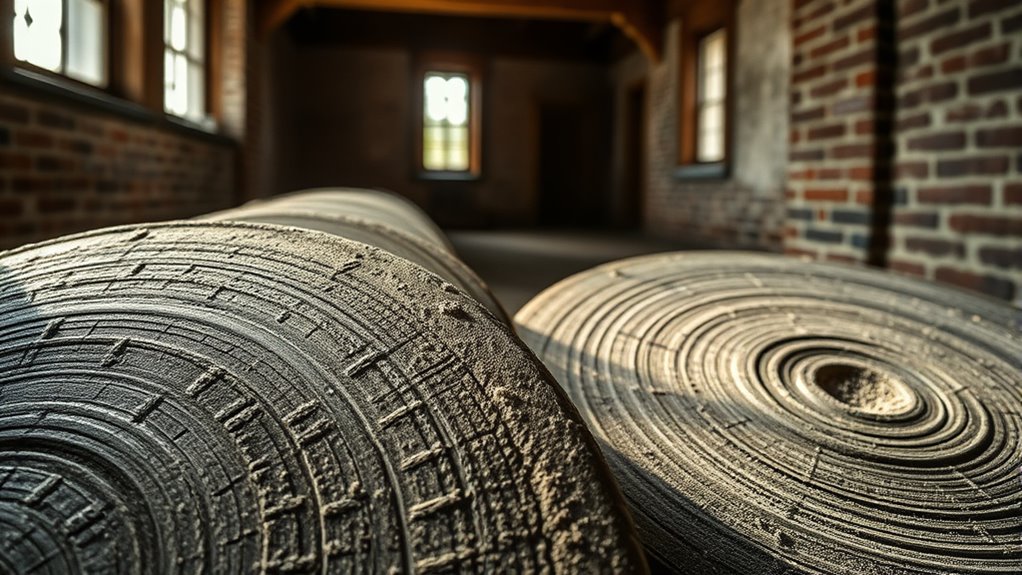
Have you ever wondered how traditional millstones and locally sourced grains shape the history of the Mohawk Valley? This region’s rich agricultural legacy hinges on the practices of grain harvesting and the craftsmanship of millstones, both of which have played essential roles in shaping its identity. Grain harvesting in the Mohawk Valley isn’t just about collecting crops; it’s a time-honored tradition that reflects the area’s deep-rooted connection to the land. Farmers used simple, effective methods to gather wheat, corn, oats, and barley, ensuring their crops thrived in the fertile soil. These harvests weren’t just for sustenance—they fueled the local economy and supported the community’s growth. As you walk through fields during harvest season, you can almost hear the echoes of early farmers, their efforts laying the foundation for the region’s prosperity.
Integral to this process is millstone craftsmanship, a skill passed down through generations. These massive stones, often made from durable quarried materials like granite or sandstone, transformed harvested grains into flour and meal. Crafted with precision, each millstone was designed to grind efficiently while preserving the quality of the grains. The artisans behind millstone craftsmanship understood that the shape, texture, and balance of each stone affected the milling process. They painstakingly carved and finished these tools by hand, turning raw stone into essential equipment that powered local mills. This craftsmanship wasn’t just about utility; it was an art form that embodied patience, skill, and a deep understanding of geology and engineering. Additionally, the sustainability of these traditional tools contributed to the biodiversity of the local environment by reducing reliance on modern machinery and synthetic materials.
The connection between grain harvesting and millstone craftsmanship is evident in how the two worked together to sustain communities. As farmers brought their harvests to local mills, the millstones turned tirelessly, grinding the grains into flour for bread, pastries, and other staples. This process was critical, especially before modern machinery, because it allowed communities to store and prepare food for the winter months. Each millstone’s craftsmanship impacted the efficiency of grinding and, ultimately, the quality of the food that sustained generations. When you consider the history of the Mohawk Valley, it’s clear that the intricate relationship between harvesting crops and creating durable, effective millstones shaped not just the economy but also the cultural fabric of the region.
Frequently Asked Questions
What Types of Grains Are Used in Mohawk Valley Grain Products?
You’ll find a variety of grain varieties used in Mohawk Valley Grain products, including wheat, rye, and corn. They utilize traditional milling techniques to preserve the grains’ natural flavors and nutrients. By focusing on high-quality grains and careful processing, they create products that stand out in taste and authenticity. If you appreciate wholesome, artisanal grains, you’ll enjoy the diverse options made with expert milling techniques.
How Are the Millstones Sourced and Maintained?
You might think millstones are ancient relics, but they’re carefully sourced and maintained today. You’ll find they’re often made from durable, natural stones like French burr or granite, sourced through reputable suppliers committed to sustainable practices. Maintenance involves regular cleaning, checking for cracks, and precise balancing to guarantee efficiency. This combination of sourcing practices and maintenance techniques keeps the millstones in top condition, ensuring consistent, high-quality milling for your favorite grains.
Do They Offer Custom Milling Services?
Yes, they offer custom milling services. You can work with them to develop unique grain blends tailored to your specific needs. They utilize advanced milling techniques to guarantee quality and consistency in every batch. Whether you’re looking to create a signature product or refine an existing recipe, their expertise helps you achieve your goals efficiently. With personalized attention, you get precisely the milling results you want for your project.
Are Their Products Suitable for Gluten-Free Diets?
Like a lighthouse guiding ships to safe harbor, Mohawk Valley Grain offers gluten-free options for those with allergen concerns. Their products are carefully processed to guarantee they meet gluten-free standards, making them suitable for celiac or gluten-sensitive individuals. You can enjoy their grains without worry, trusting that quality and safety are prioritized. For anyone seeking allergen-conscious choices, these products serve as a reliable, wholesome option for a healthy, inclusive diet.
What Is the History Behind Mohawk Valley Millstones?
You’ll find that the history behind Mohawk Valley Millstones dates back to early regional significance, where their origins lie in traditional stone milling practices. These millstones played a essential role in local agriculture and food production, symbolizing craftsmanship and heritage. Over time, their design and use have evolved, but their historical roots remain a proud part of the region’s cultural identity, connecting past milling techniques with modern appreciation.
Conclusion
So, whether you’re admiring the historic millstones or savoring fresh grains, remember that quality craftsmanship withstands the test of time. Supporting places like Mohawk Valley Grain keeps tradition alive and ensures you get the best. As the saying goes, “A stitch in time saves nine,” meaning taking care of quality now pays off later. Keep exploring and appreciating these timeless treasures—they’re worth every moment.