Prairie schoolhouses in Minnesota showcase a simple yet resilient approach to rural education. Built from local materials like wood and stone, these structures feature straightforward layouts with tall windows to bring in natural light and a small bell tower to signal students. They served as community centers, offering a space for learning, gatherings, and social activities. Exploring their design and history reveals the enduring spirit of early American education—there’s much more to uncover about their legacy.
Key Takeaways
- Prairie schoolhouses were constructed from local materials like wood and stone, reflecting resourcefulness and durability in rural Minnesota.
- They featured simple rectangular designs with tall windows to maximize natural light for effective rural learning.
- These schoolhouses served multiple grades with a single teacher, fostering versatile and space-efficient educational environments.
- Beyond education, they functioned as community centers for gatherings, town meetings, and social events.
- As symbols of Minnesota’s rural history, they embody resilience, community spirit, and the foundational role of education in early American life.

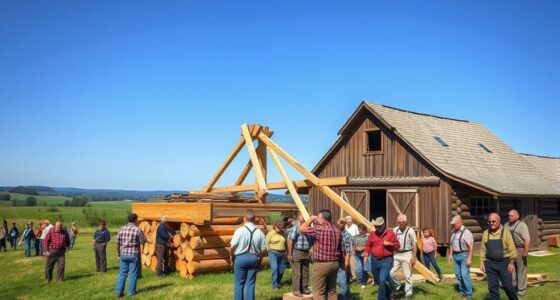
Have you ever wondered what one-room schoolhouses looked like in the vast Minnesota prairies? These humble structures were much more than simple buildings; they embodied the spirit of early American education and the resilience of rural communities. Their architectural design reflects a distinct period in historical architecture, emphasizing practicality and community values. Typically constructed from local materials like wood and stone, these schoolhouses featured a straightforward rectangular shape, tall windows to let in natural light, and a small bell tower to summon students from miles around. Their sturdy, functional design aimed to withstand harsh weather conditions while serving as a essential hub for learning and community gatherings.
One-room schoolhouses in Minnesota prairies reflected practicality, resilience, and community spirit with simple, sturdy designs.
As you explore these structures, you’ll notice how their architectural simplicity speaks to the educational traditions of the time. In an era when resources were limited, one-room schoolhouses had to be versatile. They were designed to accommodate children of all ages, with a single teacher managing multiple grade levels simultaneously. This setup fostered a unique learning environment where older students often helped instruct younger ones, reinforcing the educational values of cooperation and shared responsibility. The schoolhouse’s interior was modest—desks and benches arranged to maximize space, a wood stove for warmth, and a blackboard at the front where lessons were shared. Despite the lack of modern amenities, these classrooms became centers of learning, community discussion, and social development.
You can imagine the daily routine inside, where the bell’s chime marked the start of lessons, recess, and the end of the day. These schoolhouses played a essential role in shaping educational traditions that valued hands-on learning, discipline, and community involvement. Students learned reading, writing, arithmetic, and moral lessons, often under the watchful eye of a teacher who was as much a community leader as an educator. The buildings weren’t just places to acquire knowledge—they served as gathering spots for town meetings, church services, and social events, reinforcing their role as community anchors.
Additionally, the architecture of these schools often incorporated local materials, which contributed to their durability and harmony with the surrounding environment. Today, these prairie schoolhouses stand as enduring symbols of Minnesota’s rural history. Their historical architecture offers a glimpse into a time when education was deeply rooted in simplicity, resourcefulness, and community spirit. They remind us of a period when learning was accessible to all children in the countryside, and when the schoolhouse was more than just a building—it was the heartbeat of rural life. As you reflect on this history, you gain a deeper appreciation for the educational traditions that helped shape generations of Minnesotans.
one-room schoolhouse replica model
As an affiliate, we earn on qualifying purchases.
As an affiliate, we earn on qualifying purchases.
Frequently Asked Questions
How Did Prairie Schoolhouses Influence Modern Rural Education?
Prairie schoolhouses shaped modern rural education by emphasizing a strong community impact and a practical educational philosophy. You see, they fostered close-knit learning environments where students and teachers worked together, promoting values like teamwork and independence. This approach influenced current rural schools to prioritize community involvement and hands-on learning, ensuring education remains relevant and accessible. Their legacy continues to inspire how rural communities value education and support student growth today.
What Materials Were Commonly Used to Build These Schoolhouses?
A stitch in time saves nine, and it also reflects prairie schoolhouses’ simplicity. You’d find these structures built with local materials like wood, often from nearby forests, using basic construction techniques. The logs or planks provided sturdy walls, while handmade nails and wooden joints kept everything together. These natural, resourceful building materials helped create durable, functional schoolhouses that served rural communities well, embodying practicality and ingenuity in every detail.
Were There Any Notable Teachers or Students Associated With These Schools?
You’ll find that some prairie schoolhouses had famous educators like Ella Flagg Young, who inspired many, and notable students such as Laura Ingalls Wilder, whose stories highlight rural life. These schools often fostered strong community bonds, and dedicated teachers played vital roles in shaping local histories. By attending these schools, students gained unique experiences that left lasting impacts, making them noteworthy in the domain of rural education.
How Did Weather Conditions Affect School Operations in Prairie Towns?
Weather was the gatekeeper of your school days, shaping your learning like a river carving its path. Harsh winters and storms forced seasonal closures, making climate adaptation essential. Snowdrifts and icy roads could shut down classes unexpectedly, so you learned resilience through these interruptions. These weather conditions kept you connected to nature’s power, reminding you that education in prairie towns depended on respecting the land’s unpredictable nature.
Are There Preserved Prairie Schoolhouses Open to the Public Today?
Yes, many prairie schoolhouses are preserved and open to the public today. You can visit these historic sites, where community events and educational programs bring history to life. Through historical preservation efforts, these schoolhouses maintain their original charm and serve as a reminder of rural education’s past. When you explore them, you get a firsthand look at the community spirit and learning environments of bygone eras.

MindWare Art-chitect Home Model Building for Kids – 3D Architectural Design Kit for Kids Ages 8 and Up – Learn The Basics of Architecture As You Design Start to Finish
Toys That Teach: This home design planner teaches creative design and professional drawing techniques while strengthening and applying…
As an affiliate, we earn on qualifying purchases.
As an affiliate, we earn on qualifying purchases.
Conclusion
Just like the brave pioneers who built these schoolhouses, you carry the spirit of discovery and resilience. These humble structures remind us that education’s roots run deep, shaping communities much like the roots of mighty oaks. As you reflect on these prairie schoolhouses, remember that every lesson learned there helped carve out a future—yours and theirs—proving that even small beginnings can lead to great journeys. Keep shining your light, just like those timeless schoolhouses.

Vintage Metal Tin Sign THE SCHOOLHOUSE 4''x16'' inch, Street Sign for Home, Restaurant, Bar, Cafe, Garage – Retro Wall Decor Plaque
Vintage Aesthetic: This 4''x16'' metal tin sign captures the essence of nostalgic, retro decor with its aged and…
As an affiliate, we earn on qualifying purchases.
As an affiliate, we earn on qualifying purchases.

Prairie Style: Houses and Gardens by Frank Lloyd Wright and the Prairie School
Used Book in Good Condition
As an affiliate, we earn on qualifying purchases.
As an affiliate, we earn on qualifying purchases.