
In Minnesota, co-ops and community grain projects strengthen local food systems by promoting sustainable farming, crop diversity, and regional resilience. By participating, you support farmers using organic and regenerative methods, reduce environmental impact, and enjoy fresh, locally grown grains. These initiatives also foster community connections and preserve agricultural heritage. If you want to discover how these efforts help build a more sustainable future, there’s more to explore below.
Key Takeaways
- Minnesota co-ops strengthen local food systems by sharing resources like equipment, seeds, and transportation among farmers.
- Many Minnesota co-ops prioritize organic and regenerative farming, promoting environmentally responsible agriculture.
- Community grain projects in Minnesota focus on local grains, heirloom varieties, and traditional farming techniques to support regional resilience.
- These co-ops and projects provide consumers with access to fresh, locally grown grains while fostering transparency and trust.
- They contribute to sustainability and economic health by promoting crop diversity, fair prices, and environmentally friendly practices.
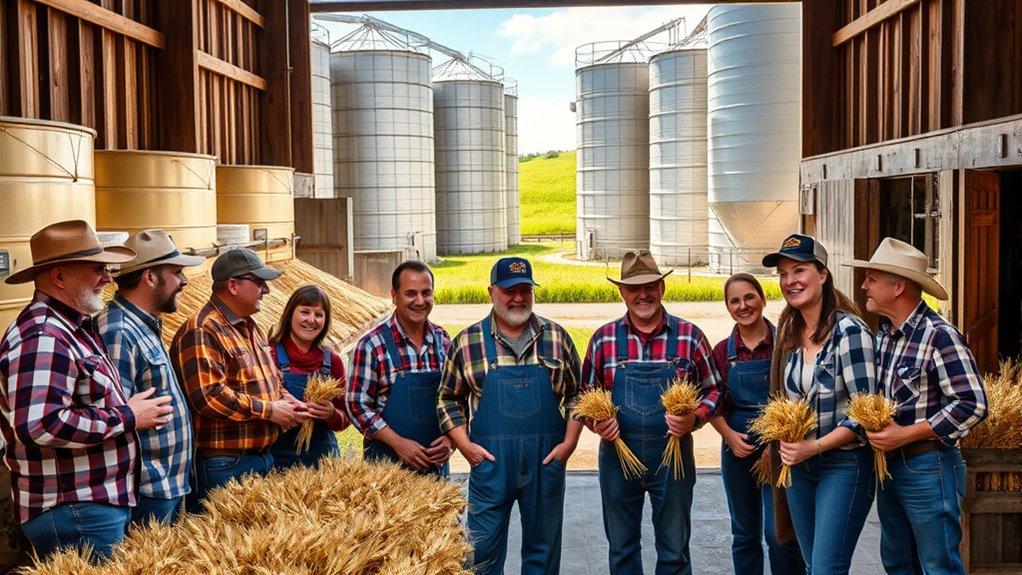
In Minnesota, co-ops and community grain projects are transforming how farmers and consumers connect around local food. These initiatives foster a sense of shared responsibility, supporting sustainable farming practices that prioritize environmental health and long-term viability. By working together through local food initiatives, farmers can access resources, share knowledge, and reduce costs, making sustainable farming more accessible and practical. As a consumer, you get the chance to buy directly from farmers who are committed to growing food in ways that protect the land, water, and air. This direct connection not only ensures fresher, healthier food but also encourages transparency and trust in the food system.
Co-ops serve as a powerful tool for strengthening local food networks. When farmers band together in a cooperative, they can pool their resources for shared equipment, seeds, and transportation, reducing individual expenses and minimizing environmental impact. These collectives often prioritize organic and regenerative farming methods, which are essential components of sustainable farming. As a result, co-ops become models for environmentally responsible agriculture, demonstrating how collective effort can lead to healthier soil, cleaner water, and reduced reliance on chemical inputs. For consumers, participating in these co-ops means gaining access to high-quality, locally produced grains and other staples, often at fair prices. It creates a cycle where what’s good for the environment is also good for the local economy.
Community grain projects take this further by emphasizing the importance of local grains and traditional farming techniques. These projects often involve sharing seed stocks, supporting heirloom varieties, and promoting crop diversity—all key elements of sustainable farming. By focusing on local grains, these initiatives reduce the carbon footprint associated with long-distance transportation and promote resilience in local food systems. As a participant, you might find yourself involved in grain shares or community milling events, where you directly support local farmers and preserve regional agricultural heritage. This approach helps build a vibrant local food culture, where consumers value and prioritize food grown close to home.
Top picks for "minnesota community grain"
Open Amazon search results for this keyword.
As an affiliate, we earn on qualifying purchases.
Frequently Asked Questions
How Do Minnesota Co-Ops Impact Local Economies Long-Term?
You see, Minnesota co-ops boost local economies long-term by fostering economic resilience and empowering farmers. They keep profits circulating within the community, create jobs, and support local businesses. By providing farmers with better bargaining power and access to resources, co-ops help sustain farm operations during tough times. This interconnected system strengthens the local economy, ensuring its vitality and stability for years to come.
What Legal Requirements Exist for Starting a Community Grain Co-Op?
Starting a community grain co-op is like planting a seed—you need proper legal care to foster strong growth. You must meet legal requirements like registering your co-op, complying with state and federal laws, and creating clear membership bylaws. These rules ensure your co-op’s structure is sound and transparent. By following these legal steps, you lay a solid foundation for long-term success and community resilience.
How Do Co-Ops Ensure Fair Pricing for Small Farmers?
You guarantee fair pricing for small farmers by fostering strong farmer collaboration and maintaining price transparency. By working together, farmers can negotiate better prices and share information openly about costs and market rates. Co-ops establish clear pricing structures and openly communicate them, preventing unfair practices. This approach empowers small farmers, giving them a fair chance to earn sustainable income while participating actively in decision-making processes.
What Challenges Do Community Grain Initiatives Face in Minnesota?
You’ll face challenges like maintaining farmer engagement and managing a complex supply chain. Ensuring enough participation from small farmers can be tough, especially when competing with larger agribusinesses. Additionally, coordinating logistics within the supply chain requires effort to keep costs low and quality high. These hurdles can slow growth and impact your ability to build resilient local food systems, but staying committed to community values helps overcome them.
How Can Individuals Join or Support Local Co-Ops?
You can join or support local co-ops by exploring their membership options, which often include purchasing shares or paying a small fee. Volunteering your time is another great way to get involved and help the co-op thrive. Attend meetings, participate in events, or assist with daily operations. Your involvement strengthens the co-op community, supports local farmers, and promotes sustainable food practices. Every effort makes a meaningful difference.
Conclusion
By supporting co-ops and community grain in Minnesota, you help build stronger communities, promote sustainable farming, and preserve local traditions. You become part of a movement that values collaboration over competition, resilience over reliance, and quality over quantity. When you choose to get involved, you’re not just making a difference today — you’re shaping a better tomorrow. Embrace the power of community, the strength of cooperation, and the future of local agriculture.