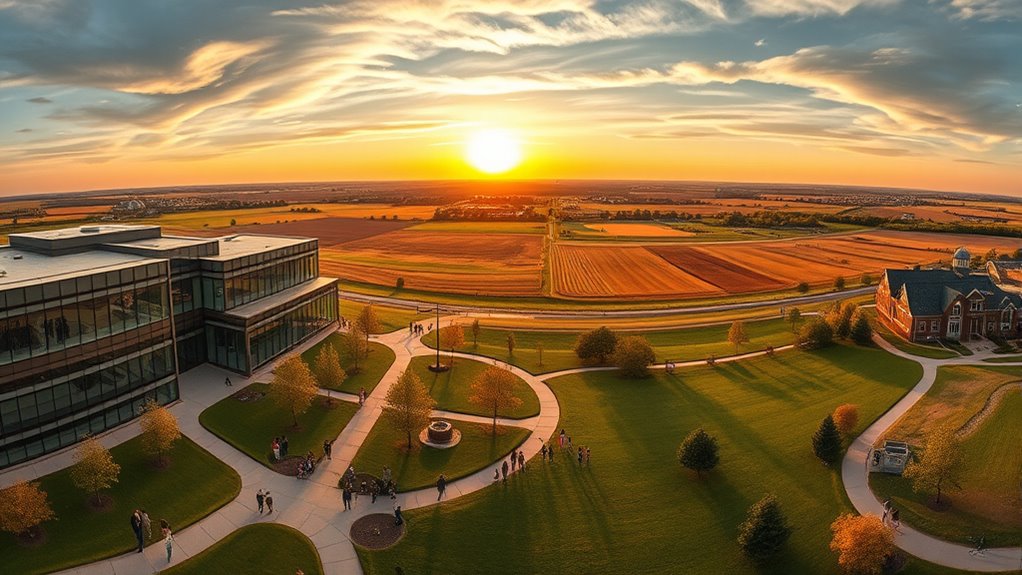

University extensions are transforming the heartland by making education more accessible through distance learning and community outreach. You can now study from anywhere and participate in local workshops tailored to your needs. These initiatives help bridge gaps in access and foster stronger connections between universities and communities. As a result, opportunities for personal growth and skill development expand for everyone. Exploring this shift reveals how higher education is becoming more inclusive and impactful across the region.
Key Takeaways
- Distance learning expands access to higher education in rural and underserved areas of the Heartland.
- Community outreach initiatives bring educational programs directly to neighborhoods, bridging gaps in resources.
- University extensions foster local engagement through workshops tailored to regional industries and cultural needs.
- Flexible online options allow students to balance education with work and family commitments in the Heartland.
- These efforts strengthen university-community ties, promoting regional development and lifelong learning opportunities.

Have you ever wondered how universities expand their reach beyond traditional classrooms? One of the most effective ways they do this is through university extensions that focus on distance learning and community outreach. These initiatives are transforming the way education is delivered, making it more accessible to people who might not have considered attending a university otherwise. Distance learning, in particular, allows you to study from anywhere, whether you’re in a rural town, a busy city, or even balancing work and family commitments. No longer do you have to relocate or commute hours to access higher education. Instead, you can log in from your living room, a local library, or even during your lunch break. This flexibility opens doors for a broader range of students, especially those in underserved communities or with limited resources.
University extensions expand access through flexible distance learning and community programs, reaching more students everywhere.
Community outreach is another crucial part of university extensions. It involves actively engaging with local communities to identify their needs and develop programs that address them. You might find universities partnering with local schools, community centers, or non-profit organizations to offer workshops, seminars, or short courses. These initiatives help bridge gaps in access to education and create opportunities for lifelong learning. If you’re someone interested in acquiring new skills or advancing your career, community outreach programs can serve as a stepping stone. They often focus on practical skills like digital literacy, vocational training, or health education, which directly benefit the community. By bringing educational resources directly into neighborhoods, universities are breaking down barriers that traditionally kept some individuals from pursuing higher learning.
This approach also fosters a sense of connection between the university and the community. You become part of a local network that values growth and development. As a participant, you might find yourself attending workshops that are tailored to local industries or cultural contexts, making the learning experience more relevant and impactful. Universities understand that knowledge isn’t confined within campus walls; it thrives when shared with the community. Through outreach, they can identify talents and aspirations within neighborhoods that might otherwise go unnoticed, creating pathways for students to continue their education or develop new skills. Recognizing the role of prophetic dreams in understanding subconscious messages can also inspire innovative approaches to education and community engagement, fostering a deeper connection between personal growth and collective development.
In essence, university extensions that leverage distance learning and community outreach are reshaping education’s landscape in the heartland. They’re making it more inclusive, flexible, and responsive to local needs. Whether you’re seeking personal growth, career advancement, or just curious about new subjects, these programs bring learning directly to your doorstep. They ensure that the heart of higher education beats stronger in every corner, connecting universities with the communities they serve and empowering individuals to reach their full potential.

High-Impact Design for Online Courses
As an affiliate, we earn on qualifying purchases.
As an affiliate, we earn on qualifying purchases.
Frequently Asked Questions
How Do University Extensions Impact Local Communities Economically?
University extensions boost local economies by creating jobs, attracting students, and encouraging community development. You’ll see increased spending on housing, food, and services, which helps small businesses thrive. While funding challenges can limit expansion, you benefit from diverse curriculum development that meets community needs. Overall, these extensions serve as economic catalysts, fostering growth and stability in your area while enhancing educational opportunities for residents.
What New Programs Are Being Introduced Through University Extensions?
You’ll find that university extensions are introducing new programs focused on distance learning and cultural outreach. These initiatives aim to expand access to education by offering flexible online courses, and they promote cultural awareness through community events and collaborations. By participating, you can benefit from innovative learning opportunities and engage with diverse communities, making education more inclusive and connected to local needs.
How Do Extensions Adapt to Rural Versus Urban Needs?
You might think extensions can’t cater to both rural and urban needs, but they do through tailored programs. For rural innovation, they focus on agriculture, tech access, and local workforce development. Meanwhile, urban engagement emphasizes professional training, entrepreneurship, and diversity initiatives. By customizing content and delivery methods, extensions effectively bridge gaps, ensuring communities thrive regardless of location, making education accessible, relevant, and impactful for everyone.
What Technological Tools Are Used to Deliver Extension Programs?
You use digital platforms and mobile applications to deliver extension programs effectively. These tools enable you to reach rural and urban communities by providing access to educational resources, webinars, and workshops anytime, anywhere. With digital platforms, you can share videos, articles, and updates quickly, while mobile applications allow for interactive learning and real-time communication. These technologies make extension services more accessible, engaging, and tailored to diverse needs.
How Do Extensions Measure Their Success and Community Impact?
You measure your extension program’s success through community engagement and program evaluation. Tracking participation rates, feedback, and community impact helps you understand how well your initiatives resonate. You also assess changes in knowledge, skills, or behaviors among community members. By regularly reviewing these metrics, you can identify areas for improvement and demonstrate your program’s value, ensuring it effectively addresses community needs and fosters lasting positive impact.

11×14 Sneakers Pre Sketched Canvas 28 Pack Sip And Paint Kit Bulk School Supplies Classroom Carnival Corporate Workshop Fundraiser Activity
Bulk 28 pack sneakers sip and paint kit designed for classrooms homeschool programs youth groups summer camps church…
As an affiliate, we earn on qualifying purchases.
As an affiliate, we earn on qualifying purchases.
Conclusion
As you see, university extensions are transforming the heartland, opening doors to education and opportunity. Imagine a young farmer in Kansas, gaining new skills through online courses, then applying them to improve crops and boost local economy. These programs breathe new life into communities, proving that education isn’t confined to campuses. By embracing these changes, you can be part of a movement that reshapes the future of the heartland, one student at a time.

Literacy Coaching: Transforming Teaching and Learning with Digital Tools and Technology
As an affiliate, we earn on qualifying purchases.
As an affiliate, we earn on qualifying purchases.

Mobile Crane Certification 300 Question General Knowledge Practice Test Booklet – US Copyright verified
As an affiliate, we earn on qualifying purchases.
As an affiliate, we earn on qualifying purchases.