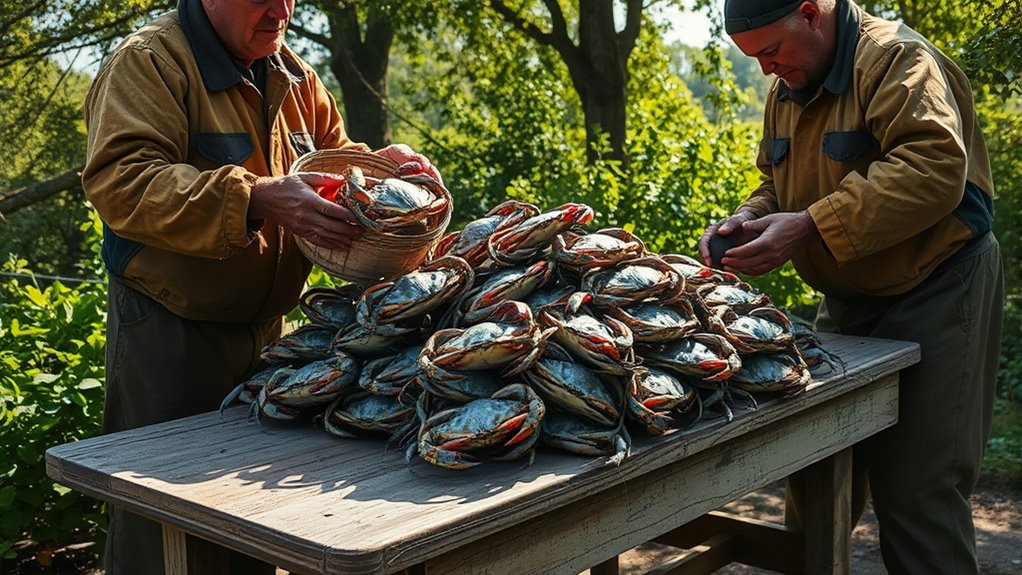

Maryland watermen are essential to the state’s maritime heritage, harvesting seafood sustainably and supporting local traditions. Their practices focus on protecting Chesapeake Bay’s ecosystem, ensuring fresh, high-quality catches. The farm-to-table movement encourages you to buy directly from watermen, which promotes freshness and sustainability. By choosing Maryland seafood, you help preserve this heritage and a healthy environment. To discover how these traditions and practices combine for a delicious, responsible dining experience, keep exploring this topic.
Key Takeaways
- Maryland watermen supply fresh seafood directly to local farm-to-table restaurants and markets, promoting sustainability and regional flavors.
- The farm-to-table movement encourages consumers to buy seafood straight from watermen, supporting local economies and preserving maritime heritage.
- Sustainable fishing practices by Maryland watermen ensure healthy Chesapeake Bay ecosystems, benefiting seafood quality and environmental conservation.
- Chesapeake Bay’s ecosystem health, maintained by watermen’s sustainable methods, is vital for the long-term viability of Maryland’s seafood traditions.
- Participating in local markets and direct sales helps consumers make ethical, informed choices that support watermen and Chesapeake Bay preservation.

Maryland’s watermen have long been the backbone of the state’s rich maritime tradition, harvesting blue crabs, oysters, and other seafood that define the region’s culinary identity. As a consumer or supporter of local food, you can play a essential role in preserving this heritage by embracing sustainable fishing practices. Watermen today are increasingly committed to methods that protect the environment, ensuring that seafood remains abundant for future generations. This focus on sustainability isn’t just about conservation; it’s about maintaining the health of Chesapeake Bay’s delicate ecosystem, which directly impacts the quality and flavor of the seafood you enjoy. By choosing seafood harvested through sustainable fishing practices, you support watermen who prioritize the long-term viability of their livelihoods and the health of the waters they work in.
Supporting sustainable fishing helps preserve Maryland’s seafood traditions and protects Chesapeake Bay’s delicate ecosystem.
The farm-to-table movement aligns naturally with this ethos. When you purchase locally caught seafood, you’re closing the gap between the watermen and your dinner plate, ensuring freshness and reducing the carbon footprint associated with long-distance transportation. This movement encourages you to seek out restaurants, markets, and fishmongers that source their seafood directly from Maryland’s watermen. Not only does this support local economies, but it also promotes transparency about how your seafood is harvested, giving you confidence that it was caught responsibly. Many watermen have adopted sustainable fishing practices, such as trap limits and seasonal closures, to prevent overfishing and protect spawning grounds. By choosing seafood from these waters, you’re helping to support these conservation efforts.
Furthermore, the farm-to-table movement fosters a deeper appreciation for the story behind your food. When you learn about the watermen’s dedication to sustainable fishing, you connect with the tradition and hard work that goes into each catch. This connection encourages mindful consumption and reduces waste, as you better understand the importance of respecting the resources that sustain Maryland’s seafood industry. Participating in farmers markets or direct sales from watermen allows you to enjoy fresh, responsibly caught seafood while aligning with ethical eating practices. It’s a way to honor the Chesapeake Bay’s legacy, ensuring that the region’s culinary treasures continue to thrive.
A growing awareness of personal development principles like mindfulness and goal setting can also enhance your appreciation for sustainable practices, fostering a more intentional and responsible approach to your food choices.
In essence, by supporting sustainable fishing and embracing the farm-to-table movement, you become part of a larger effort to preserve Maryland’s maritime heritage. Your choices can influence how seafood is harvested, consumed, and enjoyed, helping to secure a future where watermen’s traditions and the health of Chesapeake Bay remain intact. It’s about more than just a meal; it’s about sustaining a way of life that has defined Maryland for generations.
Frequently Asked Questions
How Do Maryland Watermen Ensure Sustainable Harvesting Practices?
You can guarantee sustainable fishing by following conservation methods like adhering to regulated catch limits and seasonal restrictions. Maryland watermen actively participate in monitoring fish populations, using selective gear to reduce bycatch, and practicing responsible harvesting techniques. These actions help maintain healthy ecosystems, protect marine life, and ensure that seafood remains abundant for future generations. By prioritizing conservation methods, you support the long-term sustainability of fishing communities and the environment.
What Are the Seasonal Variations in Local Maryland Seafood?
You know what they say, “timing is everything.” Seasonal variations in Maryland seafood mean you’ll notice different seafood flavors throughout the year. In spring, oysters and soft-shell crabs are at their best, while summer brings striped bass and blue crabs. Fall offers hearty fish like rockfish, and winter highlights eels and clams. Harvest timing influences freshness, so eating seasonally guarantees you enjoy the best quality and flavor.
How Do Farm Tables Support Local Maryland Farmers?
Farm tables support local Maryland farmers by promoting farm-to-table practices that emphasize fresh, locally-sourced ingredients. You can enjoy dishes made with sustainable agriculture, which helps reduce environmental impact and supports community economies. By choosing farm-to-table options, you’re directly encouraging farmers to grow more sustainably, ensuring the preservation of Maryland’s agricultural heritage. This connection between consumers and farmers fosters a healthier, more resilient local food system for everyone.
What Traditional Maryland Recipes Highlight Watermen’s Catches?
You’ll love traditional Maryland recipes like crab cakes and oyster stew that highlight watermen’s catches. Crab cakes showcase fresh Chesapeake Bay blue crabs, seasoned and lightly fried for a delicious taste of local seafood. Oyster stew, made with fresh oysters, cream, and seasonings, offers a warm, comforting dish that celebrates the bay’s harvest. These dishes connect you to Maryland’s maritime heritage and the bounty of its waters.
How Has Climate Change Affected Maryland’s Watermen Industry?
Climate change has turned up the heat on Maryland’s watermen industry, making it harder to do your job. Rising temperatures and unpredictable weather affect water quality, causing shifts in fish and shellfish populations. You need to adapt quickly, implementing climate adaptation strategies to stay afloat. As water conditions change, you realize you must stay flexible and resilient to protect your livelihood and keep Maryland’s seafood tradition alive.
Conclusion
As you explore Maryland’s watermen and farm tables, you realize it’s no coincidence how seamlessly the freshest seafood and farm produce come together. This harmony reminds you that, sometimes, the best experiences happen when worlds collide. By supporting local traditions, you’re not just savoring delicious flavors—you’re part of a story that’s been woven through generations. So, next time you dine, remember how chance and choice blend to create Maryland’s vibrant culinary tapestry.