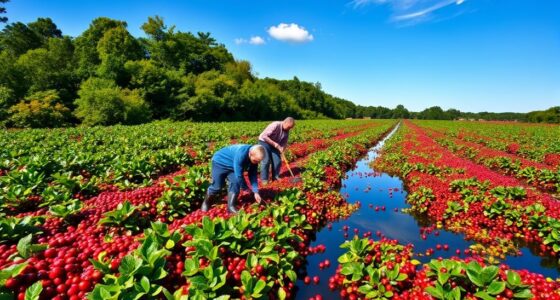
Maryland farms have shifted from tobacco monoculture to diverse, sustainable crops like soybeans, corn, and vegetables. Farmers now focus on crop rotation and integrated pest management to improve soil health and reduce pesticide use. These changes help create resilient farms that adapt to economic and environmental challenges. If you’re curious about how these practices are transforming Maryland’s farmland, you’ll find more details as you explore further.
Key Takeaways
- Maryland farmers transitioned from tobacco monoculture to diversified cropping systems for economic resilience.
- Crop rotation practices with soybeans, corn, and cover crops replaced continuous tobacco planting.
- Adoption of integrated pest management reduced chemical use and promoted sustainable pest control methods.
- The shift supports soil health, market diversification, and environmentally friendly farming practices.
- Maryland’s agricultural landscape now emphasizes resilience, sustainability, and responsible land stewardship.
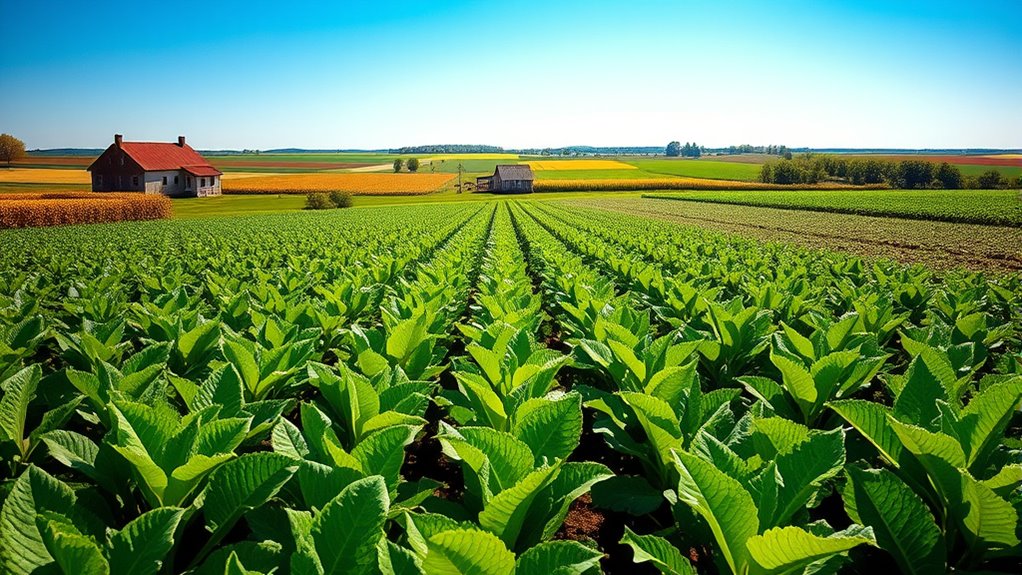
Once a staple crop in Maryland, tobacco farming has markedly declined as farmers shift toward diversified agriculture. This change reflects changing economic pressures, health concerns, and a desire for sustainable practices. As you explore the evolving landscape of Maryland’s farms, you’ll notice that many farmers are now prioritizing crop rotation and pest management strategies to maintain soil health and reduce dependency on chemical inputs. Using best practices like cover cropping and integrated pest management further supports these efforts. Crop rotation plays a crucial role in this shift. Instead of planting tobacco year after year on the same land, farmers are now rotating crops like soybeans, corn, vegetables, and cover crops such as clover or rye. This practice helps break pest and disease cycles that were once managed primarily through chemical controls. When you rotate crops, you disrupt the lifecycle of pests and pathogens that target specific plants, reducing the need for pesticides and supporting healthier soil ecosystems. This approach not only preserves soil fertility but also enhances crop yields and resilience, making farms more sustainable in the long run.
Effective pest management is also essential in this new farming paradigm. Without the monoculture of tobacco, farmers must adopt integrated pest management (IPM) techniques. These include monitoring pest populations, utilizing beneficial insects, and applying targeted treatments when necessary. Instead of relying solely on broad-spectrum pesticides, you’ll find that farmers are increasingly using biological controls and cultural practices—like adjusting planting times or selecting resistant crop varieties—to minimize pest issues. These methods help reduce chemical residues and protect the surrounding environment, aligning with the broader goals of sustainable agriculture.
The shift away from tobacco is not just about replacing one crop with another; it’s about creating a balanced, resilient farm system. You’ll observe that farmers are investing in diverse cropping systems that promote soil health, reduce pest pressures, and improve economic stability. This diversification also opens opportunities for new markets, such as organic produce or specialty crops, which often command higher prices and appeal to health-conscious consumers.
In Maryland’s landscape, you’ll see a move toward more environmentally friendly practices that address both economic and ecological concerns. Crop rotation and pest management form the backbone of this transformation, helping farmers reduce input costs and environmental impact while maintaining productivity. As the state continues to evolve, this trend toward diversified farms signifies a commitment to sustainable, innovative agriculture. It’s a clear sign that Maryland’s farming future is rooted in resilience, adaptability, and responsible stewardship of the land.
Top picks for "maryland tobacco diversifi"
Open Amazon search results for this keyword.
As an affiliate, we earn on qualifying purchases.
Frequently Asked Questions
How Has Tobacco Diversification Impacted Local Maryland Economies?
You’ve seen how tobacco diversification boosts local Maryland economies by enhancing economic resilience and ensuring crop stability. When farmers switch to diverse crops, they reduce dependence on a single commodity, which helps weather market fluctuations. This diversification creates more job opportunities, stabilizes income, and supports local businesses. Overall, it strengthens community sustainability, allowing the economy to adapt better to changes and uncertainties in agricultural markets.
What New Crops Are Farmers Adopting Besides Tobacco?
You’re likely seeing farmers adopting a variety of crops like vegetables, grains, and berries beyond tobacco. They’re also exploring exciting alternatives like alternative pest management and crop rotation strategies to protect their produce. These new crops help diversify income, reduce reliance on a single crop, and promote sustainable farming. With innovative techniques and diverse planting, farmers are transforming traditional fields into flourishing farms filled with flavor and variety.
Are There Government Incentives for Transitioning From Tobacco?
Yes, you can access government grants and policy support to help shift from tobacco. These incentives aim to encourage farmers to adopt diversified crops, boost sustainability, and reduce reliance on tobacco. You should explore federal and state programs that provide financial assistance, technical guidance, and training. By taking advantage of these resources, you can make a smoother switch to alternative crops and strengthen your farm’s long-term viability.
How Do Diversification Efforts Affect Maryland’s Environmental Sustainability?
Diversification efforts boost Maryland’s environmental sustainability by improving soil health through crop rotation, which reduces soil erosion and nutrient depletion. When you diversify, you help prevent pest outbreaks and decrease reliance on chemical inputs, leading to healthier ecosystems. This approach also promotes biodiversity and strengthens the resilience of farms against climate change impacts. By embracing diversification, you’re actively contributing to a more sustainable, environmentally friendly agricultural landscape in Maryland.
What Challenges Do Farmers Face When Shifting to New Crops?
When shifting to new crops, you face challenges like adapting your crop rotation schedules to prevent soil depletion. Pest management becomes more complex as pests may target different crops, requiring new strategies. You also need to learn about the specific needs of each crop, invest in different equipment, and navigate market uncertainties. These hurdles demand flexibility and research, but overcoming them can lead to more sustainable and resilient farming practices.
Conclusion
So, you’ve witnessed Maryland’s glorious transformation from tobacco dominance to a thriving mosaic of diversified farms. Who knew that swapping cigarettes for crops would lead to such vibrant prosperity? But don’t get too comfortable—next thing you know, farmers might start growing gourmet kale or artisanal lavender. After all, if tobacco taught us anything, it’s that change is inevitable, especially when it’s wrapped in the charming guise of “progress.” Cheers to the brave new farm-to-table frontier!