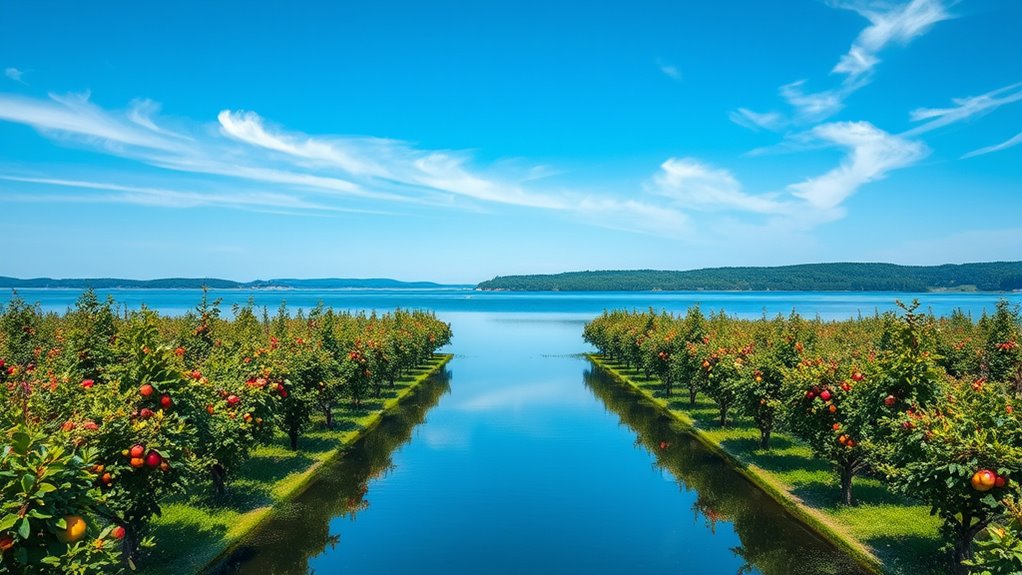

Lake effect weather can delay your orchard harvest by causing sudden cold snaps, extending fruit ripening times, and increasing frost risks that may harm blossoms or young fruit. These conditions make it hard to stick to traditional harvest schedules, so you need to stay alert and monitor the weather closely. Using protective measures and adjusting your plans can help prevent damage and keep your fruit at its best. Keep going to discover how to manage these challenges effectively.
Key Takeaways
- Lake effect can delay warming periods, extending fruit ripening and harvest timelines.
- Cold air from lake effect increases frost risk, potentially damaging blossoms and early fruit.
- Monitoring weather patterns helps adjust harvest schedules to align with actual fruit maturity.
- Humidity from lake effect may cause mold or rot if harvest is postponed too long.
- Flexibility in planning and protective measures mitigates risks associated with lake effect weather impacts.

Lake effect weather patterns can greatly influence orchard harvest timing by altering temperatures and humidity levels. When cold air streams over warmer lake waters, it generates localized snowfall, fog, and cooler conditions that can impact your orchard’s growth cycle. This phenomenon often causes unexpected delays in fruit ripening, making frost delay a critical factor in your harvest scheduling. You need to be aware of these patterns because they can push back harvest dates, especially if a late spring frost or early fall chill occurs unexpectedly. If your orchard is situated near lake-effect zones, you might find that fruit maturity doesn’t align with traditional calendar dates. Instead, you’ll need to monitor weather closely and adjust your harvest plans accordingly. Additionally, lake effect can lead to increased humidity, which can promote mold development and rot if harvest is delayed too long.
Lake effect weather can delay harvest dates by affecting temperatures and humidity levels.
Frost delay becomes a major concern for orchard managers working in lake-effect regions. As cold air pockets settle over the orchard during chilly nights, the risk of frost damage increases. Frost can damage blossoms and young fruit, which directly affects your yield and fruit quality. To mitigate this, you should implement frost delay strategies, such as delaying harvest or applying protective measures like wind machines or sprinklers. These tactics help prevent frost injury and ensure your fruit reaches ideal ripeness before harvest. Recognizing the signs of frost delay and understanding its impact on your harvest schedule allows you to make timely decisions, reducing losses and maintaining fruit quality.
In terms of harvest scheduling, lake effect conditions demand flexibility. You can’t rely solely on traditional maturity indicators or calendar-based planning. Instead, you need to track weather forecasts and temperature patterns closely. When lake effect pushes back warm-up periods, your fruits might take longer to ripen, which could mean shifting harvest dates by days or even weeks. This requires constant communication with your team and adjustments to your labor and equipment schedules. Additionally, keep an eye on humidity levels, as lake effect can cause increased moisture, fostering mold or rot if harvest is delayed too long. Being proactive in adjusting your harvest timing ensures you’re harvesting at peak ripeness, maximizing fruit quality and market value.
Ultimately, understanding how lake effect weather patterns influence frost delay and harvest scheduling helps you better plan and adapt. By staying vigilant and flexible, you can navigate the unpredictability of lake effect phenomena, ensuring that your orchard’s harvest proceeds smoothly and efficiently, even under challenging weather conditions.
Frequently Asked Questions
How Does Lake Effect Influence Orchard Pollination Schedules?
Lake effect causes microclimate shifts that can delay or advance orchard flowering, disrupting flowering synchronization. You might notice some trees bloom earlier or later than expected due to these localized temperature changes. This variability impacts pollination timing, potentially reducing fruit set and yield. By understanding these microclimate influences, you can better plan your orchard activities to optimize pollination and improve harvest outcomes despite lake effect fluctuations.
What Specific Fruit Varieties Are Most Affected by Lake Effect Timing?
Imagine you’re in a time machine, and you land in early fall. You’ll find that cherries, apples, and peaches are most affected by lake effect timing. These varieties’ susceptibility to late frosts and temperature swings can narrow or delay their harvest window. You should monitor how the lake effect influences microclimates, as it directly impacts the fruit’s development, ripening, and overall harvest schedule.
Are There Regional Differences in Harvest Timing Due to Lake Effect?
Yes, regional climate variations caused by lake effect lead to differences in harvest timing. You’ll notice that areas closer to lakes often experience delayed or extended harvest periods, increasing harvest variability. These climate influences create microclimates that affect fruit ripening, making it essential for growers to adapt their schedules accordingly. Understanding these regional differences helps optimize harvest timing, ensuring fruit quality and maximizing yield despite the variability introduced by lake effect.
How Do Orchard Managers Adjust Harvest Plans for Lake Effect Variability?
Like a seasoned sailor adjusting to shifting tides, you modify harvest plans by monitoring lake effect patterns and weather forecasts. You implement targeted irrigation strategies to ensure fruit ripening remains steady, regardless of fluctuating conditions. Additionally, you rely on crop insurance to mitigate risks, allowing flexibility in harvest timing. This proactive approach helps you optimize yield quality and timing, steering through the unpredictable lake effect with confidence and precision.
Does Lake Effect Impact Pest and Disease Management During Harvest?
Lake effect can influence pest and disease management by altering soil moisture levels and microclimates in your orchard. Increased soil moisture from lake effect may promote fungal growth, so you should adjust crop rotation strategies to reduce disease risk. Regular monitoring becomes essential, and you might need to implement targeted treatments based on changing microclimates. Staying vigilant helps you adapt pest control methods effectively during harvest, ensuring healthy, high-quality fruit.
Conclusion
Remember, timing is everything. By understanding how lake effect influences orchard harvests, you can plan better and adapt to changing conditions. Don’t rush the process—patience pays off. As the saying goes, “Haste makes waste.” Paying attention to these natural cues helps you harvest at the right moment, ensuring the best quality fruit. Stay attentive, stay flexible, and trust nature’s timing to bring you the best results.