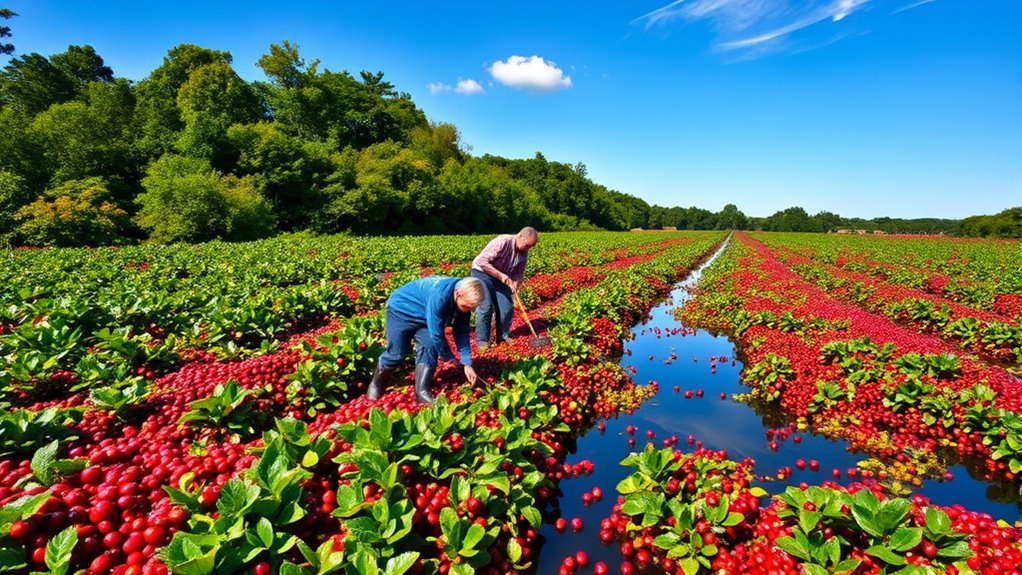

In New Jersey, cranberry bogs are carefully managed wetlands where water control is essential for healthy growth and efficient harvests. Growers use precise flooding and draining techniques to protect plants, while specialized equipment gently shakes berries loose for collection. The process also involves pest control and soil preparation, ensuring high-quality berries. As you explore further, you’ll discover how these practices combine tradition and innovation, making Jersey’s cranberry industry truly remarkable.
Key Takeaways
- Jersey cranberry bogs are carefully managed wetlands that produce large harvests through precise water control.
- Water levels are manipulated by flooding and draining to protect crops and facilitate harvesting.
- Harvesting involves specialized machinery that gently shakes berries loose for efficient collection.
- Continuous monitoring ensures optimal plant health, pest control, and soil readiness throughout the season.
- Modern practices combine water management and equipment to sustain industry productivity and environmental preservation.
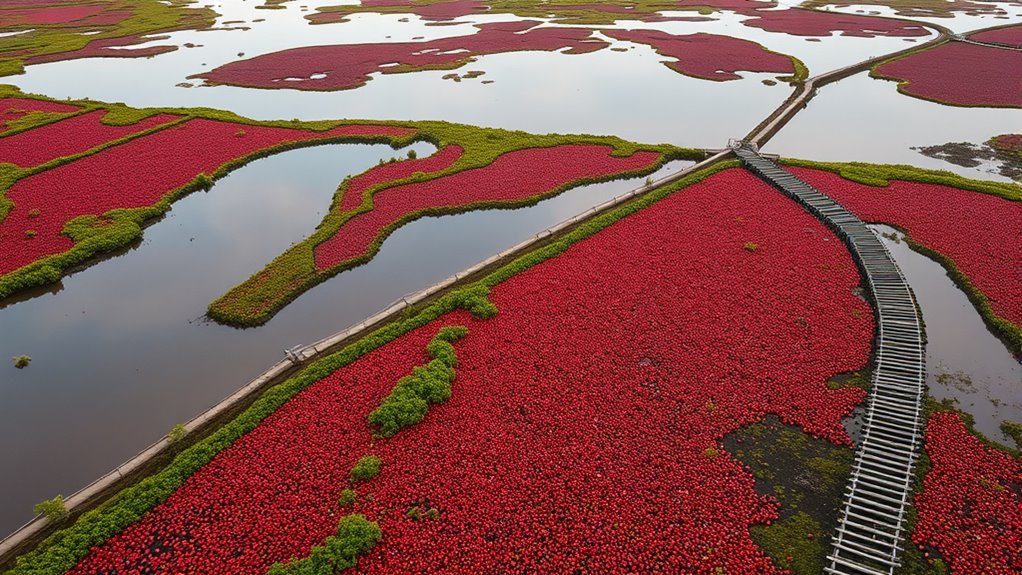
If you visit New Jersey during cranberry harvest season, you’ll see the state’s iconic bogs come alive with activity. This bustling scene is the result of careful bog management and efficient harvesting techniques that guarantee a bountiful crop each year. As you walk through these wetlands, you’ll notice that managing the bogs isn’t just about planting and harvesting; it’s a delicate balance of water control, pest management, and soil health. Growers manipulate water levels precisely, flooding the bogs at specific times to protect the plants from pests and weeds, and then draining them to expose the berries for harvesting. This water management is essential, as it helps maintain the health of the cranberry plants and maximizes yield.
When it comes to harvesting, you’ll see that the techniques are just as carefully planned. Most of the work is done with specialized equipment, like mechanical harvesters that gently shake the berries loose from the vines. These machines are designed to minimize damage to the berries and the plants, ensuring that quality isn’t compromised. Once the berries are loosened, they are collected in water-filled channels called “flumes” or “ditches,” where they float to the surface. This method, called wet harvesting, is common because it’s fast and efficient, allowing large quantities of berries to be gathered quickly. For those berries that aren’t suitable for wet harvesting, growers also use dry harvesting methods, where berries are plucked manually or with machines that gather them from the surface of the bog.
Cranberry harvesting involves specialized equipment and water channels for quick, gentle collection of berries.
Throughout the season, growers continuously monitor their bogs, adjusting water levels and applying treatments to keep pests and diseases at bay. This constant oversight is part of effective bog management, which helps guarantee the berries develop fully and stay healthy. You’ll also notice that after the harvest, growers often flood the bogs again to facilitate pest control and prepare the soil for the next planting cycle. The combination of attentive bog management and modern harvesting techniques allows New Jersey’s cranberry industry to thrive, producing berries that are enjoyed nationwide.
Seeing these practices firsthand, you’ll understand that cranberry farming isn’t just about planting and picking; it’s about precision, timing, and care. The synergy of bog management and innovative harvesting techniques keeps the process efficient while preserving the natural environment of the wetlands. As a visitor, you’ll gain a new appreciation for the hard work and expertise involved in bringing these bright red berries from bog to table, witnessing firsthand the careful dance of water, machinery, and nature that defines Jersey cranberry harvesting. Proper water control is vital in maintaining the health of the bogs and ensuring a successful harvest season.
Frequently Asked Questions
When Is the Best Time to Visit a Cranberry Bog in New Jersey?
The best visiting times are during the fall, specifically from late September to early November, when the peak harvest season occurs. During this period, you can see the bogs in full swing, with vibrant red cranberries and active harvesting. Visiting then lets you experience the cranberry harvest firsthand, enjoy seasonal events, and capture stunning photos. Don’t miss out on these months if you want the most vibrant and lively cranberry bog experience.
How Do Cranberry Farmers Prevent Pests and Diseases Naturally?
Think of cranberry farmers as guardians of a delicate garden, working in harmony with nature. They prevent pests and diseases through natural methods like integrated pest management and organic farming. You’ll find them using beneficial insects, crop rotation, and organic sprays to keep the bog healthy. This approach not only protects the cranberries but also preserves the environment, ensuring a bountiful harvest without relying on harsh chemicals.
Are There Any Eco-Friendly Practices Used in Jersey Cranberry Harvesting?
Yes, eco-friendly practices are common in cranberry harvesting. You can practice sustainable farming by using natural pest control methods, avoiding synthetic chemicals, and maintaining healthy soil. Many farmers pursue organic certification, which requires environmentally friendly methods and reduces chemical use. These practices help protect the ecosystem, preserve water quality, and support long-term productivity, ensuring that the harvest remains environmentally responsible and beneficial for future generations.
Can Visitors Participate in Cranberry Picking During Harvest Season?
Yes, visitors can participate in cranberry picking during harvest season. You get to experience firsthand how the cranberries are harvested by joining in the cranberry picking process. This hands-on activity allows you to enjoy the outdoors and learn about the crop firsthand. Many farms welcome visitor participation, making your visit more memorable and educational. Just check with the farm beforehand for specific dates and any guidelines to guarantee a smooth experience.
What Are the Main Challenges Faced by Jersey Cranberry Growers Today?
You face several challenges as a Jersey cranberry grower today, primarily climate change and water management. Rising temperatures and unpredictable weather disrupt growing cycles, while droughts and excess rainfall complicate water control. You must adapt irrigation practices, manage water resources carefully, and stay resilient amid these environmental shifts. Balancing these issues is vital to maintaining healthy crops and ensuring a sustainable harvest despite the increasing pressures of climate change.
Conclusion
Now that you’ve seen how Jersey’s cranberry bogs thrive through careful harvests, remember that these wetlands have been essential for generations. As you walk through the bogs, it’s clear this tradition isn’t just a thing of the past—it’s a living story. Like a trusty steed, these bogs continue to sustain the local economy and culture. So, keep this timeless harvest in mind, and cherish the ongoing story of Jersey’s cranberry legacy.