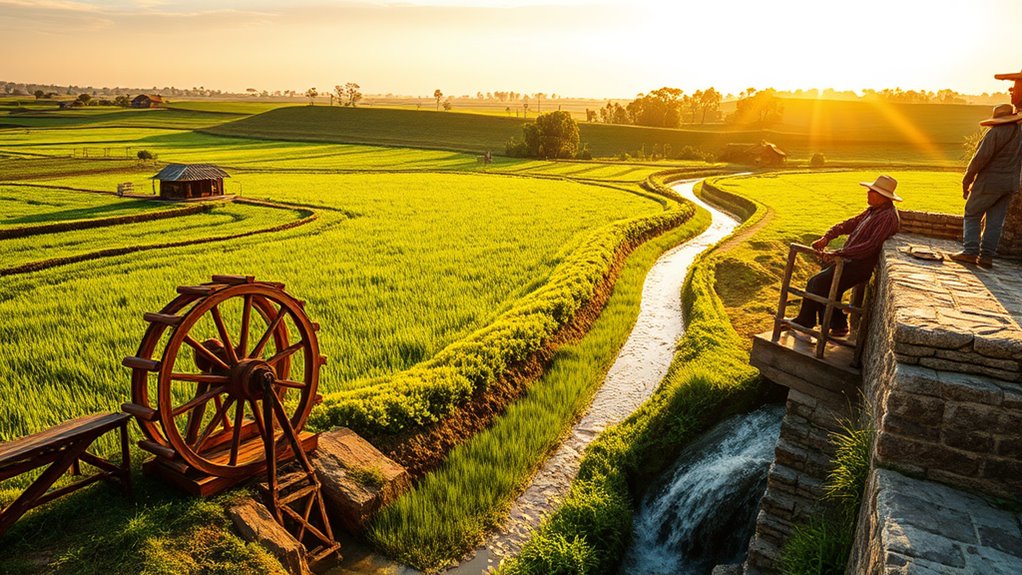

Understanding irrigation shares and water laws helps you see how water rights are allocated and protected, often based on historical agreements, legal frameworks like prior appropriation or riparian rights, and community practices. These rules determine who can use shared water sources and guarantee fairness during shortages. Managing infrastructure and resolving disputes depend on knowledge of these laws. Keep exploring to discover stories and tales that reveal how water rights shape communities and resolve conflicts.
Key Takeaways
- Irrigation shares are legal allocations of water rights tied to land or historical use, critical during shortages.
- Water law systems like prior appropriation and riparian rights shape how shares are assigned and enforced.
- Historical agreements influence current irrigation shares, often leading to complex legal and community dynamics.
- Effective management of water delivery involves legal compliance and infrastructure maintenance to honor water rights.
- Understanding water law helps resolve disputes over shares, prevent conflicts, and ensure fair water distribution among users.

Water rights and irrigation shares often lead to complex legal stories that shape how communities manage their most essential resource. When you’re involved in canal management, understanding how water rights are allocated becomes critical. These rights determine who can use water from a shared source, like a river or reservoir, and under what conditions. Often, the history behind these rights is rooted in early agreements or legal decisions that still influence current practices. If you’re overseeing a canal system, knowing who holds the legal water rights helps you prioritize allocations during droughts or shortages, ensuring fair distribution and avoiding disputes.
Managing a canal with multiple water rights holders can be tricky. You’ll need to carefully coordinate deliveries, monitor usage, and sometimes resolve conflicts that arise when demands exceed supply. Legal frameworks like prior appropriation or riparian rights guide these decisions, but each community’s history might add layers of complexity. In some cases, water rights are tied to irrigation shares, which specify a certain volume of water allocated to individual farmers or landowners. These shares are often based on historical usage, land size, or agreements made decades ago, and they serve as a legal basis for water distribution. When irrigation shares are involved, you must ensure that the canal management aligns with these rights, especially during times of scarcity.
You’ll also play a crucial role in maintaining the infrastructure that supports water delivery. Proper canal management involves scheduling flow rates, repairing channels, and implementing water conservation measures. Your decisions directly impact the ability of farmers to irrigate their crops, making your role vital in upholding legal obligations and community trust. When disputes occur over water rights or irrigation shares, understanding the legal history can help you mediate effectively. Sometimes, conflicts stem from outdated agreements or misinterpretations of rights, so having a clear grasp of the relevant laws can prevent escalation. Additionally, familiarity with water laws and regulations is essential for ensuring compliance and effective management.
Ultimately, your responsibility is to balance legal compliance with practical management. You need to ensure that water is allocated efficiently, rights are respected, and the canal system functions smoothly. Because water rights laws can be complex and vary by region, staying informed about legal updates and historical agreements is essential. Your proactive management not only preserves the resource but also helps maintain harmony among water users, ensuring that everyone’s irrigation needs are met fairly and legally.

RESTMO Water Flow Meter with Brass Inlet Metal Thread, Measure Gallon/Liter Consumption and Flow Rate for Outdoor Garden Hose Watering, RV Water Tank Filling, Lawn Sprinkler and Nozzle Sprayer
Pure Brass Inlet & Metal Thread: Durable heavy-duty brass construction ensures exceptional durability and effortless installation or removal.
As an affiliate, we earn on qualifying purchases.
As an affiliate, we earn on qualifying purchases.
Frequently Asked Questions
How Are Irrigation Shares Valued During Disputes?
During disputes, you determine the value of irrigation shares through water rights valuation, considering factors like water availability, historic use, and market demand. You must also verify the share transfer legality to guarantee the transfer complies with laws and agreements. By evaluating these elements, you establish a fair market value that reflects current conditions, helping resolve disagreements and facilitate proper share valuation during disputes.
Can Irrigation Shares Be Transferred Privately or Only Through Legal Channels?
You can transfer irrigation shares privately or through legal channels; in fact, about 60% of such transfers happen privately, offering flexibility. When you opt for a private transfer, you avoid formal procedures, but legal channels provide clear documentation and protection. It’s essential to understand local water laws, as some areas restrict private transfers to prevent disputes. Always make sure proper paperwork regardless of your choice to safeguard your rights.
What Legal Precedents Influence Current Water Rights Disputes?
You should know that historical case studies substantially influence current water rights disputes, shaping legal interpretations and rulings. Regulatory frameworks, like the prior appropriation doctrine and riparian rights, set the foundation for resolving conflicts. These precedents help you understand how courts prioritize water allocations, especially in complex disputes. By examining past decisions, you can better grasp how legal principles evolve and guide fair resolution of water rights issues today.
How Do Water Law Differences Vary Across States or Regions?
You’ll find that water law differences vary across states or regions due to historical water laws and regional water conflicts. Some states follow riparian rights, where landowners have access to water adjoining their property, while others adopt prior appropriation, prioritizing first-come, first-served rights. These legal frameworks influence how disputes are resolved and create unique regional water management challenges based on historical policies and local conflicts.
Are There Specific Regulations for Leasing or Selling Water Rights?
Yes, there are specific regulations for water rights transfer in most states. You need to follow state laws that govern legal water markets, including obtaining approval from relevant authorities before leasing or selling water rights. These regulations guarantee that water rights transfer is legal, sustainable, and properly documented. Always check your state’s rules, as procedures and restrictions can vary, and failure to comply can lead to legal issues or invalid transfers.

Clinere Ear Cleaners, Gentle Canal Cleaning and Ear Wax Removal Tool, Itch Relief, Exfoliates, 36 Count
AFFORDABLE EAR CLEANING: Clinere Ear Cleaners provide safe and effective earwax removal products available for earwax removal with…
As an affiliate, we earn on qualifying purchases.
As an affiliate, we earn on qualifying purchases.
Conclusion
As you reflect on these water law tales, it’s funny how your own experience with irrigation shares echoes the unpredictable twists of fate. Sometimes, a small decision can lead to unexpected consequences, just as a single legal case can redefine water rights. In this tangled web, you realize that water’s true value isn’t just in its flow but in the stories it carries—stories that remind us how closely fate and law intertwine in every drop.

Rain Bird DRIPKITBAG Drip Irrigation Repair and Expansion Kit
Convenient and portable storage kit contains 102 professional grade universal Drip irrigation parts
As an affiliate, we earn on qualifying purchases.
As an affiliate, we earn on qualifying purchases.
Colorado Doctrine: Water Rights, Corporations, and Distributive Justice on the American Frontier (Yale Law Library Series in Legal History and Reference)
Used Book in Good Condition
As an affiliate, we earn on qualifying purchases.
As an affiliate, we earn on qualifying purchases.