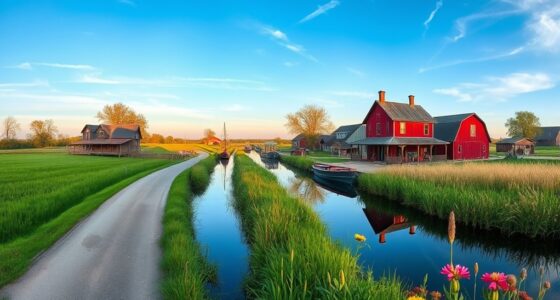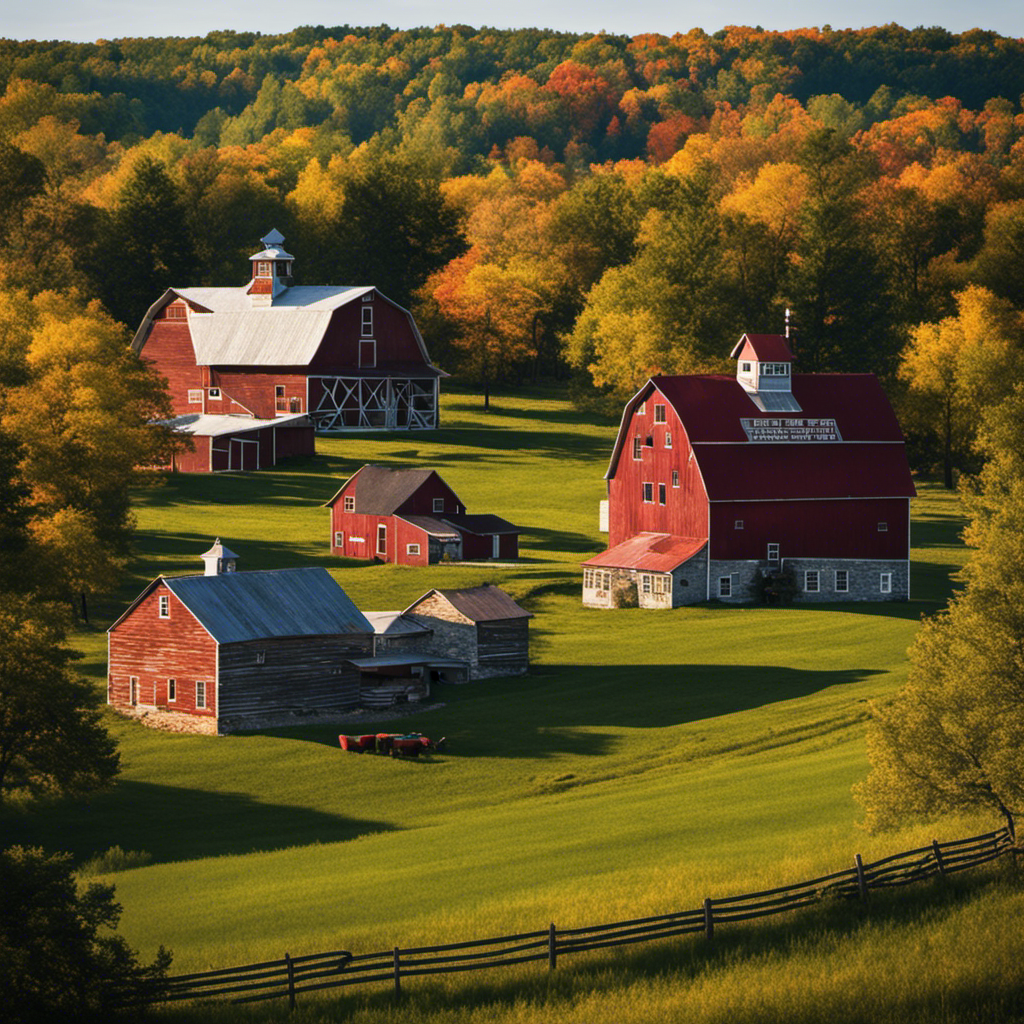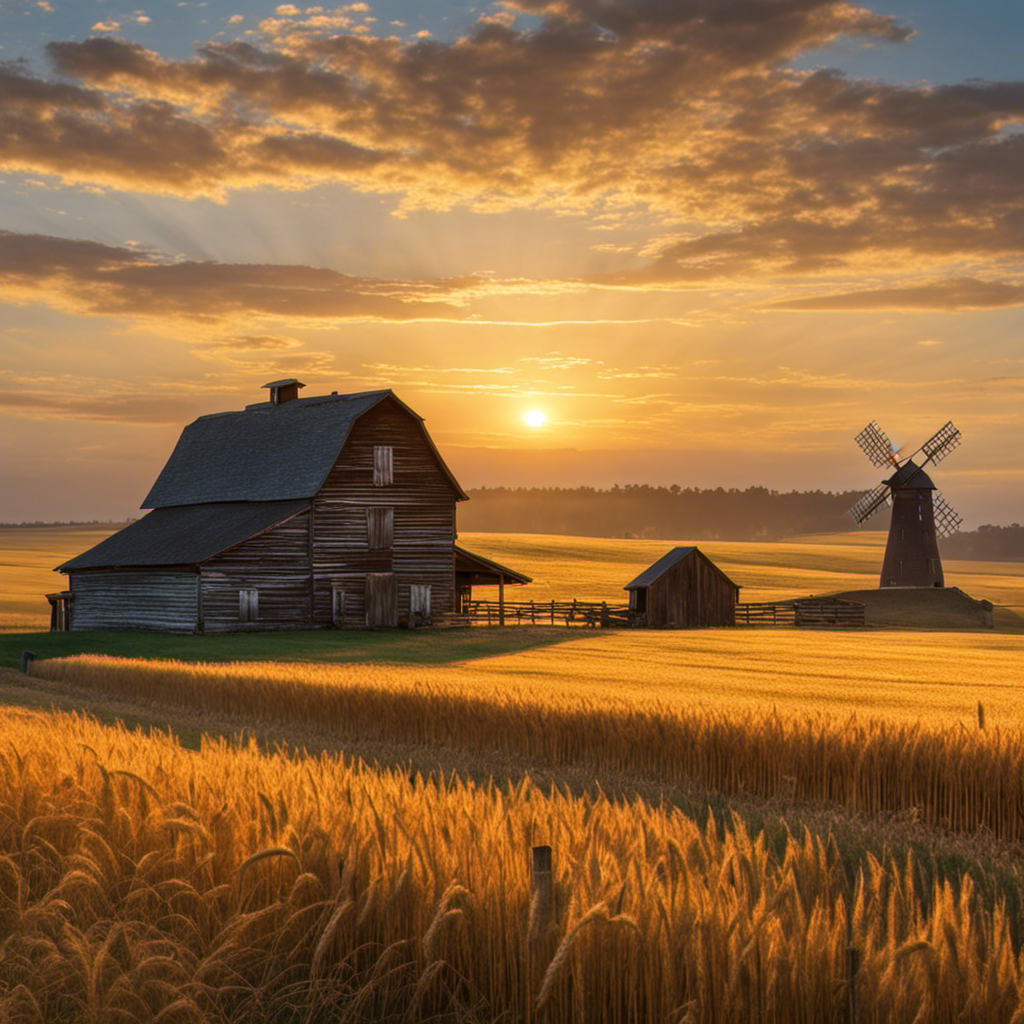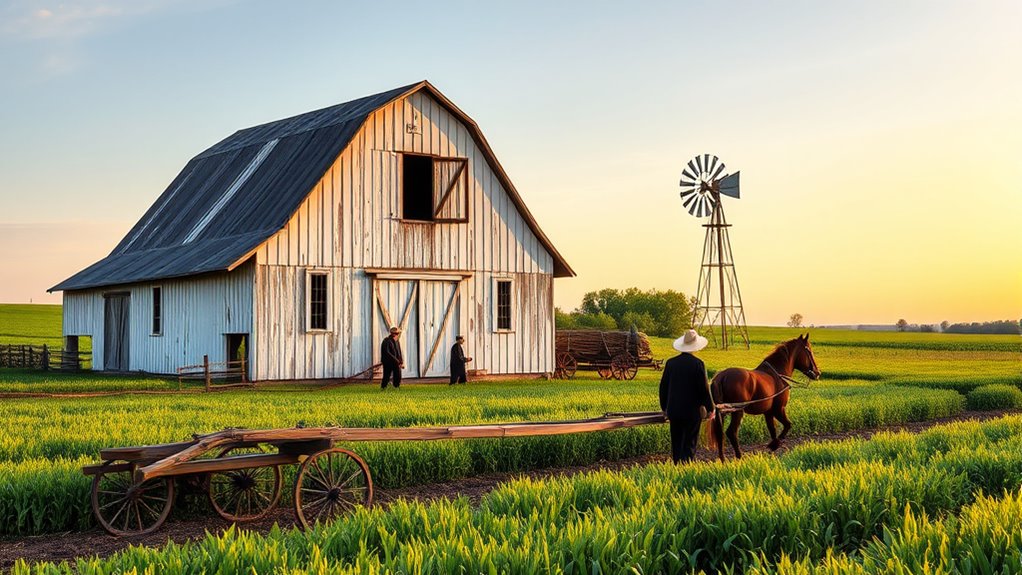

In Indiana Amish communities, farm traditions center on simplicity, humility, and sustainability. You’ll see horse-drawn carriages, traditional tools, and communal barn-raising events that highlight cooperation and faith. Farms are maintained with hand planting, harvesting, and livestock care, reflecting a deep respect for the environment. These customs uphold their heritage while fostering strong community bonds. If you want to explore more about their enduring practices and values, you’ll find plenty of inspiring details ahead.
Key Takeaways
- Amish communities in Indiana maintain traditional transportation methods like horse-drawn carriages, emphasizing humility and environmental harmony.
- Barn raising events showcase community cooperation, faith, and shared effort across generations.
- Farming practices rely on handcrafted tools, horses, and manual labor, reflecting sustainable, land-conscious methods.
- Cultural values emphasize humility, faith, and the passing down of skills through generations to preserve heritage.
- Promotion of Amish craftsmanship and products supports their self-sufficient lifestyle and cultural preservation efforts.
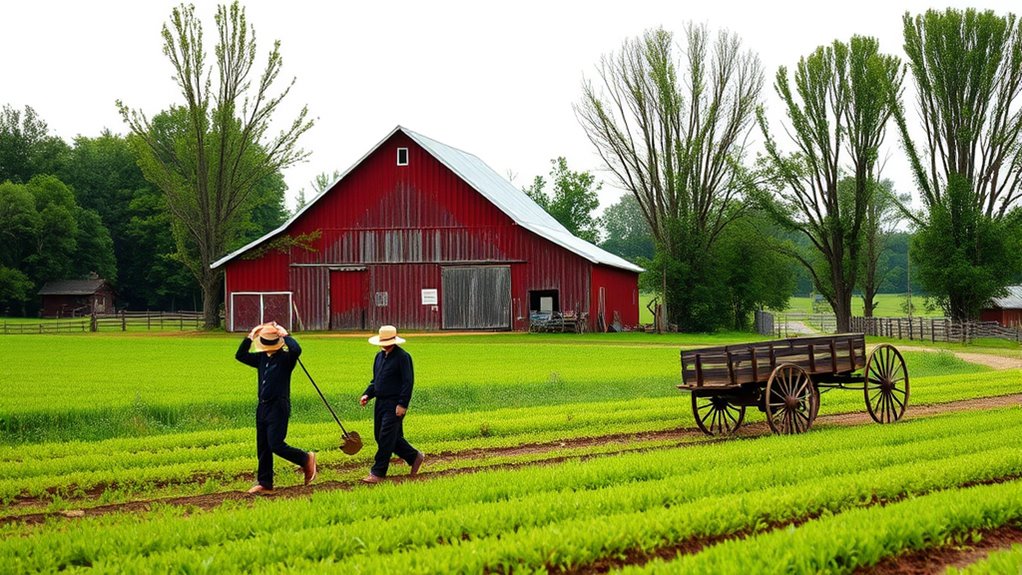
Nestled in Indiana’s rural landscapes, Amish farms preserve centuries-old traditions that shape daily life. These communities maintain a simple, purposeful way of living rooted in faith, family, and hard work. As you travel through Indiana’s countryside, you’ll notice horse-drawn carriages gliding along quiet roads, a common sight that reflects the Amish commitment to non-motorized transportation. These carriages are more than just practical; they symbolize a lifestyle centered on humility and environmental harmony. Watching them pass by, you can sense the community’s dedication to tradition and their desire to live separate from modern technology.
Amish horse-drawn carriages reflect humility, tradition, and harmony with the environment in Indiana’s countryside.
One of the most striking aspects of Amish farm life is the communal effort seen during barn raising events. When a new barn is needed, neighbors gather together in a spirit of cooperation, working tirelessly over several days to build the structure from the ground up. These events are more than just construction projects—they’re celebrations of unity, faith, and mutual support. As you observe a barn raising, you’ll see families, young and old, contributing their skills and labor, all driven by shared values. The atmosphere is lively, filled with singing, laughter, and a sense of accomplishment that reminds you of how tight-knit and resilient this community truly is.
Daily routines on Amish farms revolve around traditional practices handed down through generations. You’ll see farmers using handcrafted tools and working with livestock, chores that require skill and patience. Crops are planted and harvested by hand or with simple machinery, emphasizing sustainability and self-sufficiency. The community’s reliance on horse-drawn equipment isn’t just nostalgic; it’s a practical choice that aligns with their beliefs about simplicity and stewardship of the land. These methods also foster a close connection to the environment, one that modern machinery can’t replicate. Additionally, affiliate marketing plays a role in supporting Amish businesses by promoting their handcrafted products to a wider audience.
Throughout your visit, you’ll notice how deeply rooted these traditions are in faith and community. Amish families often gather for Sunday church services, and milestones like barn raisings reinforce their bonds. These events aren’t just about building structures—they’re about reaffirming their shared values and passing down skills that keep their way of life thriving. As you witness these enduring customs, it becomes clear that Indiana Amish families prioritize harmony, humility, and a deep respect for their heritage, ensuring that their unique way of life continues for generations to come.
Frequently Asked Questions
How Do Amish Children Learn About Modern Technology?
You learn that Amish children usually don’t get formal lessons about modern technology due to Amish education methods and strict Amish technology restrictions. Instead, they observe their families and community members, picking up skills informally. Through daily life and hands-on experience, they understand technology’s role without relying on school-based instruction. This approach helps them respect Amish values while still gaining practical knowledge, preparing them for their future roles in the community.
What Are Typical Amish Festival Foods?
Imagine a table bursting with colors and flavors—during festivals, you’ll find Amish dessert specialties like apple dumplings, shoofly pie, and fresh fruit cobblers. These traditional festival recipes are crafted with love and passed down through generations, filling the air with sweet aroma and warm memories. You taste history in every bite, celebrating community and tradition, where simple ingredients come together to create a delicious symphony that warms your soul.
How Do Amish Families Celebrate Weddings?
When Amish families celebrate weddings, you’ll see they follow traditional Amish wedding customs, emphasizing simplicity and community. The bride wears traditional wedding attire, often featuring modest dresses and bonnets, while the groom wears plain suits. The celebration includes a church service, followed by a communal feast. Family and friends gather to sing hymns, share blessings, and enjoy homemade foods, creating a heartfelt, humble atmosphere that honors their faith and traditions.
What Crafts Are Most Popular Among Amish Artisans?
Imagine walking through a vibrant market where Amish artisans showcase their craft. You’ll find Amish quilt making, with intricate patterns that tell stories in fabric, and wooden toy craftsmanship, creating timeless treasures from simple wood. These crafts are the heartbeat of Amish artistry, blending tradition with skill. You’re drawn to their craftsmanship, feeling the dedication woven into each quilt and carved wooden toy, embodying generations of skill and community.
How Do Amish Farms Adapt to Changing Environmental Conditions?
You notice that Amish farms adapt to changing environmental conditions through sustainable farming practices, like crop rotation and soil conservation. They choose resilient crops suited for local climates and rely on natural methods rather than chemicals. By working closely with nature, you help build environmental resilience, ensuring the farm stays productive despite weather shifts. This approach maintains tradition while protecting the land for future generations, demonstrating a deep commitment to sustainable farming.
Conclusion
You’ve seen how Indiana Amish farms preserve centuries-old traditions, from handcrafted crafts to sustainable farming methods. Fascinatingly, over 30% of Indiana Amish households generate income through agriculture, highlighting their deep-rooted connection to the land. By embracing these timeless practices, they maintain a way of life that values community, faith, and self-sufficiency. As you reflect on their dedication, consider how these enduring traditions serve as a powerful reminder of the importance of preserving cultural heritage in today’s fast-paced world.