
Illinois prairie cemeteries and family plots are important historic sites that showcase local traditions, community stories, and funeral customs. They serve as lasting memorials and provide insights into Illinois’s cultural heritage. Many involve community efforts to preserve weathered stones and clear overgrown paths, ensuring these sites remain meaningful. Exploring these cemeteries reveals the evolving ways families honor loved ones and maintain traditions—discover more about their rich history and significance as you continue your journey.
Key Takeaways
- Illinois prairie cemeteries and family plots reflect local history, community traditions, and serve as memorials for generations.
- Preservation efforts focus on restoring stones, maintaining grounds, and protecting these sites from neglect or vandalism.
- Cemeteries offer educational insights into evolving funeral customs and cultural values over centuries.
- Family plots exemplify personal expression and community identity through unique memorial practices.
- These sites support heritage preservation, helping future generations connect with their roots and community stories.

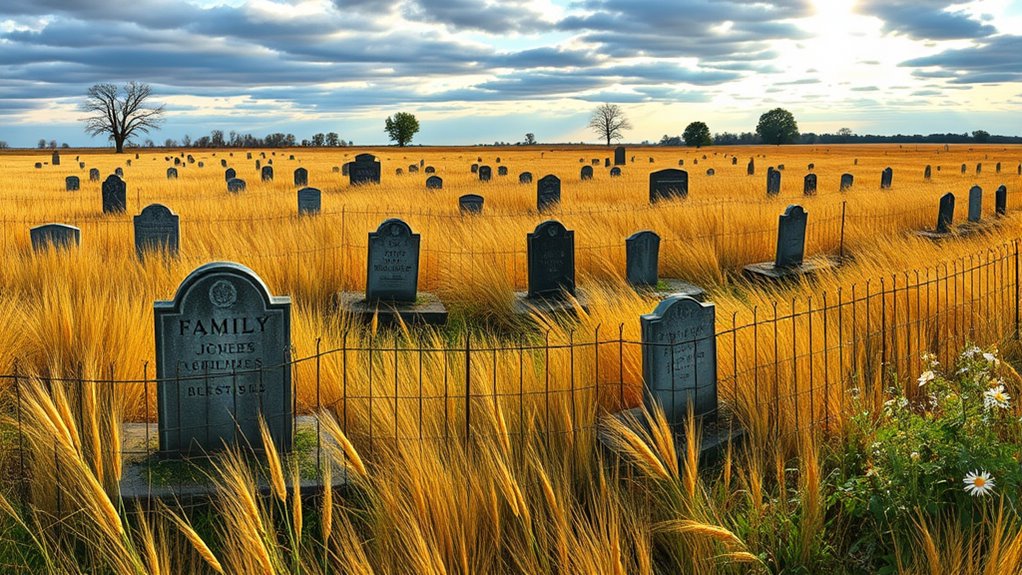
Illinois prairie cemeteries and family plots offer a quiet reflection of the state’s rich history and local traditions. As you explore these sites, you’ll notice how deeply intertwined they are with the community’s funeral traditions, serving as both memorials and historical records. These cemeteries aren’t just resting places; they are living stories of the families and communities that shaped Illinois. Many of these plots are marked by simple stones that have weathered decades, telling silent stories of resilience, faith, and remembrance. Preserving these sites becomes more than a matter of maintaining headstones; it’s about safeguarding the legacy of the people who built Illinois’s towns and farms.
Illinois prairie cemeteries tell silent stories of resilience, faith, and community legacy across generations.
Cemetery preservation plays a essential role in maintaining the integrity and accessibility of these historic sites. You might see community groups, historical societies, or descendants working diligently to restore broken stones, clear overgrown paths, and protect these areas from neglect or vandalism. Their efforts ensure that future generations can continue to connect with their roots and honor their ancestors. Preservation isn’t just about physical upkeep; it’s about keeping the stories alive through documentation, local engagement, and respectful stewardship. When you visit, you’ll notice that many cemeteries have become focal points for cultural and historical education, offering insights into the funeral traditions that have evolved over centuries.
Understanding the funeral traditions reflected in Illinois prairie cemeteries helps you appreciate the cultural diversity and values embedded in local practices. For instance, some family plots display elaborate headstones and offerings, revealing a community’s desire to honor loved ones with dignity and personal expression. Others showcase simpler arrangements, emphasizing humility and connection to the land. Many of these traditions have been passed down through generations, maintaining continuity amid change. Recognizing these customs helps you see how community identity is woven into the very fabric of the cemeteries, making their preservation essential not only for historical reasons but for ongoing cultural significance.
Ultimately, Illinois prairie cemeteries and family plots serve as enduring monuments to local history and traditions. Your role in their preservation helps ensure these quiet, sacred spaces continue to tell stories of the past while providing a place for reflection and remembrance today. Whether through volunteering, supporting preservation efforts, or simply exploring with respect, you contribute to safeguarding these hallowed grounds for future generations. In doing so, you help keep alive the funeral customs, stories, and community bonds that define Illinois’s unique heritage.
Frequently Asked Questions
How Are Family Plots Designated Within Illinois Prairie Cemeteries?
You can find family plots in Illinois Prairie Cemeteries by checking designated sections marked for family groups. During the plot reservation procedures, you select your family plot and can customize markers to honor your loved ones. Marker customization allows you to add personal touches, while clear reservation procedures assure your family plot is secured. Be sure to review cemetery maps and speak with staff to confirm plot locations and customization options.
What Are the Legal Requirements for Establishing a Family Plot?
You need to secure burial rights and plot ownership to establish a family plot legally. Typically, this involves submitting a formal application to the cemetery, paying applicable fees, and possibly obtaining approval from local authorities. An interesting fact is that most cemeteries require proof of relationship or family connection to qualify for a family plot, ensuring that the plot remains a private family space.
Can Family Plots Be Transferred or Sold to Other Families?
Yes, family plots can be transferred or sold to other families, but you must follow the proper transfer procedures. You retain plot ownership until you complete the necessary paperwork, which typically involves notifying the cemetery and obtaining approval. Make sure to review any restrictions or requirements in the cemetery’s policies, and keep clear documentation of the transfer to ensure the ownership change is legally valid and properly recorded.
Are There Specific Maintenance Rules for Prairie Cemetery Family Plots?
Yes, there are specific maintenance rules for prairie cemetery family plots. You’re responsible for landscape preservation, which includes regular lawn care and weed control, and monument restoration if needed. Many cemeteries require you to keep the plot tidy and free of debris, ensuring the site remains respectful and well-maintained. Always check with the cemetery’s regulations to confirm any restrictions or guidelines on maintenance activities to preserve the integrity of the family plot.
How Do Historical Family Plots Influence Local Genealogy Research?
Imagine uncovering a hidden map of your family story—these historical family plots serve as keys to your past. They influence local genealogy research by revealing burial customs and familial connections, acting as silent witnesses to generations gone by. Each marker and monument weaves a thread through history, helping you trace lineage, understand heritage, and connect with ancestors more deeply, turning silent stones into vibrant stories of your genealogical significance.
Conclusion
So, next time you’re wandering through Illinois prairie cemeteries or family plots, remember: it’s not just about the dead resting peacefully. It’s about preserving history, family drama, and maybe, just maybe, a good excuse to avoid yard work. Who knew that a patch of wildflowers and weathered stones could offer such entertainment? So go ahead, tiptoe through the tombstones—just don’t forget your sense of humor; these prairie secrets have a way of sticking around.