To create winter larders with ice blocks, you harvest natural ice from frozen lakes at least 12 inches deep and cut it into large blocks using an axe or saw. Store the ice in insulated, well-ventilated structures layered with straw or sawdust to slow melting. By keeping food and perishables in ice-lined chambers and managing the melting process, you can preserve fresh food far into the winter months. If you continue exploring, you’ll discover more about effective techniques and storage tips.
Key Takeaways
- Natural ice is harvested from frozen lakes and stored in insulated icehouses for winter preservation.
- Ice blocks are layered with insulating materials like straw or sawdust to slow melting.
- Proper storage locations are insulated, ventilated, and shielded from sunlight to maintain low temperatures.
- Ice storage extends food shelf life, preserving meats, dairy, fruits, and vegetables during winter.
- Regular replacement and melting management ensure continuous cooling and food safety throughout the season.
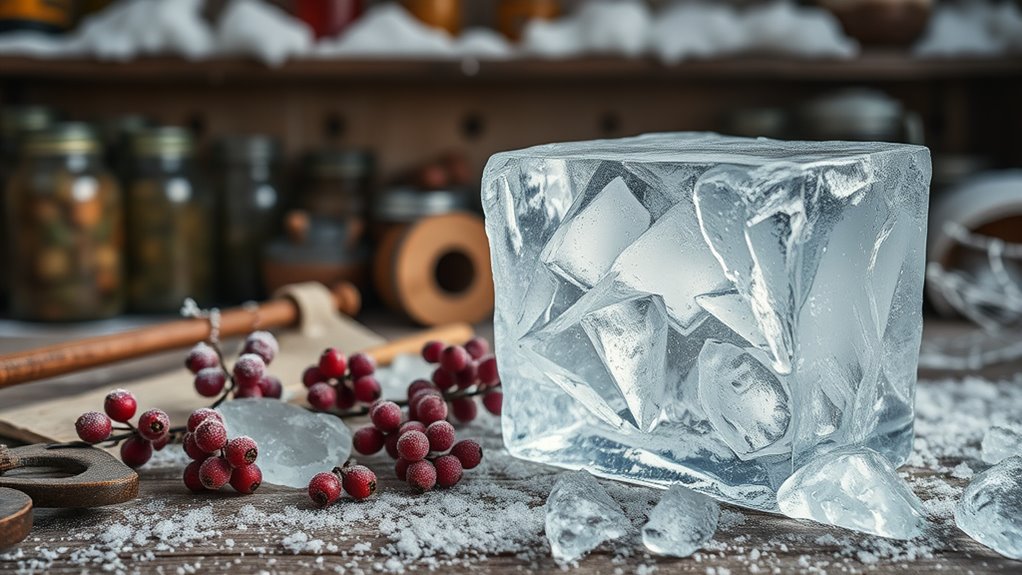
When winter arrives, storing food becomes a vital part of survival and tradition. You quickly realize that preserving perishable items requires careful planning and the right techniques. One of the oldest methods is ice harvesting, where you gather natural ice from frozen lakes or ponds. You need to identify the thickest parts of the ice, usually at least 12 inches deep, to guarantee safety. Using an axe or saw, you cut large blocks, then haul them out carefully to prevent cracks or breakage. The harvested ice is then transported to your storage area, often an icehouse or a cellar, where it can be kept for months.
Once you have your ice, the next step involves storage techniques that maximize its longevity. You build or use a dedicated icehouse—an insulated structure often dug into the ground or built from thick walls and a sloped roof to shed snow. Inside, you layer the ice blocks with straw, sawdust, or other insulating materials to slow down melting. You also make sure to keep the ice away from direct sunlight and maintain good ventilation, which helps prevent condensation and mold. By stacking the ice carefully, you create an organized winter larder that keeps your food cold and fresh.
Build or use an insulated icehouse, layer with straw or sawdust, and keep away from sunlight for optimal preservation.
Practicing proper storage techniques is essential for preserving food quality over the cold months. You can store fruits, vegetables, dairy products, and even meats in these ice-lined chambers. For meats, you pack them in salt or wrap them tightly to prevent spoilage, then nestle them among the ice blocks. Fruits and vegetables are stored in shallow containers, often layered with more insulating material to keep them cool. As the ice slowly melts, it maintains a low temperature, acting like a natural refrigerator. Monitoring the ice’s condition and managing the melting process helps extend the storage period significantly. Checking the ice regularly allows you to remove any melting water and replace it with fresh ice blocks if needed, prolonging the storage life.
Your success in winter provisioning hinges on understanding and applying effective ice harvesting and storage techniques. You learn to read the ice’s thickness and quality, harvest it at the right time, and store it properly to guarantee your larder remains well-stocked throughout the cold season. These methods, passed down through generations, keep your supplies safe and your family fed when fresh food is scarce. Whether you’re preserving meats or keeping dairy cold, knowing how to work with nature’s frozen bounty makes all the difference in surviving winter comfortably. With patience and careful attention, your winter larder becomes a reliable source of sustenance, built on the timeless art of ice harvesting and storage.

Robin II EPS Foam Ice Chest (Outside Dimensions: 24.5”x14.5”x15.75”) with Shipping Box – 1 Pack. Protective, Thermal, Insulated, Biodegradable, Recyclable, Shipping/Storage, White, 208-001/002
24.5”x14.5”x15.75” (inside dimensions: 21.37”x11.5”x12.75”)
As an affiliate, we earn on qualifying purchases.
As an affiliate, we earn on qualifying purchases.
Frequently Asked Questions
How Long Can Ice Blocks Be Stored Before Melting?
You can typically store ice blocks for about 24 to 48 hours before they start melting considerably, depending on your storage conditions. Keep them in a well-insulated cooler or freezer to slow down ice melting and extend storage duration. If you want them to last longer, make sure the temperature stays below freezing and minimize opening the container frequently. Proper insulation is key to maintaining their solidity longer.
What Are the Best Materials for Making Winter Larders?
You should use straw, wood, or hay as the best materials for your winter larder. notably, straw provides excellent insulation, maintaining low temperatures for up to several months. In winter larder design, these natural materials trap air and slow heat transfer, keeping your food cool. For ice block insulation, consider adding straw or sawdust to extend storage time. These choices help preserve your supplies efficiently during colder months.
Can Ice Blocks Preserve Perishable Foods Effectively?
Yes, ice blocks can preserve perishable foods effectively when used with proper ice block insulation. They serve as a refrigeration alternative by maintaining cool temperatures without electricity, especially in outdoor or off-grid settings. You should guarantee your ice blocks are well-insulated to slow melting, and position them around your food to maximize cooling. This method is simple, eco-friendly, and reliable for short-term food preservation during power outages or in remote areas.
Are There Eco-Friendly Methods for Freezing in Winter?
Yes, there are eco-friendly methods for freezing in winter. You can use natural insulation, like straw or hay, to protect your stored items from the cold, reducing energy use. Additionally, renewable cooling techniques, such as placing your food in a shaded, well-ventilated area or utilizing snow and ice, help keep perishables chilled without electricity. These methods are sustainable, cost-effective, and minimize environmental impact.
How Do Temperature Fluctuations Affect Ice Block Integrity?
Think of ice blocks as fragile glass, easily shattered by temperature swings. Fluctuations cause thermal expansion and contraction, weakening the structure over time. Condensation effects can form water inside cracks, accelerating deterioration. You might notice cracks or warping, which compromise your ice’s integrity. To keep your ice blocks intact, maintain steady temperatures and minimize exposure to warm air—think of it as giving your ice a peaceful, stable home.

Igloo Large Maxcold 2 Pack Ice Block, Reusable Ice Packs for Coolers, Freezer Pack, Cold Packs for Coolers, Long Lasting Ice Blocks
Non-toxic Ultratherm gel delivers extended cooling performance
As an affiliate, we earn on qualifying purchases.
As an affiliate, we earn on qualifying purchases.
Conclusion
So, next time you see those ice blocks or winter larders, remember they’re more than just storage—they’re a glimpse into how people prepared for colder days. By understanding these methods, you appreciate the ingenuity behind surviving winter’s chill. Isn’t it fascinating how our ancestors used simple tools and clever tricks to stay warm and fed? Embracing these traditions helps us connect with the past and appreciate the resilience it took to endure winter’s toughest months.

Cole-Parmer 372020 ThermoSafe 390 Dry Ice Storage Insulated Field Carrier, polyethylene, 1 cu ft
SUPERIOR INSULATION: Features efficient 2-1/4" thick polyurethane foam core for optimal temperature control
As an affiliate, we earn on qualifying purchases.
As an affiliate, we earn on qualifying purchases.

Chef Craft – Select Wood Handle Ice Pick, Plated Steel Ice Breaking Tool with Wooden Handle, 10 inches in Length 6 inch Blade, Great for Breaking Ice in Freezer
Comfortable Grip and Insulation: The wooden handle of this ice pick is designed to provide superior insulation from…
As an affiliate, we earn on qualifying purchases.
As an affiliate, we earn on qualifying purchases.