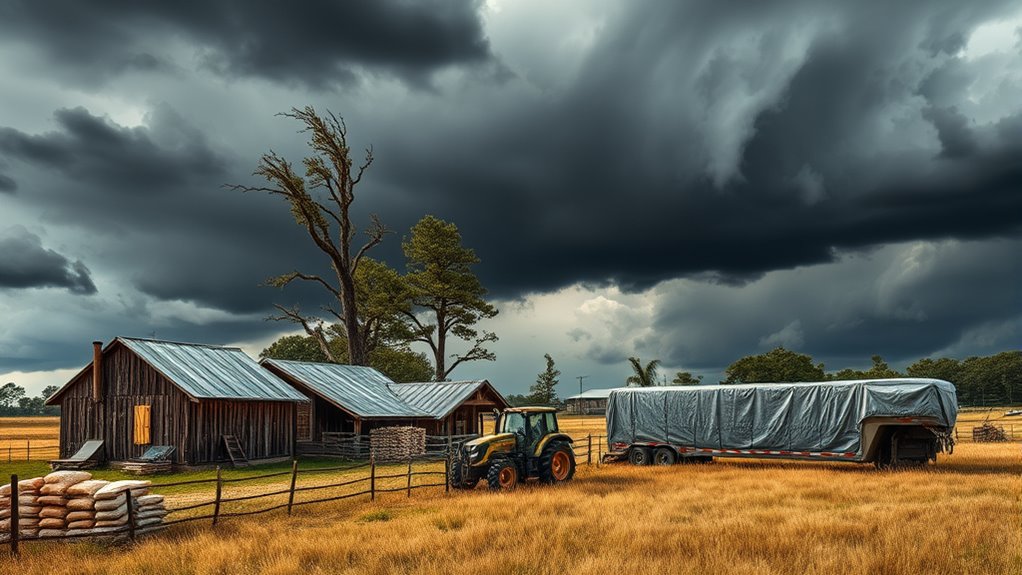
To prepare your rural homestead for a hurricane, find or build a sturdy storm shelter, stocked with emergency supplies like food, water, and first aid. Reinforce windows, secure outdoor items, and trim trees to prevent damage. Stay informed through weather alerts, plan communication with family and neighbors, and keep important documents protected. Ensuring backup power and proper drainage can also make a big difference. If you continue exploring, you’ll discover more vital steps for total readiness.
Key Takeaways
- Identify or build a sturdy storm shelter accessible from your homestead, ensuring it’s resistant to high winds and flooding.
- Stockpile sufficient water, food, medications, and emergency supplies in waterproof containers for at least three days.
- Reinforce windows with storm shutters or plywood and secure outdoor items to prevent damage and projectiles.
- Establish a clear communication plan with neighbors and keep important documents protected and accessible.
- Monitor weather updates regularly and have backup power options ready to maintain critical systems during outages.

When a hurricane threatens rural homesteads, preparation becomes crucial to guarantee safety and safeguard your property. Unlike urban areas, you might not have immediate access to emergency services or storm shelters, so you need to be proactive. The first step is finding or building a reliable storm shelter. This shelter should be sturdy, resistant to high winds and flooding, and easily accessible from your home. If you already have a basement or storm cellar, ensure it’s reinforced and clear of debris. If not, consider constructing a dedicated storm shelter that can withstand the storm’s force. It’s essential to have a designated safe space where everyone in your household can gather quickly during a hurricane.
Equally important is assembling extensive emergency supplies. Stockpile enough water, non-perishable food, and essentials to last at least three days per person. Include a first-aid kit, medications, batteries, flashlights, and a portable radio to stay informed about weather updates. Don’t forget supplies for pets, if you have them, such as food, water, and any necessary medications. Having these supplies organized and easily accessible ensures you can quickly respond when the storm hits. Check your supplies regularly and replenish items that are nearing expiration or running low.
Preparation also involves securing your property. Trim trees and branches that could fall and cause damage. Reinforce windows with storm shutters or plywood to prevent breakage. Bring inside or secure outdoor furniture, tools, and other loose items that could become dangerous projectiles in high winds. Elevate electrical systems and appliances if flooding is a concern, and ensure your sump pump and drainage systems are functioning properly. Additionally, make a communication plan with family members and neighbors. Share your storm shelter location and emergency contacts. Keep a list of important documents, such as IDs, insurance policies, and medical records, in a waterproof container.
Finally, stay informed about the weather forecast through reliable sources. Sign up for alerts from local authorities or weather apps. Knowing the storm’s progress allows you to evacuate early if necessary or finalize last-minute preparations. It’s also wise to consider reliable backup power options to keep critical devices operational during an outage. By establishing a robust plan that includes a storm shelter, emergency supplies, property securing, and communication strategies, you greatly increase your chances of staying safe and minimizing damage during a hurricane. Being prepared isn’t just about protecting your property; it’s about protecting your loved ones and ensuring everyone stays safe through the storm.
Frequently Asked Questions
How Do I Secure Livestock During a Hurricane?
You should safeguard your livestock by moving them to sturdy shelters designed for storms, like livestock shelters with reinforced fencing barriers. Make certain fences are strong and free of gaps to prevent escapes. Bring smaller animals indoors or into secure enclosures, and provide plenty of fresh water and hay. Keep a close eye on weather updates, and prepare to evacuate if the storm’s severity increases. Your quick actions can keep your livestock safe during a hurricane.
What Are the Best Ways to Protect Well Water Systems?
Worried about well water contamination during a hurricane? You should, but don’t panic. Start with well inspection tips—check for cracks, secure the cover tightly, and ensure proper drainage around the well. To protect your water system, consider installing a waterproof enclosure or elevation if flooding’s likely. Regular maintenance and inspections help prevent contamination, giving you peace of mind that your well remains safe and reliable through any storm.
How Can I Reinforce Old or Rural Structures?
To reinforce old or rural structures, you should focus on structural retrofitting and materials reinforcement. Start by inspecting the building for weak points, then add steel braces or anchors to strengthen walls and foundations. Use durable materials like pressure-treated wood or reinforced concrete for repairs. Regular maintenance, sealing gaps, and upgrading roofing help improve resilience. These steps guarantee your structures withstand storms and other natural challenges effectively.
What Emergency Communication Methods Are Effective in Rural Areas?
You should rely on satellite phones and CB radios for emergency communication in rural areas. Satellite phones work even without cell towers, ensuring you stay connected during a disaster. CB radios are easy to use and don’t depend on infrastructure, making them reliable for local communication. Keep these devices charged and stocked with fresh batteries, so you’re always ready to call for help or coordinate with others when needed.
How Do I Plan for Long-Term Power Outages?
Think of your homestead as a fortress needing backup power. To plan for long-term outages, you should install a solar backup system, ensuring energy independence. Keep an emergency kit stocked with essentials like batteries, flashlights, and a power bank. Regularly test your solar system and emergency supplies. This way, you stay connected and self-reliant, even when the grid goes down, securing your homestead’s resilience during extended outages.
Conclusion
As the storm approaches, remember that your homestead is more than just land—it’s your fortress, your sanctuary. Prepare your supplies as you would gather precious seeds, planting resilience in every corner. Let each step you take be like steady roots growing deeper, anchoring you through the chaos. When the winds roar and clouds gather, hold onto hope, for like the dawn after night, your preparedness sows the promise of safety and renewal beyond the storm’s shadow.