
Hog Killin’ Day is a community event where neighbors come together to butcher and preserve a pig using traditional methods. You’ll see skilled butchering, curing, smoking, and other techniques that have been passed down through generations. It’s more than just food—it’s about honoring craftsmanship, self-sufficiency, and shared cultural heritage. The process creates memorable aromas and strengthens community bonds. To discover how these age-old practices continue to influence rural life today, keep exploring what makes Hog Killin’ Day special.
Key Takeaways
- Hog Killin’ Day was a community event celebrating traditional pig slaughter, butchering, and preservation methods passed down through generations.
- The process involved humane slaughter, careful carcass splitting, and skills in curing, smoking, and salting meat.
- Preservation techniques relied on salt and smoke, creating distinctive aromas and extending meat shelf life without refrigeration.
- The event fostered community bonding through shared labor, storytelling, and traditional craftsmanship in rural towns.
- Hog Killin’ Day served as a cultural legacy, emphasizing self-sufficiency, resilience, and the importance of preserving heritage practices.

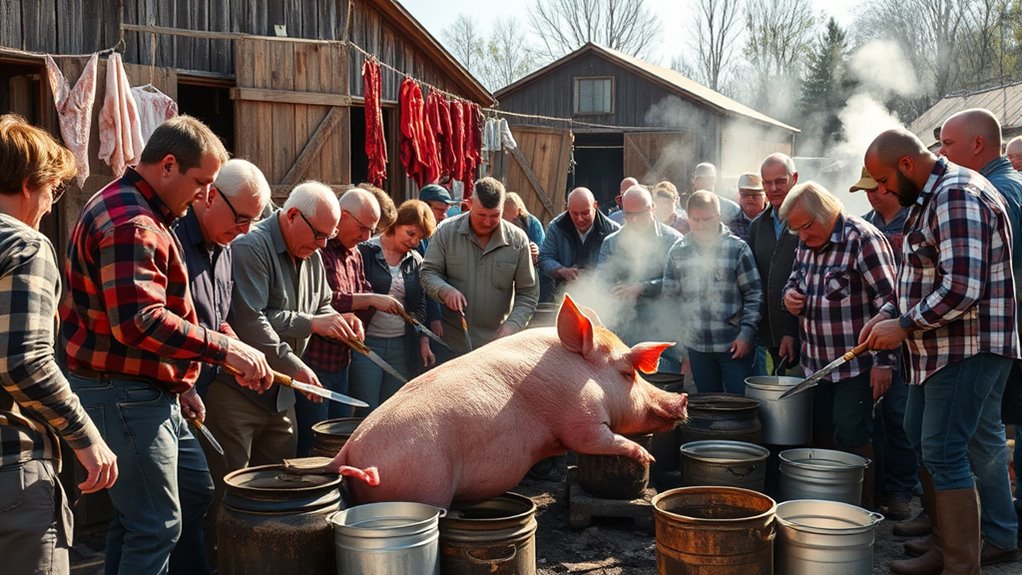
Have you ever wondered what Hog Killin’ Day looked like in small-town America? It was more than just a day to butcher a pig; it was a community event that brought neighbors together, rooted in tradition and shared effort. On this day, folks would gather early in the morning, ready to start the process of turning a live animal into a variety of preserved meats. The old ways of pork preservation played a central role, with everyone relying on traditional methods passed down through generations. These methods weren’t just about practicality—they were about maintaining a way of life that valued self-sufficiency and craftsmanship.
Hog Killin’ Day united neighbors in tradition, craftsmanship, and community effort.
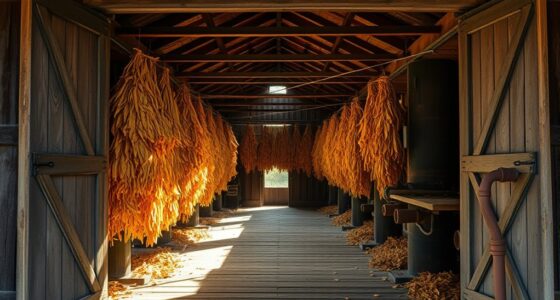
You’d see men and women working side by side, each knowing their role in the process. The slaughter was carried out quickly and humanely, often with a sharp knife and a lot of experience. Once the pig was down, the real work began. The butchering process involved carefully splitting the carcass into different cuts—hams, shoulders, ribs—and preparing them for preservation. Traditional methods like curing, smoking, and salting were employed to keep the pork edible for months to come. These techniques didn’t require modern refrigeration; instead, you relied on salt and smoke to inhibit spoilage and develop flavor. The smell of curing meat, mingled with the smoke from nearby fires, created a distinctive aroma that marked the day’s work.
You’d notice that everyone took pride in their craftsmanship. The homemade sausages, bacon, and ham weren’t just food—they were symbols of skill and community resilience. Preservation wasn’t just about stocking the pantry; it was about maintaining a connection to the land and to each other. Every step, from scalding the hog to hanging the cured meat in the smokehouse, reflected a deep understanding of traditional methods. These processes required patience and attention to detail, ensuring that each product was safe to eat and full of flavor. This traditional knowledge was passed down through generations, keeping alive a cultural heritage rooted in self-sufficiency.
Hog Killin’ Day was also a celebration. As the work wound down, folks would share a meal, swapping stories and enjoying the fruits of their labor. The methods used for pork preservation weren’t just about survival—they were about honoring a legacy. Today, many of these techniques are preserved as part of cultural heritage, reminding us of a time when community effort and traditional methods defined a way of life. Hog Killin’ Day exemplifies how shared labor and age-old practices can strengthen bonds and keep traditions alive.

TRENDY WHIMSY Microporous Paper for Hanging Meat Curing (x5) – Make Your Own Production of Hams – Assembled Kit for the Elaboration of Any Meat Cured in Salt – Raw ham/bondiola/etc – Sausage Maker
CONTAINS: 5 sheets of microporous paper 45x40cm – Paper only, does not contain elastic net (Makes 5 pieces)
As an affiliate, we earn on qualifying purchases.
As an affiliate, we earn on qualifying purchases.
Frequently Asked Questions
How Do Communities Prepare for Hog Killin’ Day?
You prepare for Hog Killin’ Day by gathering tools, organizing the schedule, and coordinating with neighbors, keeping hunting traditions alive. You may help with butchering or cooking, fostering community bonding. Everyone pitches in, sharing stories and skills, which strengthens relationships. You also guarantee safety protocols are in place. This collective effort keeps your traditions strong, turning a practical task into a meaningful event that celebrates community and heritage.
What Safety Measures Are Taken During Butchering?
During butchering, you prioritize safety by using safety equipment like gloves, aprons, and cut-resistant gloves. You guarantee proper meat inspection to identify any health issues and prevent contaminated meat. Always handle knives carefully, keep the work area clean, and follow hygiene protocols. These measures help protect you from injuries and ensure the meat is safe for consumption. Staying vigilant and prepared keeps everyone safe throughout the process.
How Is the Meat Preserved After Slaughter?
After slaughter, you preserve the meat through meat curing and refrigeration techniques. You might rub the meat with salt or a curing mixture to prevent bacteria growth and enhance flavor. Then, you store it in a chilled environment, like a refrigerator or cool cellar, to slow spoilage. These methods keep the meat safe and fresh for longer periods, ensuring it remains good for consumption while maintaining quality.
Are There Traditional Rituals Associated With Hog Killin’ Day?
Imagine you’re transported to a bygone era, where hog killin’ day isn’t just about butchering. You’ll notice ritualistic dances and ceremonial blessings, marking respect for the animal and community. These traditions honor the hog’s sacrifice, fostering unity and gratitude. Such rituals, passed down through generations, add spiritual significance to the event, transforming a practical task into a meaningful communal celebration.
How Has Hog Killin’ Day Evolved Over the Years?
Hog Killin’ Day has evolved from a essential community event to a more modern, often smaller gathering. While its cultural significance remains, regional variations influence how it’s celebrated today, with some communities maintaining traditional rituals and others adapting to contemporary practices. You might notice differences in food customs, ceremonies, or participation levels, but the core idea of coming together to process the pig and share in the harvest still holds strong.

Smokehouse Little Chief Front Load Smoker, Low to Mid Temperature Smoker for Fish, Jerky, Cheese, Sausage & Other meats, Smoke Up to 25 Pounds of Meat & Fish
SMOKEHOUSE LITTLE CHIEF SMOKER: Little Chief smoker maintains a steady low temperature setting of 165 degrees Fahrenheit. Perfect…
As an affiliate, we earn on qualifying purchases.
As an affiliate, we earn on qualifying purchases.
Conclusion
So, next Hog Killin’ Day, remember you’re not just watching a pig get butchered—you’re witnessing the very heartbeat of community and tradition. It’s a day where time slows down, and every cut echoes generations of hard work. As the smoke clears, realize that in those few hours, you’ve seen a symbol of resilience and unity that could outlast even the oldest stories. It’s more than a tradition—it’s the soul of your community, on full display.

Golden Bird Butcher Knife Set – Non-slip Skinning Knife Set with Roll Bag, Professional Game Processing Knives Sets – Butcher & Skinning Boning Knives with German Stainless Steel, Gift for Men
PROFESSIONAL BUTCHER KNIFE SET FOR FIELD & KITCHEN: Meet the ultimate butchering knife set designed for the serious…
As an affiliate, we earn on qualifying purchases.
As an affiliate, we earn on qualifying purchases.

Curing Salt No.1. Quick Cure Premium Prague Powder XL 1.5 Pound Bottle by SPQR Seasonings
XL BOTTLE OF CURING SALT #1: Enough premium Prague Powder to cure hundreds of pounds of meat, in…
As an affiliate, we earn on qualifying purchases.
As an affiliate, we earn on qualifying purchases.