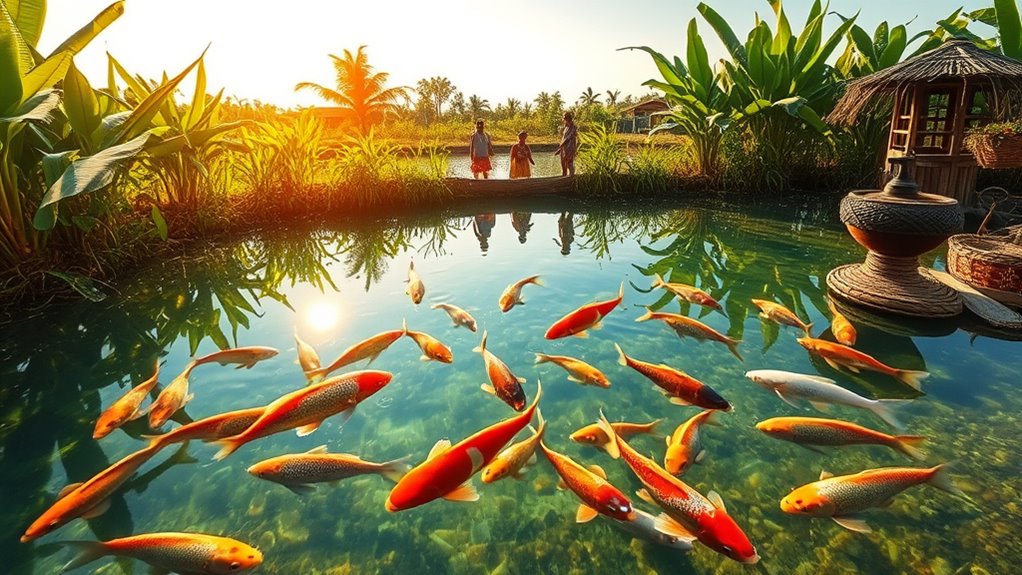

Fishponds, or loko i‘a, are crucial for your community’s food security because they provide a sustainable source of fish and support local livelihoods. Managed traditionally with eco-friendly techniques, they help maintain ecological balance and guarantee a steady supply of protein all year round. By combining these practices with modern innovations, communities can protect these systems for future generations. To discover how these methods shape food resilience, keep exploring what’s behind the tradition.
Key Takeaways
- Fishponds provide a sustainable, local source of protein, enhancing community food security.
- Traditional management practices ensure ecological balance, supporting long-term fish productivity.
- Fishponds serve as resilient systems that buffer communities against food shortages and nutritional gaps.
- Combining traditional and modern techniques optimizes fish production while preserving environmental health.
- Supporting fishponds promotes local food sovereignty and livelihoods, contributing to sustainable food systems.
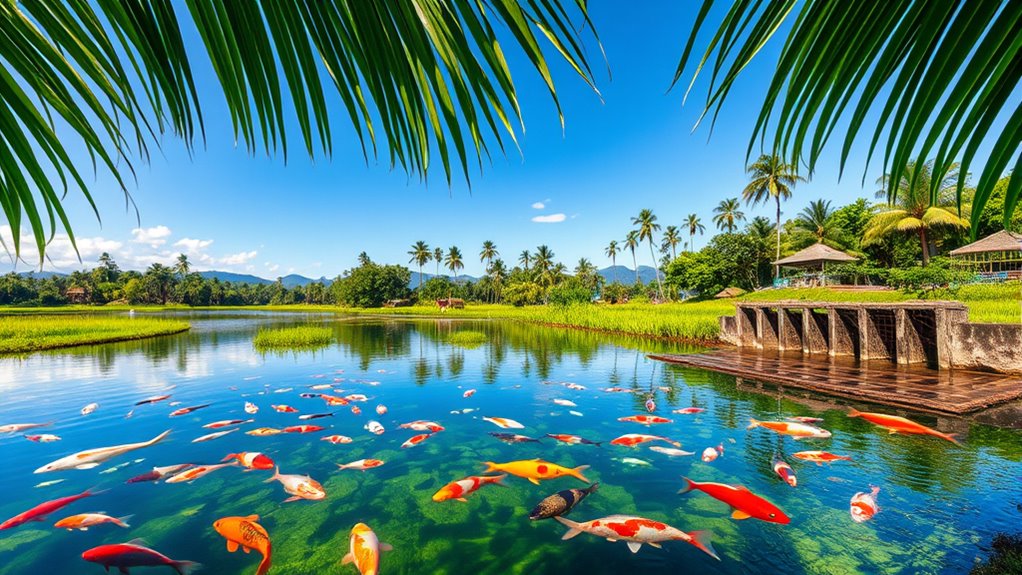
Have you ever considered how fishponds can play a crucial role in ensuring food security? These aquatic systems, known as loko i‘a in some cultures, are more than just sources of fish; they’re essential tools for sustainable food production. When managed properly, fishponds contribute notably to aquaculture sustainability by providing consistent, local sources of protein. Unlike large-scale industrial fishing, traditional practices emphasize harmony with the environment, making sure that fish populations remain healthy and productive over time. This approach not only preserves aquatic ecosystems but also supports the livelihoods of communities that depend on fishing as their primary food source.
Fishponds, or loko i‘a, sustain communities through traditional, eco-friendly food production and resource management.
In many regions, traditional practices related to fishpond management have been passed down through generations. These methods often involve low-impact techniques that maintain ecological balance. For example, communities may employ natural feeding methods, selective harvesting, and seasonal rest periods to prevent overfishing and environmental degradation. This sustainable approach guarantees that fish populations can replenish naturally, reducing reliance on external inputs like commercial feeds or chemicals. By adhering to these traditional practices, fishponds become resilient systems that can withstand environmental changes and continue to provide food security for local populations.
Furthermore, fishponds serve as adaptable food sources, especially in areas facing climate variability or resource scarcity. They offer a reliable supply of fish throughout the year, unlike wild fisheries that can fluctuate due to environmental factors. This stability is essential for vulnerable communities, providing a buffer against food shortages and nutritional deficiencies. When communities invest in maintaining and improving their fishponds, they foster a form of local food sovereignty, reducing dependence on imported or heavily commercialized food products. This empowerment is essential as it promotes self-sufficiency and resilience.
Additionally, integrating traditional practices with modern innovations can enhance the sustainability of fishponds. Simple improvements—such as better water management, habitat enhancement, and community-based monitoring—can boost productivity while preserving ecological balance. Innovative techniques can further optimize fishpond management, ensuring long-term viability. By valuing traditional knowledge and adapting it with new techniques, you help guarantee that fishponds remain a dependable source of food for future generations. This blend of old and new practices fosters a sustainable model that supports both environmental health and food security goals.

fishpond Arrowhead Fly Fishing Tool Retractor Zinger | Retractable Lanyard | Fishing Accessories – Blackrock
33" cord allows you to reach where you need when fly fishing
As an affiliate, we earn on qualifying purchases.
As an affiliate, we earn on qualifying purchases.
Frequently Asked Questions
How Do Fishponds Impact Local Biodiversity?
Fishponds impact local biodiversity by altering aquatic habitats, which can either support or threaten native species. You might notice that well-managed ponds provide refuge for native fish and plants, enhancing biodiversity. However, poorly maintained or invasive species can disrupt native ecosystems, leading to declines in native species. Consequently, your role in maintaining healthy fishponds is vital to preserving the balance and richness of native aquatic biodiversity.
What Are the Costs of Establishing Fishponds?
Building fishponds is like planting seeds in tough soil—you’ll face steep costs. You must consider a detailed cost analysis, weighing expenses like land, labor, and materials. Resource requirements are hefty, demanding careful planning to guarantee sustainability. While the investment may seem intimidating, these ponds can pay off by boosting food security and local livelihoods. Still, you’ll need to prepare for initial financial strain and ongoing maintenance to keep your aquatic garden thriving.
How Do Fishponds Affect Water Quality?
You might notice that fishponds influence water quality through water filtration and nutrient cycling. As fish swim and feed, they help filter out impurities, improving clarity. Nutrients from fish waste and uneaten feed get cycled within the pond, supporting aquatic plants and maintaining a balanced ecosystem. However, if not managed properly, excess nutrients can cause pollution and harmful algal blooms, so regular maintenance is essential to keep water quality ideal.
What Are the Best Fish Species for Small Ponds?
You should choose hardy, adaptable species like tilapia and catfish for small ponds, as they thrive in limited space. While aquaculture techniques and fish farming methods vary, these species grow quickly and resist disease, making them ideal. Juxtapose their resilience with the delicate balance of small pond ecosystems, allowing you to maximize productivity without overwhelming your water resources. Focus on sustainable practices to make certain of long-term success in your fish farming endeavors.
How Can Fishponds Be Integrated With Other Food Systems?
You can integrate fishponds with other food systems through aquaculture integration, creating a diverse and resilient food system. By combining fish farming with vegetable gardens, poultry, or rice paddies, you optimize land use and promote food system sustainability. This approach reduces waste, conserves resources, and increases overall productivity, ensuring a steady food supply. Embracing aquaculture integration helps you build a more sustainable, efficient, and self-sufficient food system.

Monitor DISSOLVED Oxygen Test KIT (60 Tests) – Monitor Aquarium and aquaculture Water Quality
Test dissolved oxygen level in water
As an affiliate, we earn on qualifying purchases.
As an affiliate, we earn on qualifying purchases.
Conclusion
Fishponds are like the heartbeat of your community’s food security, providing a sustainable source of nourishment and income. By safeguarding and managing these loko i‘a, you help guarantee that future generations can enjoy the same abundance. Just as a river flows steadily, your efforts sustain the cycle of life and sustenance. Embracing fishponds means you’re nurturing not only the land and water but also the resilience and well-being of your people.

Hungdao 7 Pcs Fishing Gear and Equipment Fishing Tools Kit for Boys Father Men Fish Accessories Include Net, Hook Remover Tool, Digital Scale, Pliers, Lanyard Beginners Gifts(51.2 Inches,Black)
Thoughtful Combination: you will receive 1 set of freshwater fishing kit, including 1 piece of fishing net with…
As an affiliate, we earn on qualifying purchases.
As an affiliate, we earn on qualifying purchases.

CrystalClear PondAir 2, Complete Aeration Kit, Whisper Quiet Water Garden Oxygenation Bubbler System Adds Oxygen to Koi & Fish Ponds, Outdoor Aerator Compressor Pump, Tubing & 2 Air Submersible Stone
Small Aerator for Ponds up to 1,000 Gallons — Increases water circulation and oxygen saturation, improving the natural…
As an affiliate, we earn on qualifying purchases.
As an affiliate, we earn on qualifying purchases.