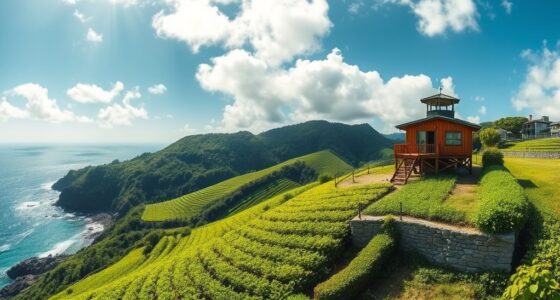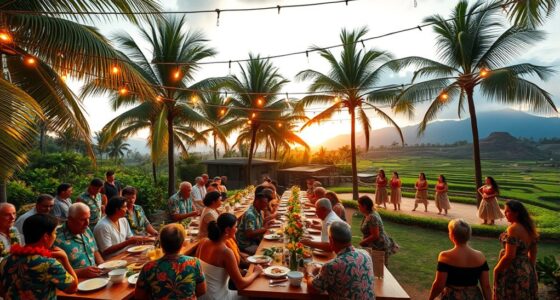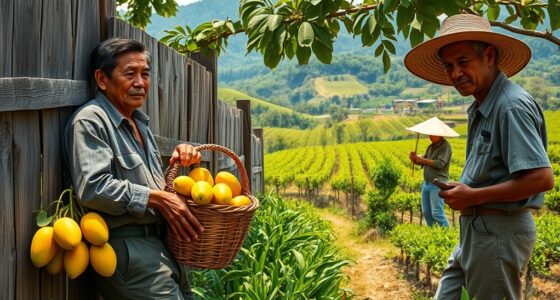
In Hawaiian family plots, certain fruit trees like breadfruit (‘ulu), bananas, and coconut trees hold special significance. These trees symbolize abundance, resilience, and hospitality, connecting families to their cultural roots. Planting and caring for them is more than tradition; it’s a way to honor ancestors and maintain ecological harmony. These trees serve as living links to history and community. Keep exploring to discover how each of these trees shapes Hawaiian cultural identity.
Key Takeaways
- Breadfruit (‘ulu) symbolizes abundance and hospitality, central to Hawaiian family plots and cultural traditions.
- Coconut trees, known as the “Tree of Life,” provide food, materials, and cultural stories essential to Hawaiian identity.
- Banana plants represent sustenance, resilience, and are commonly cultivated in family plots for daily use.
- Planting and caring for these trees preserves Hawaiian cultural heritage and traditional farming practices.
- Fruit trees foster community bonds and serve as living links to Hawaiian history and ancestral customs.

In Hawaii, planting fruit trees in family plots is more than just a tradition—it’s a way to connect with the land and guarantee fresh, homegrown produce. This practice embodies the core of traditional farming, where every tree you plant carries deep cultural significance. These trees aren’t just sources of nourishment; they are symbols of heritage, community, and respect for the natural environment. When you care for these trees, you’re participating in a way of life that has sustained Hawaiian families for generations.
Planting fruit trees in Hawaii connects families to the land, preserving culture, tradition, and community for generations.
The Hawaiian landscape is dotted with familiar fruit trees like breadfruit, banana, and coconut, each holding a special place in local culture. Breadfruit, or ‘ulu, is more than a staple; it’s a symbol of abundance and hospitality. Its roots trace back to ancient Polynesian voyagers who brought it across the Pacific, embedding it into the islands’ cultural fabric. When you plant and tend to an ‘ulu tree, you honor those traditions, keeping alive a practice that’s been passed down through centuries. Similarly, bananas are woven into everyday life, their presence a sign of ongoing sustenance and resilience. The coconut tree, often called the “Tree of Life,” offers more than just fruit—it provides food, materials for building, and cultural stories that connect generations. Additionally, traditional farming in Hawaii emphasizes harmony with nature, utilizing methods that respect the land’s delicate balance. You learn to read the land’s signals, understanding when to plant, how to nurture your trees, and when to harvest. This approach isn’t just about producing fruit; it’s about sustaining a relationship with the environment that’s rooted in respect and gratitude. Understanding traditional farming practices can help ensure these cultural traditions are preserved for future generations. The use of indigenous agricultural knowledge has historically guided Hawaiians in maintaining ecological harmony, ensuring the land remains fertile for generations to come. Recognizing the importance of cultural sustainability is vital in keeping these practices alive and relevant today. Planting these trees in family plots isn’t only a practical choice but a cultural act, reinforcing community bonds and passing on knowledge to younger generations.
Each fruit tree you plant becomes a living link to Hawaiian history and customs. It’s a way to preserve language, stories, and practices that define the islands’ identity. Whether it’s the sweet aroma of ripe mangoes or the lush canopy of a breadfruit tree, these elements serve as reminders of your connection to the land and your cultural heritage. Understanding traditional farming practices can help ensure these cultural traditions are preserved for future generations. In this way, traditional farming isn’t just about growing food—it’s about nurturing a sense of belonging and continuity that keeps Hawaiian culture vibrant and alive through the generations.
As an affiliate, we earn on qualifying purchases.
Frequently Asked Questions
How Do Fruit Trees Influence Hawaiian Family Traditions?
Fruit trees influence Hawaiian family traditions by connecting you to your ancestors through traditional planting methods, which emphasize respect for nature. These trees hold spiritual significance, symbolizing life, prosperity, and community bonds. When you care for and harvest from these trees, you honor cultural practices and reinforce family ties. This deep-rooted relationship with fruit trees keeps Hawaiian traditions alive, fostering a sense of identity and continuity across generations.
What Are the Best Fruit Trees for Small Hawaiian Gardens?
Did you know small Hawaiian gardens can support over 20 fruit tree varieties? For a compact space, choose dwarf varieties of mango, citrus, or fig, which thrive with proper orchard design. To keep pests at bay, practice integrated pest management, like natural predators or organic sprays. These trees not only fit small gardens but also provide delicious, culturally significant fruits, enriching your family’s traditions and garden sustainability.
How Have Fruit Trees Adapted to Hawaii’s Climate Over Time?
You’ll notice that fruit trees in Hawaii have adapted through climate resilience and genetic diversity. Over time, they’ve developed tolerance to rain, drought, and pests, ensuring survival in diverse conditions. This genetic variation allows trees to withstand Hawaii’s unique environment, making them more resilient. As a result, you get a rich variety of fruit trees that thrive locally, providing sustainable food sources and maintaining cultural traditions across generations.
Are There Cultural Taboos Associated With Specific Fruit Trees?
You should know that some Hawaiian fruit trees are linked to cultural taboos, like sacred symbols that shouldn’t be disturbed. Forbidden harvests exist for certain fruits, especially those tied to spiritual practices or ancestral beliefs. You’re expected to respect these traditions, honoring the trees’ significance by avoiding their fruits when prohibited. Ignoring these taboos can offend the community and violate cultural practices, so always approach these trees with reverence.
How Do Fruit Trees Impact Hawaiian Local Ecosystems?
You might be surprised to learn that Hawaiian fruit trees boost local ecosystems by increasing biodiversity—research shows over 150 native and cultivated species thrive there. They also enhance soil enrichment, improving nutrients and water retention. By supporting diverse plant life, fruit trees help sustain native insects, birds, and other wildlife, creating a balanced environment. Your efforts in preserving these trees can directly contribute to healthier, more resilient Hawaiian ecosystems.
Conclusion
Your family’s fruit trees are like the roots of a mighty banyan—deeply embedded, holding your history and culture close. They nourish your soil, your traditions, and your memories, connecting generations just as branches intertwine. Cherish these living legacies, for they’re more than just trees—they’re the heartbeat of your Hawaiian family plot, anchoring you to the land and to each other, season after season.