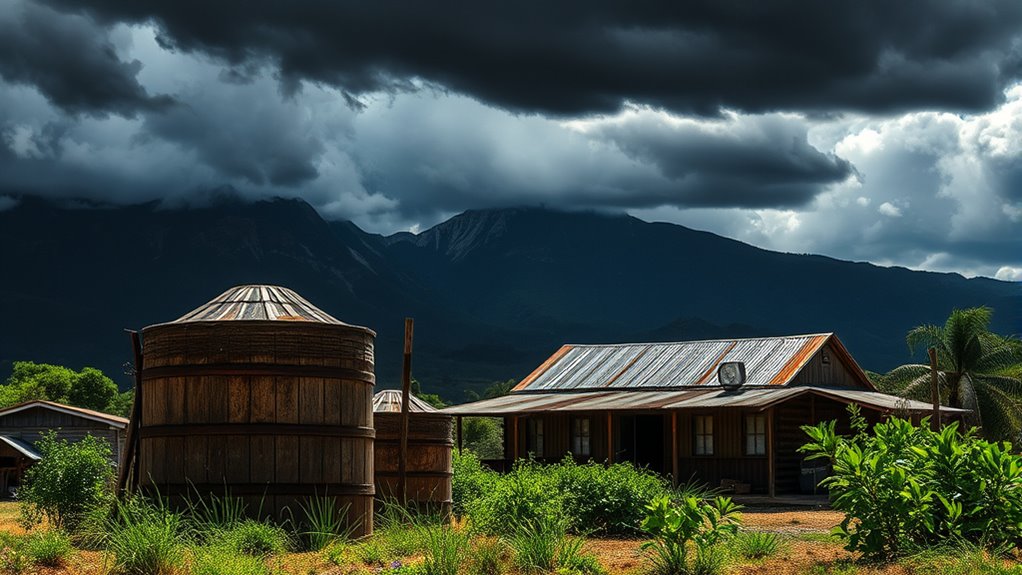

In rain shadow areas, setting up effective homestead water catchment systems is crucial due to limited natural rainfall. You can collect rainwater from rooftops with gutters, directing it into tanks or cisterns for storage. Position your catchment surfaces to maximize runoff capture and keep tanks shaded to reduce evaporation. Combining these setups with water conservation practices helps guarantee a reliable supply. Keep exploring to uncover more tips on designing efficient catchments for your rain shadow homestead.
Key Takeaways
- Rain shadow areas benefit from rooftop and land surface catchment systems to collect scarce rainfall.
- Properly maintained gutters and downspouts direct runoff into storage tanks for reliable water access.
- Shaded, protected tanks reduce evaporation, ensuring water quality and quantity in arid rain shadow zones.
- Combining catchment systems with water conservation practices optimizes limited water resources.
- Community-based initiatives and infrastructure improvements help improve water availability in homesteads within rain shadows.
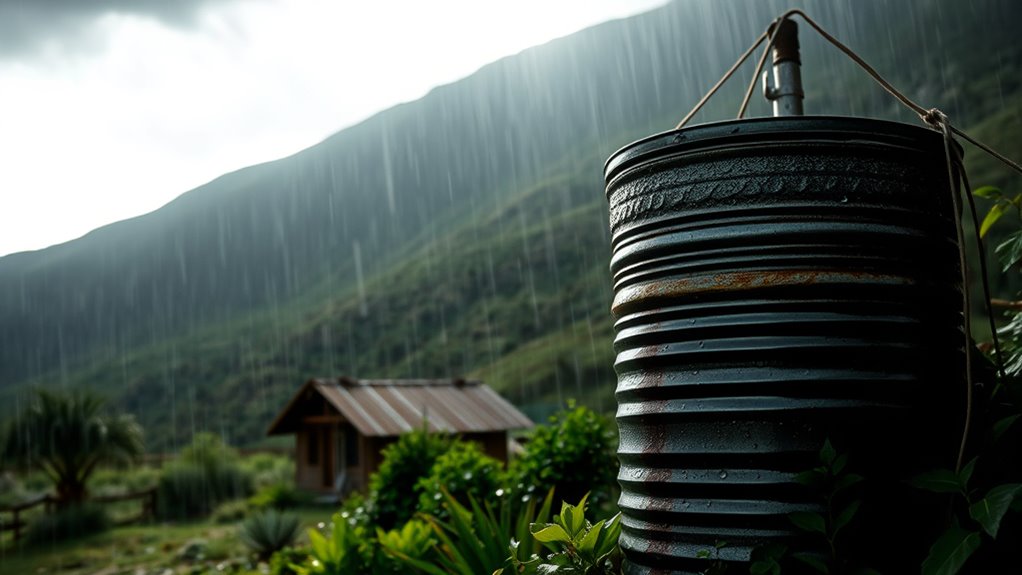
Rain shadows occur when mountains block moist air from reaching certain areas, creating dry zones on the leeward side. As the moist air rises over the mountain range, it cools and releases much of its moisture as rain or snow, a process known as rain shadow formation. Once the air descends on the other side, it becomes dry and warm, leaving little precipitation behind. This natural phenomenon results in arid conditions that challenge water availability for homesteads situated in these regions. Understanding how rain shadows influence water catchment systems is essential for effective water management in such areas.
Rain shadows create dry zones that challenge water management and require tailored catchment solutions.
If you live in a rain shadow, you’ll find that natural water sources like streams or ponds are scarce. To survive and thrive, you need to develop water catchment systems tailored to these dry conditions. Catchment systems involve collecting rainfall or runoff from roofs, land surfaces, or other catchments, then storing it for later use. In rain shadow zones, these systems become indispensable because they help maximize every drop of water that falls. You might consider installing rain barrels, cisterns, or underground tanks to capture rainwater from roofs or paved surfaces. These systems can provide a reliable water source for drinking, irrigation, or livestock, especially during drought periods.
Designing effective water catchment systems in rain shadow areas requires strategic planning. First, ensure your catchment surfaces are clean and properly maintained to optimize water collection. Use gutters and downspouts that direct water into storage tanks. Position your tanks in shaded, protected locations to reduce evaporation and contamination. Incorporate filtration systems if you’re collecting rain for drinking purposes. Also, consider installing rain sensors and automated valves to manage water flow efficiently, especially during sporadic rain events common in rain shadow regions.
Another key aspect is understanding the local climate to optimize water use. Since rain shadow areas receive less frequent rainfall, you’ll want to implement water conservation practices alongside catchment systems. Mulching around gardens, choosing drought-resistant plants, and scheduling watering during cooler parts of the day can stretch your water supplies further. You might also explore greywater systems to reuse water from sinks and showers, further reducing dependence on rainfall alone.
In addition to personal efforts, community-based water catchment initiatives can be game-changers. Collectively managing water resources ensures that everyone in a rain shadow community has access to sufficient water, especially during dry seasons. Investing in larger-scale catchment infrastructure, like small dams or reservoirs, can secure water supplies for agriculture, household use, and ecosystems. By understanding rain shadow formation and tailoring water catchment systems accordingly, you can turn the challenge of dry conditions into a manageable part of your homestead life.

RTS Home Accents 50-Gallon Rain Barrel with Brass Spigot, Flat Back Rain Water Collection Barrel, Walnut Color
50-Gallon Capacity: Provides ample storage for harvested rainwater, ideal for watering gardens, lawns, and plants.
As an affiliate, we earn on qualifying purchases.
As an affiliate, we earn on qualifying purchases.
Frequently Asked Questions
How Effective Are Rain Shadows for Water Catchment?
Rain shadows can markedly boost your water catchment efficiency by providing dry, sheltered areas that reduce evaporation. The rain shadow benefits include more consistent water collection and less runoff loss, making your catchment system more reliable. While they don’t eliminate the need for other water sources, they optimize rainwater harvesting, especially in dry regions. Overall, rain shadows are an effective natural feature for enhancing your water catchment system’s performance.
Can Homestead Water Catches Be Used for Irrigation?
Think of your homestead water catch as a garden’s lifeline, a reservoir ready to quench its thirst. Yes, you can use it for irrigation, but guarantee proper rainwater filtration to keep sediments out of your system. Place your storage tank on a stable, elevated spot for gravity-fed flow, making watering easier. Proper setup guarantees your catchment supplies healthy water, nourishing your plants and keeping your garden thriving.
What Materials Are Best for Rain Catchment Systems?
You should choose durable, UV-resistant materials like food-grade plastic or polyethylene for your rain barrel, which is vital for safe water storage. Using a gutter system that directs rainwater efficiently into your rain barrel guarantees maximum collection. Metal or sturdy plastic components work well for the gutter, while the barrel itself should be sealed to prevent debris and mosquitoes. These materials help create an effective, long-lasting rain catchment system for your homestead.
Are Rain Shadows Suitable for All Climate Types?
Think of rain shadows as a versatile tool, like a Swiss Army knife, but they aren’t suitable for all climates. In areas with high climate variability, rain shadows can limit water availability, making water conservation tough. For example, in desert regions, relying solely on rain shadows can lead to drought. So, you must consider local climate patterns to determine if rain shadows support your water conservation goals effectively.
How Much Rainfall Is Needed to Sustain a Homestead?
You need about 20-30 inches of annual rainfall to sustain a homestead, but this varies based on your water needs and efficiency of rainwater harvesting. To guarantee adequate supply, invest in effective water storage solutions and collect rainwater during dry spells. Properly managing your rainwater harvesting system helps you maximize rainfall and reduces reliance on external sources, ensuring your homestead stays well-watered year-round.

Harvesting Rainwater for Your Home: Design, Install, and Maintain a Self-Sufficient Water Collection and Storage System in 5 Simple Steps for DIY … environmentalists (Simple Sustainable Living)
As an affiliate, we earn on qualifying purchases.
As an affiliate, we earn on qualifying purchases.
Conclusion
By understanding rain shadows, you can strategically position your homestead to maximize water catches. Imagine setting up a rainwater collection system on the windward side of a mountain range, where rain naturally falls more heavily. For instance, in a dry region, a homesteader in Oregon’s rain shadow successfully harvests enough rainwater to sustain their family year-round. With planning and awareness, you turn challenging conditions into a reliable water source, ensuring your homestead thrives regardless of the weather.

Rainwater Harvesting Made Easy: A Beginner's Guide to Build and Maintain Your Own Sustainable Clean Water System for Your Urban Home, Rural Farm, or Homestead
As an affiliate, we earn on qualifying purchases.
As an affiliate, we earn on qualifying purchases.

Elkhart Plastics 1000 Gallon Vertical Water Storage Tank, Plastic Water Tank for Collection, Holding, and Storage, UV-Resistant, for Rainwater Harvesting, Agricultural, RV, Emergency, and General Use
RELIABLE LONG-LASTING VERTICAL WATER STORAGE: The Elkhart Plastics 1000 Gallon Water Container is designed for a wide range…
As an affiliate, we earn on qualifying purchases.
As an affiliate, we earn on qualifying purchases.