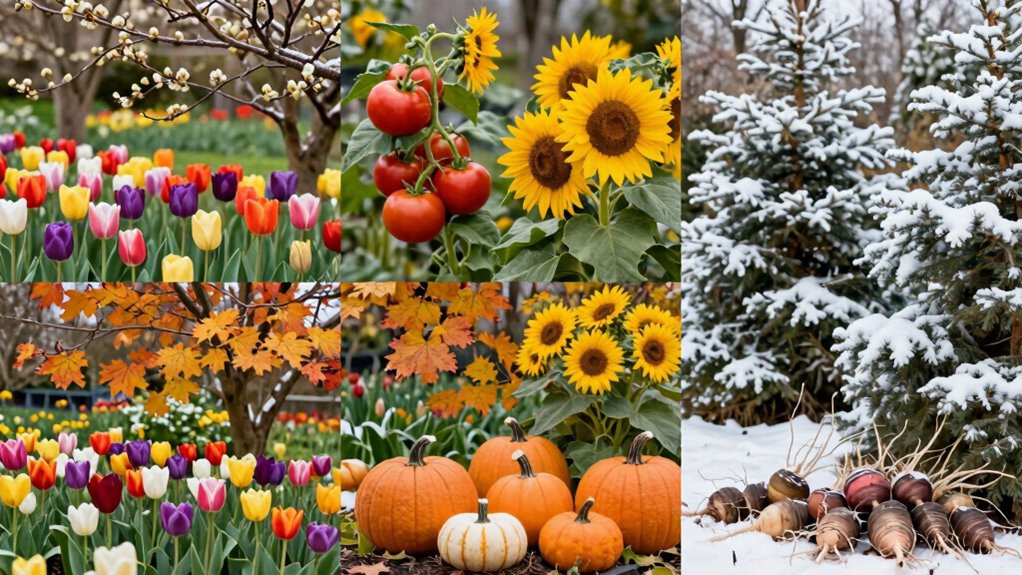

To create a four-season harvest calendar, start by mapping out your region’s growing zones and first frost dates. Plan your planting schedule to stagger crops for continuous harvests and rotate crops to maintain soil health and prevent pests. Select crops suited for different seasons, and use season extension techniques like row covers. For more tips on optimizing your garden year-round, explore how careful planning can help you achieve steady yields throughout the year.
Key Takeaways
- Map out regional climate, frost dates, and growing zones to plan planting times for each season.
- Select season-appropriate crops and stagger plantings to ensure continuous harvests year-round.
- Incorporate crop rotation and soil health practices to support resilient, healthy plants across seasons.
- Use season-extending techniques like row covers and cold frames to protect crops during colder months.
- Plan garden layout strategically, timing plantings to maximize space and harvest periods throughout the year.

Have you ever wondered how to enjoy fresh, homegrown produce year-round? Creating a four-season harvest calendar might seem complex at first, but with some planning, you can extend your growing season and reap the rewards of continuous harvests. The key is understanding your local climate and selecting the right crops for each season. It’s also essential to adopt good gardening practices, like crop rotation and pest management, to keep your plants healthy and productive all year.
Start by mapping out your growing zones and planting times based on your regional climate. Once you know when the first frosts come and go, you can plan your planting schedule accordingly. To maximize your yield throughout the year, stagger your plantings so that when one crop finishes, another is just beginning. This way, you avoid gaps in your harvest and make the most of your garden space. Incorporating crops that thrive in different seasons ensures a steady supply of fresh produce.
Crop rotation plays a crucial role in maintaining soil health and preventing pests and diseases. Each season, rotate your crops to different beds, avoiding planting the same family of plants in the same spot year after year. For example, if you’ve just harvested leafy greens from a bed, plant root vegetables or legumes in that space next season. This practice reduces the buildup of pests and diseases specific to certain crops and keeps your soil fertile. It also helps prevent nutrient depletion, ensuring your plants continue to grow strong and healthy. Additionally, selecting disease-resistant varieties can further reduce crop losses and improve your harvests.
Pest management is another critical aspect of maintaining a productive year-round garden. By starting with healthy, pest-resistant varieties and practicing good garden hygiene, you can minimize pest issues. Use physical barriers like row covers to protect young plants during vulnerable stages, and encourage beneficial insects that prey on pests. Regularly inspecting your plants allows you to catch and manage pest problems early, preventing them from spreading. Combining integrated pest management techniques with crop rotation creates a resilient garden system that supports continuous harvests. Incorporating companion planting can also naturally deter pests and enhance plant health.
Creating a four-season harvest calendar requires some effort, but it’s unquestionably worth it. By carefully planning your planting schedule, practicing crop rotation, and managing pests effectively, you’ll ensure a steady supply of fresh, homegrown produce no matter the season. Over time, these practices will become second nature, transforming your garden into a reliable source of nutritious food year-round. With patience and attention to detail, you’ll enjoy the satisfaction of harvesting your own vegetables and herbs throughout every season.
As an affiliate, we earn on qualifying purchases.
Frequently Asked Questions
How Do I Adapt the Calendar for Different Climate Zones?
You adapt your four-season harvest calendar by considering climate adaptation and zone considerations. Adjust planting and harvesting dates based on your USDA hardiness zone, recognizing that colder zones need later planting and earlier harvests, while warmer zones allow for earlier planting and extended seasons. Use local frost dates and climate data to modify your calendar, ensuring your crops thrive throughout the year without risking frost damage or missed growing opportunities.
What Tools Are Best for Tracking Planting Dates Year-Round?
You should use digital tools like gardening apps or spreadsheets that let you track planting dates year-round. Incorporate soil testing results to optimize planting times and plan crop rotation to prevent soil depletion. These tools help you monitor your garden’s progress, adjust for seasonal changes, and stay organized. Regularly updating your calendar with soil test outcomes and crop rotation schedules guarantees a healthy, productive garden throughout all seasons.
Can I Include Perennial Crops in a Four-Season Calendar?
Yes, you can include perennial crops in your four-season calendar. Perennial planning involves noting their active growth periods and harvest times, which helps you integrate them smoothly into your crop rotation schedule. By tracking these cycles, you guarantee continuous harvests and maintain soil health. Including perennials makes your calendar more thorough, allowing you to optimize space and resources while supporting sustainable gardening throughout all seasons.
How Do I Handle Unexpected Weather Changes Affecting Planting Schedules?
You should stay flexible and adapt your planting schedule based on seasonal weather. Monitor weather forecasts closely, and if unexpected changes occur, consider adjusting planting times or choosing more crop-resilient varieties. To minimize risks, diversify your crops and include hardy, resilient plants that can withstand weather fluctuations. This approach helps guarantee a steady harvest year-round, despite unpredictable weather, keeping your four-season garden productive and sustainable.
What Are Common Mistakes to Avoid When Planning a Year-Round Harvest?
Think of planning your year-round harvest like tending a delicate garden maze—you’ll want to avoid dead ends. Common mistakes include neglecting crop rotation, which can exhaust soil nutrients and spread pests, and overlooking pest management strategies. Failing to stagger planting times may lead to gaps in harvests, while ignoring seasonal variations risks crop failure. Stay proactive, adapt your plans, and keep your garden thriving across all seasons.
Conclusion
By planning your harvest calendar carefully, you can enjoy fresh produce all year round and maximize your garden’s productivity. Did you know that gardeners who plan for year-round harvests report a 30% increase in overall yield? With a well-structured calendar, you’ll not only extend your growing season but also reduce waste and improve your garden’s efficiency. Start mapping out your four-season harvest today, and reap the benefits of a continuous, bountiful garden.