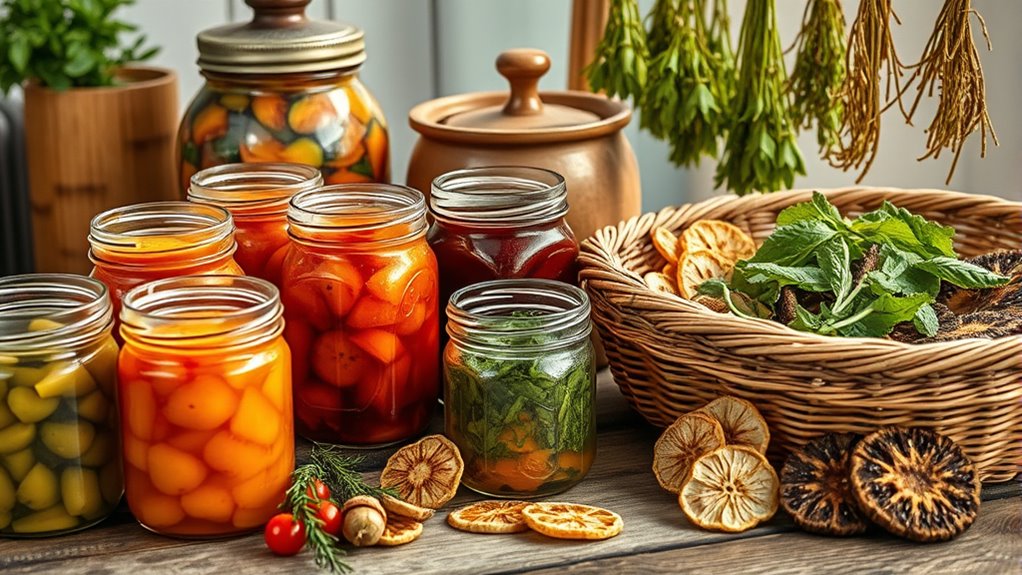

Food preservation methods like canning, freezing, fermenting, and drying help you extend shelf life and reduce waste. Canning involves processing foods in jars to keep them safe, while freezing slows spoilage with minimal effort. Fermentation uses natural bacteria to create tasty, probiotic-rich foods, and drying removes moisture to preserve delicate items. If you want to explore how these techniques work and how to use them effectively, there’s plenty more to discover.
Key Takeaways
- Canning involves sealing foods in jars and heat processing to destroy bacteria and extend shelf life.
- Freezing preserves food by slowing microbial activity and enzyme action, maintaining freshness and nutrients.
- Fermentation uses beneficial bacteria to produce probiotics and acids that inhibit spoilage, ideal for vegetables and dairy.
- Drying removes moisture from foods, preventing microbial growth and prolonging storage for herbs, fruits, and meats.
- Each method varies in equipment, duration, and suitable foods, offering multiple options for safe, long-term preservation.
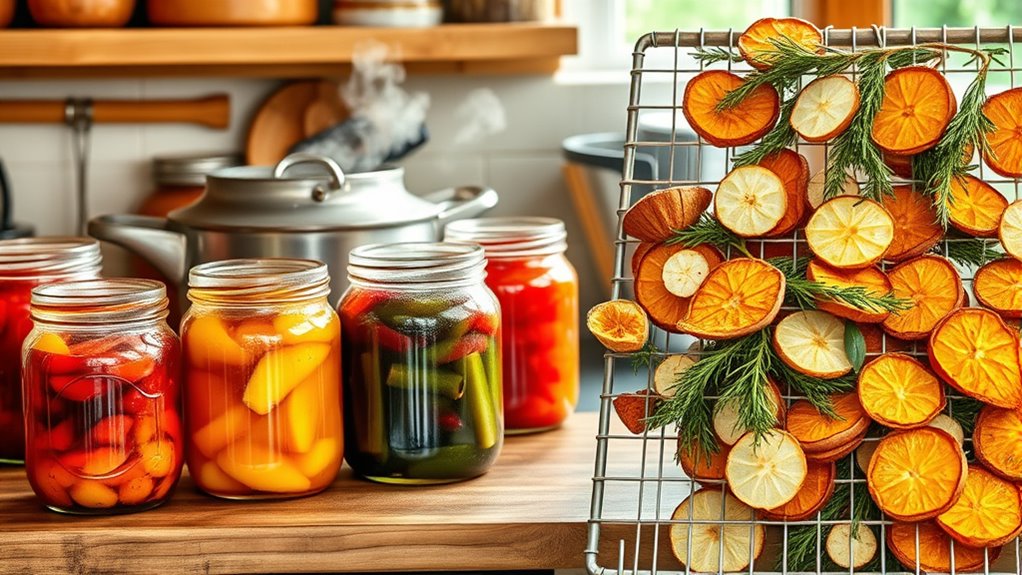
Preserving food is essential for extending shelf life, reducing waste, and ensuring you have access to nutritious options year-round. When it comes to maintaining freshness, understanding different methods like fermentation techniques and freezing strategies can make a big difference in your kitchen. Fermentation not only preserves food but also enhances its flavor and nutritional value through natural processes. By using fermentation techniques such as lacto-fermentation, you convert vegetables into tangy, probiotic-rich foods like sauerkraut and kimchi. These methods rely on beneficial bacteria converting sugars into acids, creating an environment that inhibits spoilage. It’s a simple process that requires minimal equipment—just a clean jar, some salt, and patience. You’ll want to keep the fermenting vegetables submerged in brine and store them in a cool, dark place for a few days or weeks, depending on your taste preference. Fermentation is a versatile preservation method, suitable for vegetables, dairy, and even beverages like kombucha. Additionally, choosing the right containers and maintaining proper hygiene are crucial to successful fermentation and preventing contamination home food safety.
On the other hand, freezing strategies are one of the easiest and most convenient ways to preserve a wide variety of foods. Freezing slows down enzyme activity and microbial growth, effectively halting spoilage. To maximize quality, you should invest in good-quality airtight containers or freezer bags, removing as much air as possible to prevent freezer burn. Blanching before freezing vegetables helps preserve color, texture, and nutrients by inactivating enzymes that cause deterioration. For fruits, washing, peeling, and slicing before freezing ensures quick, uniform freezing and easier use later. When freezing meats or leftovers, portioning into smaller sizes helps you defrost only what you need, reducing waste. Label everything with dates so you can keep track of storage times, ensuring you consume items at their peak quality. Freezing strategies are particularly useful for seasonal produce, leftovers, and bulk purchases, allowing you to enjoy fresh flavors long after the harvest or shopping trip.
Both fermentation techniques and freezing strategies serve different needs but share the common goal of extending food’s usability. Fermentation adds unique flavors and health benefits, making it a great choice for those interested in probiotic foods. Freezing, meanwhile, offers speed and convenience, ideal for preserving large quantities of seasonal produce and prepared meals. By mastering these methods, you gain control over your food supply, reduce waste, and enjoy nutritious options any time of the year. Whether you prefer the tang of fermented vegetables or the simplicity of frozen berries, understanding and applying these preservation techniques empowers you to make the most of what you have, saving money and reducing your environmental footprint.
![[6 Pack] 16 oz. Regular-Mouth Glass Mason Jars with Metal Airtight Lids and Bands for 1 Pint Canning, Preserving, & Meal Prep](https://m.media-amazon.com/images/I/51KwbVBrqNL._SL500_.jpg)
[6 Pack] 16 oz. Regular-Mouth Glass Mason Jars with Metal Airtight Lids and Bands for 1 Pint Canning, Preserving, & Meal Prep
Glass Mason Jars W/ Lids- 6 sets of 16 oz. ball canning jars and lids that are super…
As an affiliate, we earn on qualifying purchases.
As an affiliate, we earn on qualifying purchases.
Frequently Asked Questions
What Are the Safest Canning Practices for Beginners?
To guarantee canning safety as a beginner, follow tested recipes from reputable sources like the USDA or Ball Blue Book. Use proper techniques such as boiling water baths for jams and pickles, and pressure canning for low-acid foods. Always sterilize jars and lids, check for seals, and store canned goods in a cool, dark place. These beginner techniques minimize risks and keep your preserved foods safe to enjoy.
How Long Does Dried Food Typically Last?
Dried food typically lasts 6 months to a year when stored properly. Your shelf life depends on factors like moisture content and storage conditions. To maximize freshness, keep dried items in airtight containers in a cool, dark, and dry place. Follow storage tips like labeling packages and avoiding humidity. Regularly check for signs of spoilage, like mold or off odors, to guarantee your dried foods stay safe and tasty longer.
Can You Preserve Foods Without Using Sugar or Salt?
Think of preserving foods without sugar or salt as planting seeds in a different garden. You can use natural preservation methods like dehydration, fermentation, or freezing. These alternatives slow spoilage and keep nutrients intact. For example, drying removes moisture, and fermentation creates beneficial acids. So yes, you can preserve foods naturally without sugar or salt, relying on these innovative methods that work with nature’s own processes.
What Are the Best Storage Conditions for Preserved Foods?
You should store preserved foods in a cool, dark place where temperature control is consistent, ideally between 50-70°F. Humidity regulation is vital—keep the environment dry to prevent mold and spoilage. Use airtight containers to limit moisture exposure, and avoid areas with fluctuating temperatures or direct sunlight. Proper storage ensures your preserved foods stay safe, flavorful, and last longer, maintaining their quality over time.
Are There Any Foods That Cannot Be Canned or Dried?
Some foods, like perishable fruits and high moisture vegetables, can’t be safely canned or dried because they spoil quickly or don’t preserve well. You should avoid canning or drying these items unless you use advanced methods or additives. Additionally, foods with low acidity or high sugar content may require special processing to prevent bacteria growth. Always follow recommended guidelines to guarantee safety and quality when preserving foods.
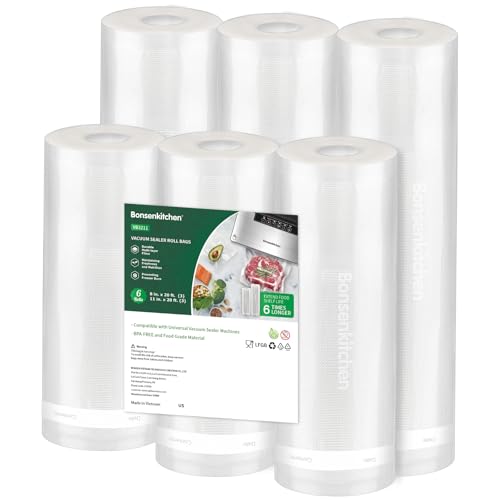
Bonsenkitchen Vacuum Sealer Rolls Bags, 6 Pack 3 Rolls 11" x 20' + 3 Rolls 8" x 20' Commercial Grade BPA Free Bag Rolls, Durable Customized Size Food Vac Bags for Storage and Sous Vide Cooking VB3211
BPA FREE: Bonsenkitchen vacuum food sealer roll bags can be microwaved, frozen, re-used, washed, boiled and dishwasher safe….
As an affiliate, we earn on qualifying purchases.
As an affiliate, we earn on qualifying purchases.
Conclusion
Think of food preservation methods as a toolbox, each offering a unique way to lock in freshness and flavor. Whether you’re canning, drying, or freezing, you’re fundamentally planting a seed that keeps your food vibrant and ready for later seasons. By choosing the right method, you’re crafting a pantry that’s a treasure chest, filled with delicious, preserved delights. With each technique, you’re turning everyday ingredients into timeless keepsakes of flavor and tradition.
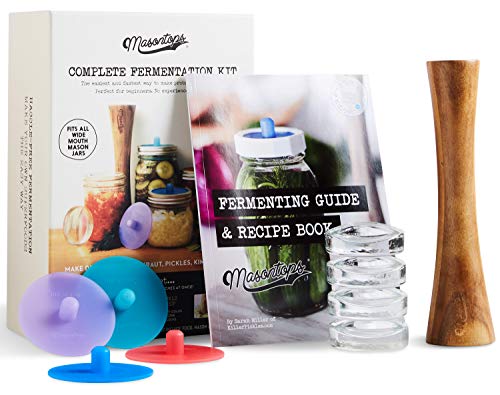
Masontops Complete Mason Jar Fermentation Kit – Pickle Kit, Sauerkraut Making Kit Kimchi Container – Fermentation Airlock Lids Wide Mouth Mason Jars
MASONTOPS COMPLETE MASON JAR FERMENTATION KIT: Includes all the tools needed to turn your ordinary wide mouth mason…
As an affiliate, we earn on qualifying purchases.
As an affiliate, we earn on qualifying purchases.
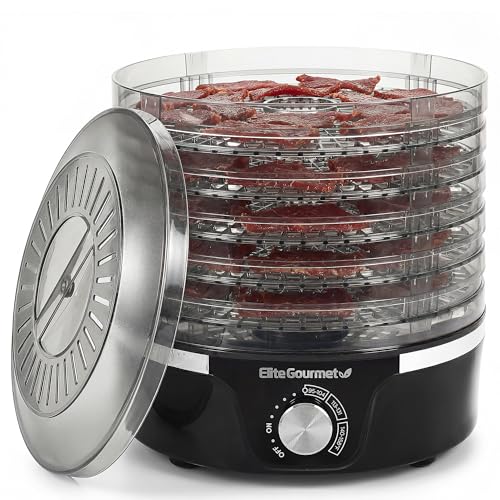
Elite Gourmet EFD319 Food Dehydrator, 5 BPA-Free 11.4" Trays Adjustable Temperature Controls, Jerky, Herbs, Fruit, Veggies, Dried Snacks, Black
CUSTOM TEMPERATURE CONTROL FOR PERFECT RESULTS: Adjustable temperature range from 95°F–158°F lets you dry fruits, vegetables, herbs, mushrooms…
As an affiliate, we earn on qualifying purchases.
As an affiliate, we earn on qualifying purchases.