Designing a food forest for perennial abundance involves creating a resilient, multi-layered ecosystem that maximizes diversity and yields. Focus on planting a variety of perennial trees, shrubs, herbs, and ground covers in strategic groups to foster beneficial relationships and natural pest control. Incorporate native plants and manage edges to boost resilience and attract wildlife. By applying sustainable, ecological principles, you’ll develop a thriving, self-sufficient landscape that continues to grow abundantly—discover how to fine-tune this approach for your space.
Key Takeaways
- Incorporate layered planting with canopy, understory, shrub, herbaceous, and ground cover to maximize space and productivity.
- Select perennial plants with companion relationships that enhance soil health, pest control, and yield.
- Design edge zones to increase biodiversity, attract beneficial insects, and support ecosystem resilience.
- Use natural plant synergy and minimal inputs to create a self-sustaining, low-maintenance ecosystem.
- Prioritize perennial, deep-rooted species to improve soil structure, water retention, and long-term abundance.
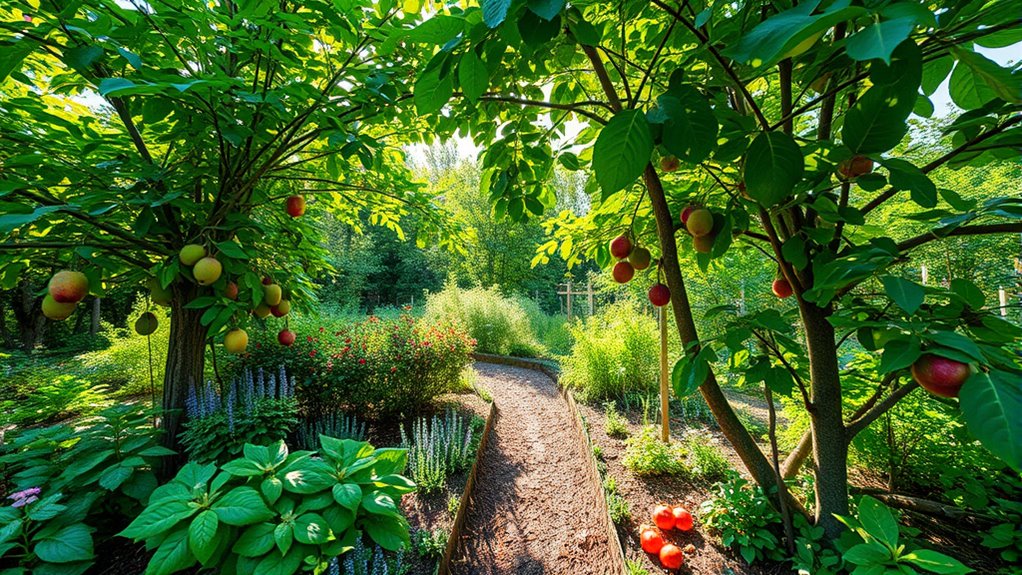
Are you interested in creating a sustainable, self-sufficient garden? If so, designing a food forest that emphasizes perennial companion planting and effective forest edge management can transform your space into a thriving ecosystem. Perennial companion planting involves selecting plants that grow well together year after year, working symbiotically to improve soil health, deter pests, and maximize yields. When you thoughtfully pair fruit trees, shrubs, herbs, and ground covers, you create a resilient system that requires less maintenance and minimizes the need for external inputs. As you plan your food forest, consider how each plant can support others—such as planting nitrogen-fixing legumes near fruit trees or using ground covers to suppress weeds and retain moisture. This approach not only boosts productivity but also fosters a balanced, harmonious environment that mimics natural ecosystems.
Forest edge management plays an essential role in shaping your food forest’s productivity and ecological health. The forest edge is where different ecosystems meet, and managing this transition zone effectively can increase biodiversity and plant resilience. By designing your food forest with a layered approach—combining canopy, understory, shrub, herbaceous, and ground cover layers—you create a diverse edge that attracts beneficial insects, pollinators, and wildlife. Managing these edges involves strategic pruning, planting, and maintenance to encourage healthy growth and prevent invasive species from taking over. You might also incorporate native plants along the edges to enhance local biodiversity and create habitat corridors for beneficial insects and birds. Proper forest edge management ensures that your food forest remains productive, resilient, and ecologically sound, providing abundant harvests year after year.
Incorporating perennial plants into your design reduces the need for annual planting and soil disturbance, reinforcing sustainability. These plants establish deep root systems that improve soil structure, increase water retention, and sequester carbon. As you select perennials for your food forest, think about how they interact with their environment and neighboring species. Some plants can serve as natural pest repellents or attract pollinators essential for fruit set. Using perennial companion planting techniques, you can create a self-sustaining system that requires minimal input once established. The key is to observe natural plant relationships and mimic them in your design, fostering a resilient landscape that offers consistent yields and supports local ecosystems.

Food Forest Plants for Hotter Conditions: 250+ Perennial Plants For Tropical and Sub-Tropical Food Forests and Permaculture Gardens
As an affiliate, we earn on qualifying purchases.
As an affiliate, we earn on qualifying purchases.
Frequently Asked Questions
How Do I Choose the Best Plants for My Climate?
You should start by researching plants that are climate compatible with your area. Focus on plant selection that thrives in your local conditions, such as temperature, rainfall, and soil type. Visit local nurseries or talk to gardening experts to identify native or adapted species. This way, you’ll guarantee your food forest is resilient and productive, with plants that naturally thrive and require less maintenance.
What Are Common Pests in Food Forests?
You’ll often face pests like aphids, caterpillars, and beetles in your food forest. To keep them at bay, choose pest-resistant varieties, promote natural pest control, and maintain healthy plants to resist infestations. Regularly monitor your garden, introduce beneficial insects, and practice crop rotation. Staying vigilant helps prevent major issues, allowing your food forest to thrive naturally and abundantly without relying heavily on chemical interventions.
How Much Maintenance Is Required Over Time?
You’ll find that maintenance mainly involves perennial pruning to keep plants healthy and productive, and mulch maintenance to retain soil moisture and suppress weeds. Over time, these tasks become less frequent as your food forest matures. Regularly inspect for pests and diseases, and replenish mulch as needed. With consistent care, your food forest will thrive with minimal effort, providing abundant yields year after year.
Can Food Forests Be Integrated Into Small Urban Yards?
Yes, you can definitely integrate food forests into small urban yards. Studies show that urban gardens can produce up to 50% more food per square foot than traditional gardens. You’ll want to focus on enhancing urban aesthetics and start with soil preparation to guarantee healthy growth. With thoughtful planning, even compact spaces can support diverse perennial plants, creating a lush, sustainable food source right outside your door.
What Are Initial Costs and Long-Term Savings?
Your initial expenses for creating a food forest can be significant, covering plants, soil amendments, and planting supplies. However, over time, you’ll enjoy substantial cost savings since your food forest reduces the need for store-bought produce and minimizes maintenance costs. With proper planning, these long-term benefits outweigh the upfront investment, making your food forest a smart, sustainable choice that pays off through years of fresh, homegrown food.

Native Soil Natural Fertilizer and Soil Conditioner (1 Pound)
Natural and Effective: An all-natural, synthetic-free, sustainable fertilizer made from nutrient-rich organic waste.
As an affiliate, we earn on qualifying purchases.
As an affiliate, we earn on qualifying purchases.
Conclusion
So, now you’re all set to create your food forest—because who doesn’t want a lush, perpetual buffet? With a dash of patience and a sprinkle of planning, you’ll watch your trees and bushes grow into a jungle of abundance. Forget shopping trips; nature’s got your back. Just remember, the secret to perennial perfection isn’t magic, it’s your hands in the dirt—and maybe a little bit of divine intervention. Happy planting!

Seed Needs Herb Seeds Variety Pack Culinary Herb Collection (12 Individual Packets for Planting Indoors or Outdoors) Grow Your Own Herb Garden – Heirloom, Non-GMO
Indoor Herb Garden: Grow your own indoor herb garden with our 12 variety pack of herb seeds. This…
As an affiliate, we earn on qualifying purchases.
As an affiliate, we earn on qualifying purchases.

Original Live Milk Kefir Grains Starter Kit for Almond, Whole or Coconut Milk with Active Probiotic Cultures, Jar, Fermentation Lid, Spoon, Thermometer & Strainer by The Spirit Of The Forest
Complete Fermentation Kit: The Original Live Milk Kefir Grains Starter Kit includes mason jars, fermentation lids, and a…
As an affiliate, we earn on qualifying purchases.
As an affiliate, we earn on qualifying purchases.