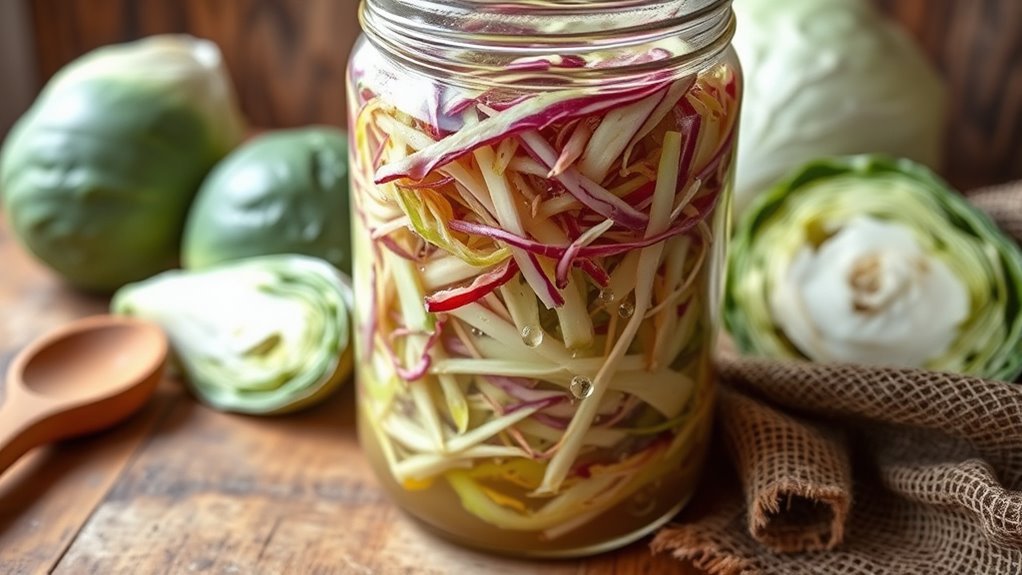

To start your first batch of sauerkraut, guarantee your cabbage is clean and evenly sliced. Dissolve about 2% salt into water to make a brine and submerge the cabbage completely, pressing out excess air. Use clean jars and keep the cabbage submerged under brine to prevent mold and spoilage. Store in a cool, dark place and check regularly for bubbles, smell, and texture. Staying mindful of these basics helps produce safe, flavorful sauerkraut—plus, you’ll discover more tips as you continue.

Get furniture and decor delivered free with Prime
- Fast, free delivery on millions of items
- Prime Video, Amazon Music and more included
- Member-only deals all year
Key Takeaways
- Use clean, airtight containers and ensure cabbage is sliced uniformly for even fermentation.
- Submerge cabbage completely in a salt brine (about 2%) to create an environment that inhibits spoilage.
- Maintain fermentation temperature between 65-75°F (18-24°C) for optimal flavor development and safety.
- Regularly check for mold, off-smells, or excessive bubbling; discard unsafe batches promptly.
- Once desired flavor and texture are achieved, refrigerate to slow fermentation and preserve the sauerkraut.
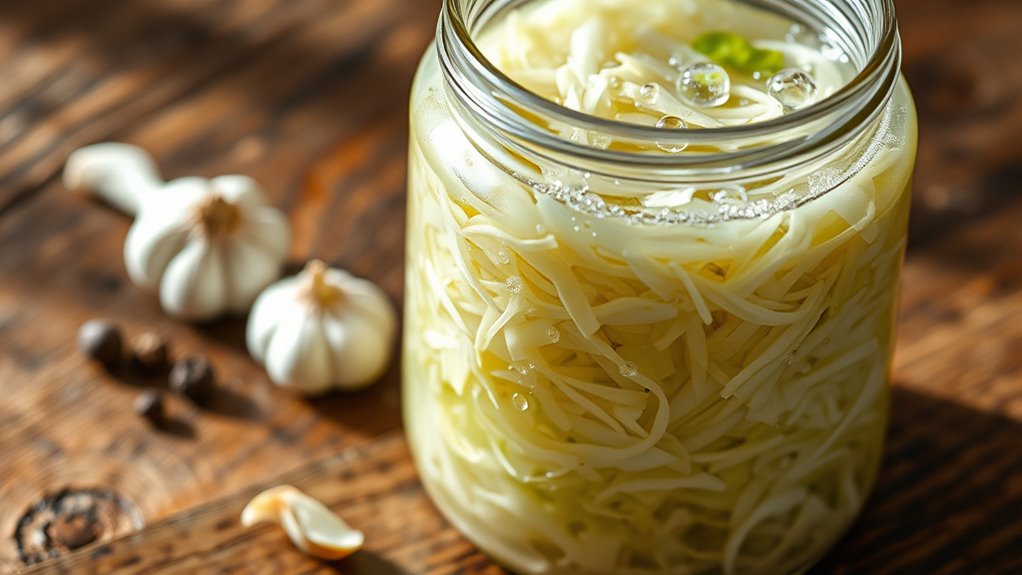
Have you ever wondered how foods like yogurt, sauerkraut, and beer are made? The secret lies in fermentation — a natural process that transforms simple ingredients into flavorful, probiotic-rich foods. If you’re ready to start your first batch of sauerkraut, understanding basic fermentation fundamentals is essential. One of the crucial aspects is mastering pickling techniques, which involve submerging cabbage in a salty brine to create the ideal environment for beneficial bacteria to thrive. These techniques help guarantee that your sauerkraut develops the tangy flavor you’re after while also preventing spoilage. Proper pickling involves slicing the cabbage uniformly, dissolving salt thoroughly, and making sure the cabbage stays submerged under the brine during fermentation. This prevents oxygen from reaching the cabbage, which could encourage unwanted mold or bacteria.
Fermentation safety is equally important. You want to create conditions where only safe, beneficial microbes grow, outcompeting harmful bacteria. Using clean utensils and containers is a must. It’s also essential to maintain the right salt concentration—typically about 2% of the weight of the cabbage—to inhibit spoilage organisms. Keep the jar in a cool, dark place, ideally between 65-75°F (18-24°C). Too warm, and fermentation might speed up excessively, risking off-flavors or undesirable bacteria. Too cold, and fermentation could slow down or stall altogether. Regularly checking your sauerkraut during the process helps you catch any issues early, like excessive bubbling or mold formation. If you see any fuzzy white or green patches on the surface, it’s best to discard that batch to avoid health risks.
As you gain confidence, you’ll learn to recognize the signs of properly fermenting sauerkraut: a pleasant sour smell, bubbling, and a crisp texture. Patience is key—fermentation typically takes about one to four weeks, depending on your taste preferences and room temperature. When it reaches your desired flavor, transfer the jar to the refrigerator to slow down the fermentation process. This not only preserves the flavor but also guarantees safety. Remember, successful fermentation hinges on maintaining hygienic practices and understanding pickling techniques. By doing so, you create a safe, delicious, probiotic-rich food that can enhance your meals and boost your gut health. Starting your sauerkraut journey is both rewarding and straightforward when you respect these fundamental principles.
fermentation crock for sauerkraut
As an affiliate, we earn on qualifying purchases.
As an affiliate, we earn on qualifying purchases.
Frequently Asked Questions
How Long Does Homemade Sauerkraut Typically Last?
Homemade sauerkraut typically lasts about 3 to 6 months if stored properly. To maximize storage duration, keep it in an airtight container in the refrigerator. Watch for spoilage indicators like off odors, mold, or slimy texture, which mean it’s time to discard it. Properly fermented and stored sauerkraut remains safe and tasty for several months, but always trust your senses to detect any signs of spoilage.
Can I Use Non-Traditional Vegetables for Fermentation?
You can definitely use alternative vegetables for fermentation, which shows the flexibility of the process. Many vegetables, like carrots, beets, or radishes, work well and add unique flavors. Just keep in mind that fermentation flexibility depends on maintaining proper salt ratios and ensuring the vegetables are submerged. Experimenting with non-traditional vegetables can be fun and delicious, as long as you follow basic fermentation principles to prevent spoilage.
What Are Common Signs of Fermentation Failure?
Imagine your fermentation journey as a delicate dance. If you notice contamination signs like foul odors, slimy textures, or mold detection on the surface, it’s a red flag. These issues indicate fermentation failure, and you should discard the batch to avoid health risks. Trust your senses—if it looks or smells off, it’s better to start fresh. Proper hygiene and monitoring help guarantee successful fermentation every time.
Is It Safe to Reuse Old Fermentation Brine?
Reusing old fermentation brine isn’t recommended because it can compromise microbial safety and affect brine preservation. The brine may contain unwanted bacteria or mold, risking contamination. To stay safe, always start fresh brine for each batch. If you do reuse, verify the brine was stored properly and shows no signs of spoilage. Prioritize microbial safety to ensure your fermented foods remain healthy and delicious.
How Do I Adjust Fermentation for Different Climate Conditions?
To adjust fermentation for different climates, you should focus on temperature adjustment and humidity control. In warmer environments, keep your ferment in a cooler spot or use a fermentation chamber to maintain consistent temperatures. In humid conditions, guarantee proper humidity control by using a breathable cover and avoiding excess moisture that could cause spoilage. Monitoring and adjusting these factors helps keep your ferment steady and safe, regardless of climate.
Conclusion
Now that you’ve started your sauerkraut journey, remember that fermentation is both an art and a science. Some believe that the natural bacteria present on cabbage are enough to guarantee successful fermentation, and research shows that relying on wild microbes often works well. Trust your senses—look for bubbles and a tangy aroma. With patience and a little curiosity, you’ll discover that mastering fermentation isn’t just a myth; it’s a delicious, rewarding adventure.
Halloween Picks
halloween
As an affiliate, we earn on qualifying purchases.