Throughout history, farmhouse table joinery has blended traditional techniques like mortise and tenon with modern methods such as pocket holes and CNC precision. You’ll see craftsmanship shine through visible, handcrafted joints, while seamless and reinforced joinery guarantees durability. By combining rustic charm with contemporary tools, artisans create sturdy, authentic pieces that honor tradition and embrace innovation. Want to discover how these techniques come together in farmhouse tables? Keep exploring to uncover the full story.
Key Takeaways
- Traditional farmhouse tables utilize durable joints like mortise and tenon for strength and rustic authenticity.
- Modern techniques such as pocket hole and biscuit joints enable quick, precise assembly while maintaining rustic charm.
- Hybrid joinery methods combine traditional craftsmanship with modern tools, balancing authenticity and efficiency.
- Joinery often highlights craftsmanship, with visible handcrafted joints or seamless connections blending rustic aesthetics and precision.
- The evolution of joinery reflects a harmony between historical techniques and contemporary innovation, ensuring durable, beautiful farmhouse tables.
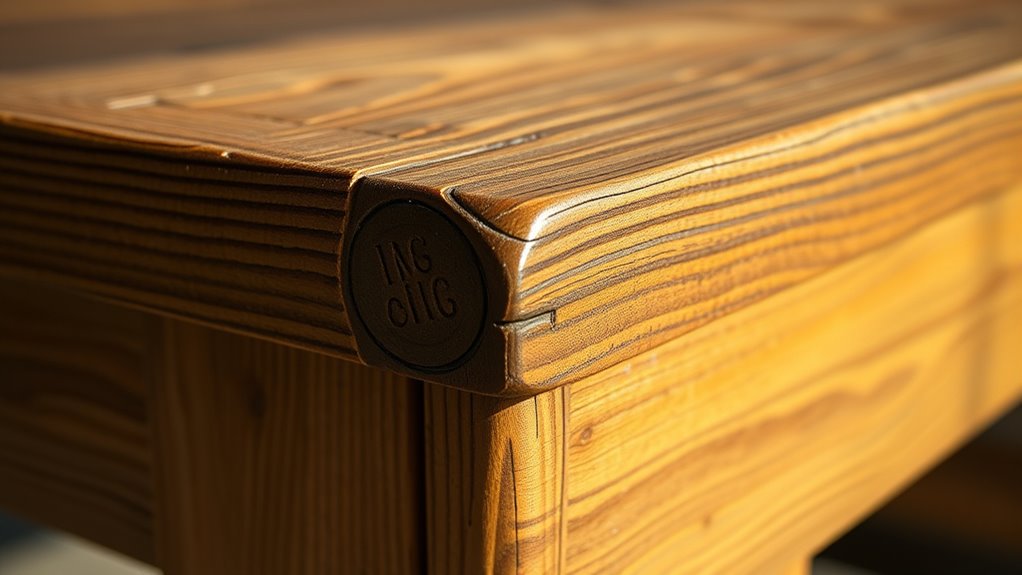
Have you ever wondered how a sturdy farmhouse table comes together? The answer lies in the joinery techniques that have evolved over centuries, blending rustic design with modern techniques to create functional, beautiful pieces. When crafting a farmhouse table, the focus is often on durability and timeless appeal. Traditionally, woodworkers relied on simple, strong joints like mortise and tenon or dovetails, which have stood the test of time for their strength and reliability. These methods fit perfectly within the rustic design aesthetic, emphasizing honest craftsmanship and natural materials. Today, however, modern techniques have introduced new tools and methods that make the process more precise and efficient, without sacrificing that rustic charm. For instance, pocket hole joinery and biscuit joints are now common in contemporary farmhouse table construction because they allow for quick assembly and a clean finish. Despite these innovations, many artisans still prefer traditional joinery for its authenticity and strength, especially when aiming for a rustic design that celebrates craftsmanship. You might see a farmhouse table with visible, handcrafted joints that showcase the woodworker’s skill, or a sleek, seamless look achieved through modern techniques.
Using modern tools doesn’t mean abandoning the rustic aesthetic; instead, it enhances it. For example, CNC machines can carve intricate joinery details or precisely cut joints, ensuring a perfect fit and reducing waste. This precision helps maintain the table’s structural integrity while preserving its authentic, rustic appearance. Many craftsmen also opt for techniques like dowels or lap joints, which combine the rustic look with modern accuracy. The key is balancing the traditional methods that give a farmhouse table its character with contemporary techniques that improve strength, alignment, and efficiency. Additionally, understanding the joinery techniques used in traditional and modern craftsmanship can help you appreciate the skill involved in creating these timeless pieces. You’ll notice that the joinery often remains hidden or subtly displayed, emphasizing the natural beauty of the wood rather than the construction process.
Ultimately, building a farmhouse table with joinery that respects its rustic roots while incorporating modern techniques creates something both sturdy and charming. Whether you’re a hobbyist or a professional, the blend of old and new allows you to craft a piece that’s not only functional but also a tribute to the enduring appeal of rustic design. It’s this harmony—between tradition and innovation—that makes the farmhouse table a timeless centerpiece in any home.
Frequently Asked Questions
What Materials Were Traditionally Used in Farmhouse Table Joinery?
You’ll find that traditional farmhouse table joinery primarily used wooden pegs and metal fasteners. Wooden pegs, often called dowels, held joints tightly without nails, ensuring durability. Metal fasteners, like nails and screws, added extra stability, especially in later designs. Together, these materials allowed craftsmen to create sturdy, long-lasting tables, blending natural wood techniques with more modern fastening methods for a reliable structure.
How Did Joinery Techniques Evolve Over Different Historical Periods?
Imagine discovering a farmhouse table with intricate dovetail joints. Over time, joinery techniques evolved from simple pegged joints in early timber framing to more decorative joints like dovetails and mortise-and-tenon, enhancing both strength and appearance. These advancements reflect changing craftsmanship and aesthetic values, allowing you to appreciate how functional timber framing became more refined with decorative joints, showcasing the skill and artistry of different historical periods.
Are There Regional Variations in Farmhouse Table Joinery Styles?
Yes, regional craftsmanship and cultural influences shape farmhouse table joinery styles. You’ll notice differences between regions, like the sturdy, simple joints in Northern Europe versus the ornate, decorative techniques in Southern Europe. Local materials and traditions influence these styles, reflecting cultural preferences and available resources. By examining joinery details, you can see how regional craftsmanship and cultural influences blend, creating unique farmhouse table designs across different areas.
What Tools Were Historically Used for Joinery in Farmhouse Tables?
Like a master painter with a brush, antique woodworking tools shaped farmhouse tables with precision. You’d have used hand saws, chisels, and augers, essential for crafting sturdy joints. These craftsmanship techniques relied on simple, reliable tools—cutting, carving, and fitting wood by hand. The skillful use of these tools created joinery that’s both functional and beautiful, standing the test of time and earning admiration among collectors and craftsmen alike.
How Do Modern Joinery Methods Compare to Traditional Techniques?
Modern joinery methods like dovetail joints and biscuit joining are faster and more precise than traditional techniques. Dovetail joints provide strong, decorative connections, while biscuit joining simplifies aligning panels and adds stability. You benefit from reduced manual effort and increased consistency, making assembly easier and stronger. Traditional methods, though skilled, take longer and require more tools, whereas modern techniques streamline the process without sacrificing durability or craftsmanship.
Conclusion
Now that you understand the incredible journey of farmhouse table joinery, you realize it’s not just about wood and nails—it’s about centuries of craftsmanship etched into every joint. You hold the power to honor this legacy, transforming simple pieces into timeless masterpieces. With each cut and each connection, you’re not just building a table; you’re creating a monument to tradition that will last for generations—an unstoppable affirmation to the art of joinery!