

Farm preservation easements are legal agreements that protect farmland from development, ensuring it stays available for agriculture forever. When you place an easement on your land, it limits future rights, preventing residential or commercial projects and keeping the land’s rural character. Land trusts or government agencies hold and enforce these agreements. While restrictions may reduce land value for certain uses, they often offer tax benefits and help preserve local farmland. Explore further to understand how these easements can benefit you and your community.
Key Takeaways
- Farm preservation easements are legal agreements that restrict land development to protect farmland’s agricultural use.
- They involve a land trust or government agency holding rights to enforce land use restrictions permanently.
- Easements can lower land market value but help ensure the land remains agricultural, often providing tax incentives.
- Restrictions prevent future owners from subdividing or developing the land, safeguarding rural landscapes.
- Appraisals and legal agreements ensure fair compensation and enforceability of easements over time.
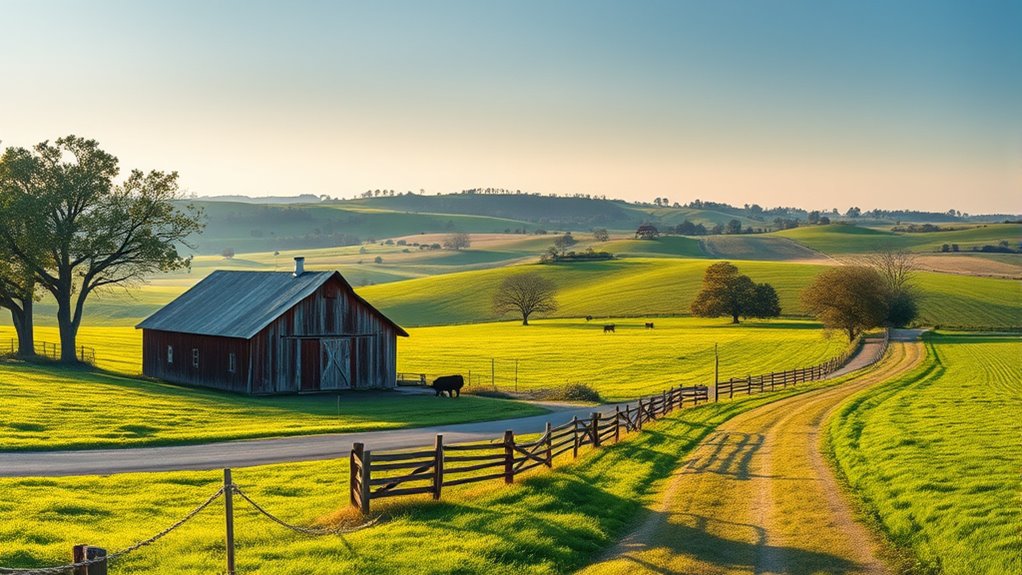
Farm preservation easements are powerful tools that help safeguard farmland from development and guarantee it remains available for agriculture. When you consider placing a farm easement on your land, you’re essentially entering into a legal agreement that limits future development rights. This agreement typically involves a private or public organization, known as a land trust or government agency, that holds the easement and enforces its terms. One of the key aspects of these easements is understanding how they impact land valuation. When a farm is protected by an easement, its value for farming purposes often remains high because the land retains its agricultural use restrictions. However, its overall market value may decrease compared to unrestricted land, since potential buyers can’t develop it for residential or commercial purposes. This reduction is important because it can influence property taxes, estate planning, and sales.
Legal restrictions are at the core of farm preservation easements. By agreeing to an easement, you give up certain rights to develop or subdivide your land, often permanently. These restrictions are carefully documented in legal agreements that run with the land, meaning they bind all future owners. This legal framework guarantees that the farmland stays protected in perpetuity, aligning with the goal of preserving the land’s agricultural purpose. It’s essential to understand that these restrictions are enforceable by law, and violating them can result in legal action, including the loss of the easement or other penalties. While these restrictions might seem limiting, they serve a larger purpose: maintaining the rural landscape, supporting local agriculture economies, and preventing urban sprawl. Additionally, understanding the legal enforceability of these easements is crucial for long-term preservation.
In exchange for these restrictions, many landowners receive financial incentives, such as tax benefits or easement purchase payments, which can help offset the decrease in land value or provide additional income. The process usually involves a detailed appraisal to determine the land’s value both with and without the easement. This appraisal helps establish the easement’s value and ensures that the landowner receives fair compensation. It’s also essential to work with legal and real estate professionals familiar with easements, as they can guide you through the complexities of land valuation and the legal restrictions involved. Ultimately, farm preservation easements serve as a strategic tool for landowners who want to protect their farmland’s future, while also balancing financial considerations and legal obligations. They guarantee that your land remains a fundamental part of the local agricultural landscape for generations to come.
farm preservation easement legal guide
As an affiliate, we earn on qualifying purchases.
As an affiliate, we earn on qualifying purchases.
Frequently Asked Questions
Can Easements Be Transferred to Heirs?
Yes, easements can be transferred to heirs through inheritance transfer. When you pass on a property with an easement, that easement typically survives as part of the property’s legal rights, ensuring easement succession. This means your heirs automatically inherit the easement rights along with the land, preserving the restrictions or benefits tied to the property. Make sure to review the specific easement agreement, as some may have conditions affecting inheritance transfer.
What Happens if the Land Is Sold?
When you sell the land, the easement typically stays with the property, meaning the new owner must follow its restrictions. This affects land resale, as buyers need to understand the easement’s limitations. Easement termination usually isn’t possible unless specific conditions are met, like mutual agreement or legal changes. You should review the easement agreement and consult legal counsel to guarantee smooth transfer and compliance during the sale.
Are Easements Permanent or Revocable?
Easements are generally permanent, lasting forever once established. Over 70% of preserved farms remain protected for future generations. You should know that these easements substantially boost the agricultural impact and environmental benefits by conserving open land and preventing development. They guarantee land stays in farming, supporting local food systems and maintaining natural habitats, which benefits everyone. So, once in place, these easements offer lasting protection and positive environmental influence.
How Does Easement Valuation Affect Taxes?
Easement valuation directly impacts your tax implications by determining the fair market value of the preserved land. When you use valuation methods like comparable sales or income approach, it can reduce your taxable estate or provide deductions. Accurate valuation guarantees you’re not overpaying taxes, while an underestimated value might lead to missed tax benefits. Always work with a professional to choose the right valuation method for your farm preservation easement.
Can Easements Be Modified After Agreement?
You can’t usually modify an easement after signing unless both parties agree to an easement renewal or easement termination. If circumstances change, you might negotiate new terms or terminate the easement, but this requires approval and often legal procedures. Keep in mind that easements are designed to be permanent, so modifications are rare and typically need a formal process to guarantee both parties’ interests are protected.

PruQuaiy 3 Pcs Public Safety Police Field Interview Notebook Report Notepad for Law Enforcement Officer Gifts Ticket Book Notebook Cop Interview Equipment Accessories, 70 Sheets/ 140 Pages(3.5×5 Inch)
Durable Field Notes 3 spiral-bound notebooks (70 sheets/140 pages) with 1.5mm reinforced backing plates for stable writing in…
As an affiliate, we earn on qualifying purchases.
As an affiliate, we earn on qualifying purchases.
Conclusion
Farm preservation easements are your key to safeguarding farmland for future generations. By granting these protections, you’re planting seeds for a legacy that grows stronger over time. Think of it as locking in the farm’s future like a treasure chest, ensuring it remains a haven for agriculture and community. With an easement, you’re not just preserving land; you’re nurturing a piece of history, allowing it to flourish like a well-tended garden for years to come.

Rural Land Valuation & Appraisal: Discover the True Value of Farmland, Ranches, and Rural Real Estate.: The definitive guide
As an affiliate, we earn on qualifying purchases.
As an affiliate, we earn on qualifying purchases.
tax benefits for farmland preservation
As an affiliate, we earn on qualifying purchases.
As an affiliate, we earn on qualifying purchases.