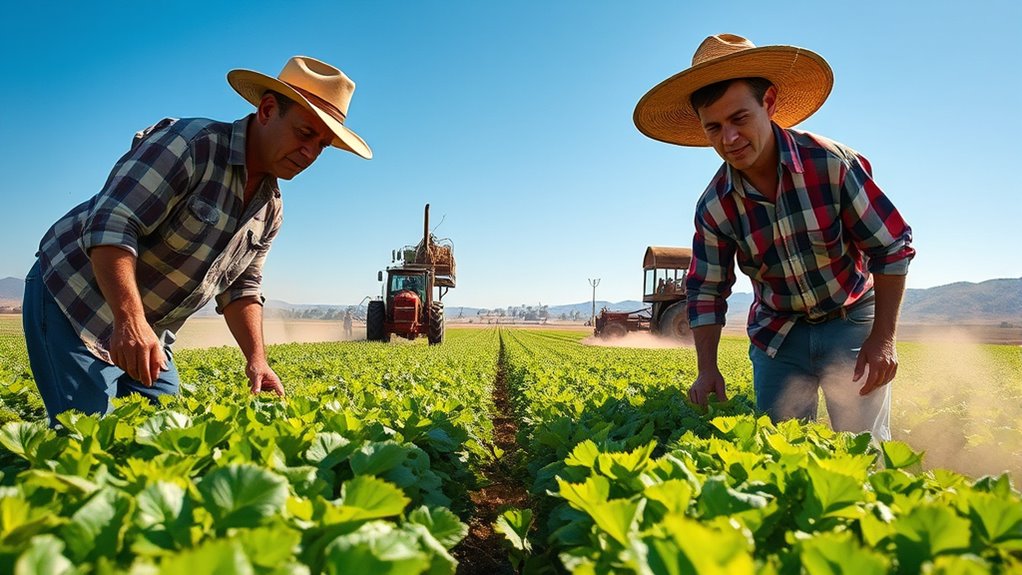

Farm labor movements, from the historic Bracero Program to modern efforts, have shaped workers’ rights in agriculture. The Bracero Program offered temporary work for Mexican laborers but exposed worker exploitation and limited protections. These movements pushed for fair wages, better conditions, and legal rights, often facing resistance tied to immigration policies. Understanding this history reveals how collective action continues to fight for justice, and there’s more to uncover about the ongoing struggles and reforms shaping farm labor today.
Key Takeaways
- The Bracero Program (1942-1964) was a U.S.-Mexico agreement addressing wartime labor shortages and exposing worker exploitation.
- Farm labor movements have historically fought for fair wages, improved conditions, and legal protections for farmworkers.
- Reforms like the Agricultural Labor Relations Act of 1975 aimed to empower farmworkers and support unionization efforts.
- Ongoing debates focus on immigration policies, guest worker programs, and protecting undocumented farmworkers’ rights.
- Collective activism has been crucial in shaping policies and highlighting farmworkers’ rights as human rights.

Have you ever wondered how farm labor movements have shaped the agricultural industry and workers’ rights? These movements, especially during the mid-20th century, played a pivotal role in transforming the way farmworkers are treated and how policies impact their lives. One of the most notable chapters in this history is the Bracero Program, which began in 1942. This agreement between the United States and Mexico allowed millions of Mexican laborers to work temporarily on American farms, addressing labor shortages during World War II. While it provided employment opportunities for many workers, it also highlighted significant issues surrounding immigration policies and labor rights. The program often kept workers in vulnerable conditions, with limited protections and rights, exposing how immigration policies could be used to exploit labor rather than protect it. Over time, farm labor movements pushed for reforms, demanding fair wages, better working conditions, and legal protections, which gradually led to improvements but also revealed ongoing struggles.
As farm labor movements gained momentum, they shed light on the inequalities faced by migrant workers, many of whom lacked basic labor rights. These movements pressed policymakers to recognize farmworkers as essential to the economy and deserving of protections similar to other workers. Efforts to organize farmworkers faced resistance, often rooted in immigration policies that restricted their rights or made them vulnerable to deportation. Labor rights, such as safe working environments, fair pay, and the right to organize, became central themes in these struggles. Leaders and organizations worked tirelessly to challenge the status quo, advocating for policies that would grant farmworkers dignity and security. The agricultural industry, historically dependent on migrant labor, was gradually influenced by these efforts, leading to reforms like the Agricultural Labor Relations Act of 1975, which aimed to empower farmworkers and protect their rights to unionize. Additionally, the ongoing influence of labor rights advocacy continues to shape policy debates today.
Despite these advances, the relationship between immigration policies and farm labor rights continues to be complex. Contemporary debates often revolve around guest worker programs, border enforcement, and the rights of undocumented farmworkers. You can see how shifts in immigration policies directly impact the ability of farmworkers to organize, advocate, and achieve fair treatment. The history of farm labor movements underscores the importance of aligning immigration policies with labor rights—ensuring that workers aren’t exploited because of their status or background. Your understanding of this history reveals the ongoing struggle for justice and equality in agriculture, emphasizing that fair treatment isn’t just a matter of policy but a fundamental human right. As farm labor movements continue to evolve, they remind us of the power of collective action in shaping a more just and equitable agricultural industry.

VEVOR Goat Milking Machine, 6 L 304 Stainless Steel Bucket, Electric Automatic Pulsation Vacuum Milker, Portable Milker with Food-Grade Silicone Cups and Tubes, Adjustable Suction for Cows and Sheep
Free up Your Hands: Say goodbye to uncomfortable milking sessions! You no longer have to endure sweating in...
As an affiliate, we earn on qualifying purchases.
Frequently Asked Questions
How Did the Bracero Program Impact U.S. Agricultural Productivity?
The Bracero program boosted U.S. agricultural productivity by addressing labor shortages and increasing agricultural efficiency. You see, it provided a steady supply of Mexican workers, which helped farms operate more smoothly and produce more crops. As a result, farmers could meet higher demand without compromising quality. This program played a vital role in shaping the agricultural landscape, making it more resilient and productive during its time.
What Are the Modern Equivalents of Farm Labor Movements Today?
Today, you see modern farm labor movements focused on advocating for migrant worker rights and fair wages. You might notice agricultural technology improving efficiency, but it also raises concerns about job security. These movements aim to guarantee migrant workers are protected and treated justly amid evolving farming practices. By organizing and lobbying, they push for policies that balance technological progress with the dignity and rights of farm laborers.
How Did Farm Labor Movements Influence Immigration Policies?
Imagine a gate, sometimes open, sometimes closed—that’s how farm labor movements shaped immigration policies. They pushed for relaxed immigration restrictions when farmworkers demanded fair labor rights, highlighting their essential role. For example, the Bracero program’s legacy led to ongoing debates about guest worker programs, influencing policies to balance farm labor needs with immigration controls. Your awareness of these movements reveals their lasting impact on shaping fairer, more inclusive policies.
What Role Did Farm Labor Unions Play in Advocating for Workers’ Rights?
You see, farm labor unions played a vital role in advocating for workers’ rights by fostering worker solidarity and engaging in collective bargaining. They organized strikes and negotiations to improve wages, working conditions, and protections. These efforts empowered workers to stand together, challenge unfair practices, and push for policy changes, ultimately strengthening their voice in the industry and inspiring broader labor movements across the country.
How Have Farm Labor Movements Affected Rural Community Development?
Imagine a time when farm labor movements sparked change like the invention of the wheel. You see how they boost rural infrastructure by improving roads, housing, and services, which attracts new residents. These movements foster community cohesion, empowering workers to organize and advocate for better conditions. As a result, rural areas grow stronger, more connected, and better equipped to support agriculture and local economies, shaping vibrant, resilient communities.

MUDUOBAN Milking Machine for Cows 3L Pulsation Vacuum Electric Suction Pump Milking Machine Portable Milking Equipment with 2 Teat Cups
Portable Milk Machine: Milking machine is versatile, easy to carry and can be used in a variety of...
As an affiliate, we earn on qualifying purchases.
Conclusion
You might think farm labor movements are just history, but the echoes still shape today’s fields. Coincidentally, as you read this, new workers are fighting for fair treatment, just like the Bracero program once did. The struggle for justice in agriculture continues—your awareness can spark change. Remember, behind every harvest, there’s a story of resilience. Stay informed, because these movements impact not just farmers, but everyone who depends on the food we eat.

KHEARPSL 8L Cow/Goat Two-in-One Rechargeable Electric Milker, Goat Milker Machine, Cow Milking Machine, The Latest Pulsation Vacuum Pump with Pressure Gauge, 304 Stainless Steel Bucket (Rechargeable)
2 in 1 COW/GOAT MILKING MACHINE: We have two pairs of milking cups for customers, one for goats...
As an affiliate, we earn on qualifying purchases.

VEVOR Goat Milking Machine, 12 L 304 Stainless Steel Bucket, Electric Automatic Pulsation Vacuum Milker, Portable Milker with Food-Grade Silicone Cups and Tubes, Adjustable Suction for Cows and Sheep
Free up Your Hands: Say goodbye to uncomfortable milking sessions! You no longer have to endure sweating in...
As an affiliate, we earn on qualifying purchases.