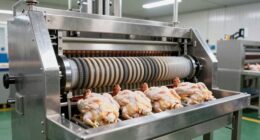
Farm dairies now deliver fresh, high-quality milk directly to urban markets through streamlined supply chains that focus on cow health, advanced processing, and sustainable practices. By connecting farms straight to city milk routes, you get fresher milk with fewer additives, while supporting local farmers. Modern technology guarantees safe, better-preserved dairy products, reducing transportation time. Discover how these innovations create a seamless, responsible system that benefits both producers and consumers.
Key Takeaways
- Direct connections between farm dairies and city milk routes ensure fresh, high-quality dairy products reach urban consumers quickly.
- Modern processing technology maintains milk freshness and safety during transportation from farms to cities.
- Emphasis on cow health enhances milk quality and safety, supporting efficient urban supply chains.
- Integrated systems combine technology and standards to preserve milk quality throughout the supply chain.
- These evolving systems improve sustainability, reduce environmental impact, and promote transparency from farms to urban markets.

Farm dairies are increasingly connecting directly with urban milk routes, bringing fresh, locally produced dairy products straight to city shelves. This shift benefits consumers by providing higher-quality milk and supports local farmers. As you explore this trend, understanding how dairy cow health and milk processing technology play crucial roles becomes essential. Ensuring the health of dairy cows is the foundation of high-quality milk. When cows are well-fed, regularly veterinary-checked, and kept in comfortable environments, the milk they produce is healthier and safer for consumption. Farm dairies now prioritize dairy cow health more than ever, adopting best practices that reduce stress and prevent disease. This focus not only improves milk quality but also increases productivity, helping farms meet the demands of urban markets efficiently.
The integration of technology in milk processing has become vital to maintaining freshness and safety during transportation.
Simultaneously, advancements in milk processing technology have revolutionized how farm dairies prepare their products for city consumption. Modern processing methods ensure milk stays fresh longer, maintains its nutritional value, and adheres to strict safety standards. Techniques such as ultra-pasteurization and aseptic packaging allow dairies to extend shelf life without compromising quality. These innovations make it feasible to deliver fresh milk directly from farm to city, reducing the need for extensive storage and transportation times. As a result, consumers get fresher milk with better flavor and fewer additives.
By integrating high standards for dairy cow health with cutting-edge milk processing technology, farm dairies create a seamless supply chain that benefits everyone involved. You, as a consumer, can enjoy the assurance that the milk you purchase is not only fresh but also produced responsibly. The health of the cows directly impacts the quality of milk, and technological advancements ensure that this quality is preserved during processing and transportation. This integrated approach helps farms meet the increased demand for local, fresh dairy products while maintaining safety and sustainability.
In essence, the evolution of farm dairies connecting directly with urban milk routes is a win-win situation. It empowers farmers to deliver premium products efficiently, while consumers receive high-quality, fresh milk with a smaller environmental footprint. With a focus on dairy cow health and innovative processing technology, this system paves the way for a more sustainable and transparent dairy industry, bridging the gap between rural farms and bustling city life.
Frequently Asked Questions
How Do Dairies Ensure Milk Freshness During Transportation?
You can guarantee milk freshness during transportation by using proper milk packaging that minimizes exposure to contaminants and oxygen. Additionally, transportation refrigeration plays a vital role, keeping the milk at a consistent, cold temperature to prevent spoilage. By combining high-quality packaging with reliable refrigeration systems, dairies effectively preserve milk’s freshness from farm to urban markets, ensuring you receive fresh, safe milk every time.
What Safety Standards Are in Place for Urban Milk Delivery?
Like a shield protecting precious cargo, safety standards keep your milk safe. You’ll find strict milk pasteurization processes that kill harmful bacteria, ensuring freshness and safety. Packaging regulations require secure, tamper-evident containers to prevent contamination during urban delivery. Delivery vehicles are regularly sanitized, and temperature controls are monitored, so your milk remains fresh from farm to fridge. These standards work together to guarantee your milk’s safety every step of the way.
How Are Dairy Farms Regulated for Quality Control?
You’re likely aware that dairy farms must meet strict regulations for quality control. They obtain dairy farm certifications that verify adherence to hygiene and safety standards. Regular milk quality testing ensures the milk is free from contaminants, bacteria, and adulteration. These measures help maintain high-quality products, protecting consumers and supporting trustworthy dairy practices. By following these protocols, dairy farms play a vital role in delivering safe, fresh milk to urban communities.
What Technology Is Used to Track Milk Shipments?
Imagine you’re watching a milk shipment like a hawk, ensuring freshness stays intact. You use advanced technology like RFID tags and GPS tracking to monitor each step. These tools help prevent milk spoilage by providing real-time updates on temperature, location, and transit conditions. Shipment tracking systems make sure your dairy products arrive fresh, cutting down waste and guaranteeing quality from farm to table.
How Do Urban Milk Routes Impact Local Dairy Farm Sustainability?
Urban milk routes can boost local dairy farm sustainability by aligning with consumer preferences for fresh, local products. As you prioritize milk pricing and quality, these routes help farmers reduce transportation costs and minimize spoilage, leading to better margins. Plus, they strengthen community ties, encouraging loyal customers who value sustainability. This direct connection supports farm growth, adapts to market demands, and promotes environmentally friendly practices, ensuring long-term viability.
Conclusion
So, next time you enjoy a glass of milk, remember the incredible journey it took—from bustling farm dairies to your urban doorstep. You’re part of an amazing system that transports freshness across miles, making the impossible seem effortless. This daily miracle connects rural fields to city streets, proving that your simple breakfast is part of a grand, unstoppable network. Truly, it’s like magic—delivering pure, farm-fresh goodness right to your glass every single day.