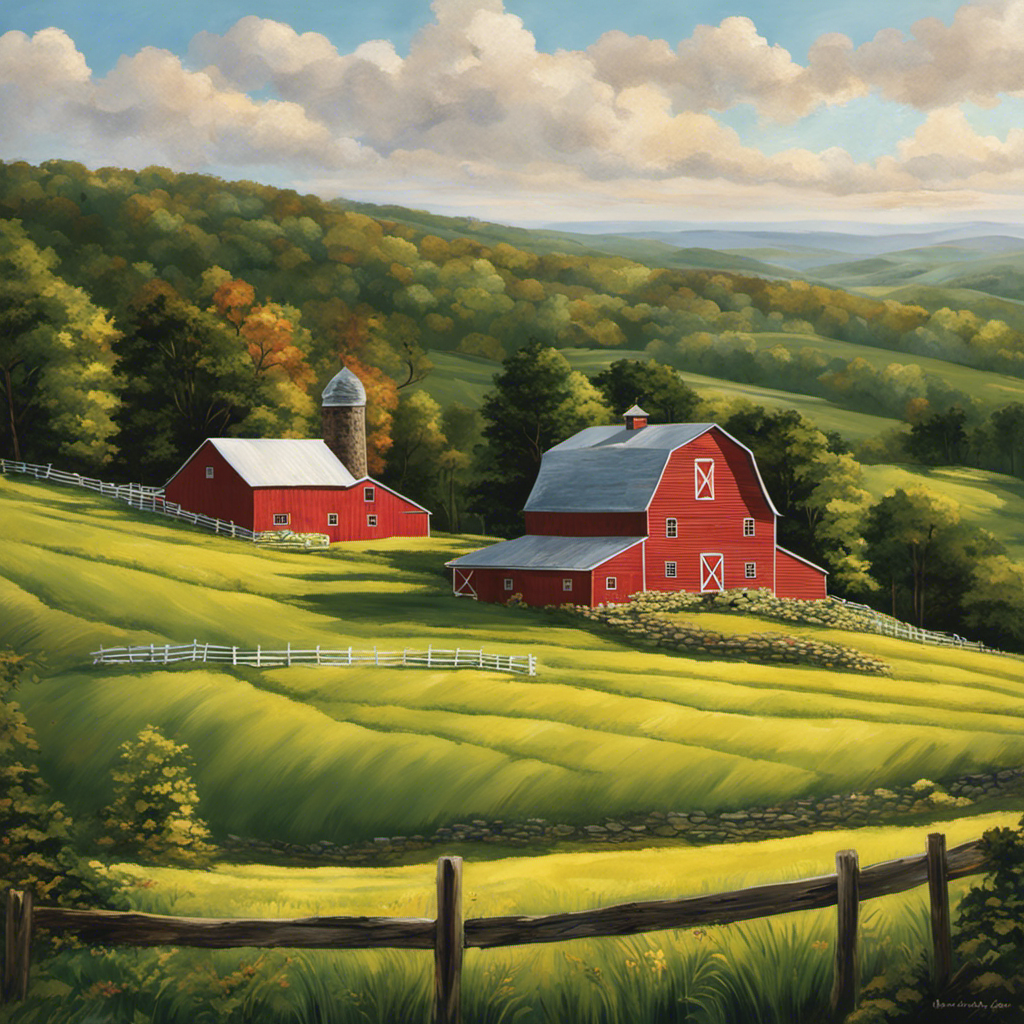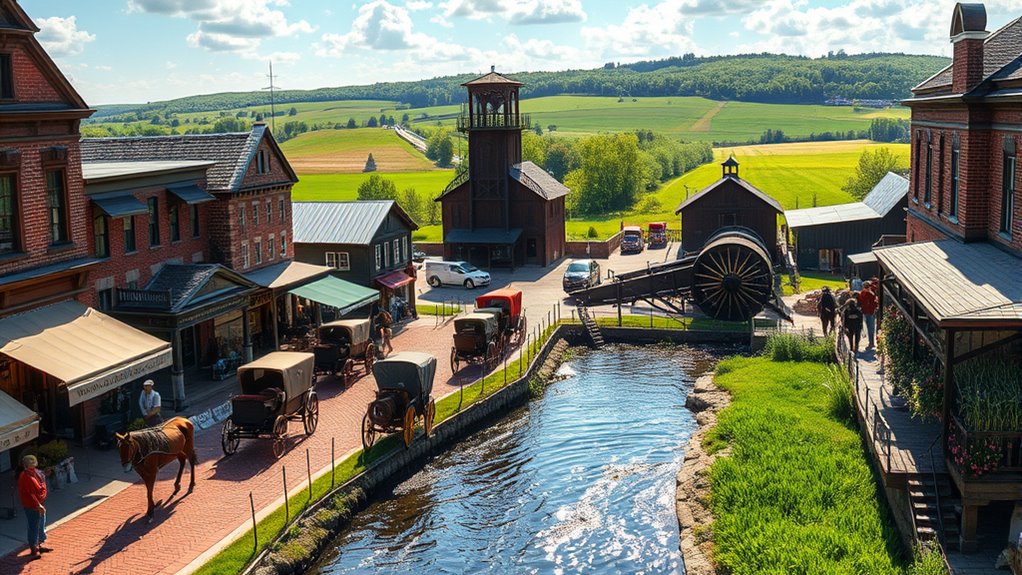

During the boom years of the Erie Canal, small farm towns transformed into lively centers of commerce and industry. The canal connected them to distant markets, making trade faster and easier. Population and prosperity surged as industries like milling and textiles grew, boosting local economies. Infrastructure improvements, such as better roads and docks, supported expansion. This period marked a shift toward more diverse communities, and if you explore further, you’ll discover how these changes shaped regional growth and development.
Key Takeaways
- The Erie Canal transformed small farm towns into thriving trade hubs by connecting farms to distant markets.
- Population growth and industrial expansion surged as transportation improvements attracted workers and entrepreneurs.
- Local economies diversified with industries like milling, woodworking, and textiles flourishing alongside agriculture.
- Infrastructure developments such as docks, warehouses, and better roads boosted regional commerce and community life.
- The canal era fostered regional economic integration, setting the stage for subsequent growth with railroads and industrialization.

The Erie Canal transformed small farm towns into thriving hubs of commerce and community. When you look back at this period, it’s clear that the canal’s construction sparked a wave of industrial expansion and transportation development that forever changed the region. Before the canal, these towns relied mainly on local markets and limited overland routes, which kept their growth modest. But once the canal opened, it became the essential artery connecting interior farms to distant markets, enabling goods to move faster and in larger quantities. You can imagine how this transportation development revolutionized local economies, making it easier for farmers to sell their produce and for merchants to bring in supplies. As a result, these towns experienced a surge in population and prosperity, attracting workers, entrepreneurs, and new industries.
With the canal’s success, the demand for transportation infrastructure grew exponentially. Railroads soon followed, complementing the canal and further expanding the reach of regional commerce. As you walk through these towns during their boom years, you’d notice bustling docks, warehouses, and thriving markets, all fueled by the efficient movement of goods. The transportation development not only improved logistics but also lowered costs, allowing farmers to compete in larger markets and encouraging the growth of local manufacturing. Industries such as milling, woodworking, and textiles sprang up to serve the expanding community, turning these farm towns into industrial centers. This growth created jobs and improved living standards, making the towns more attractive places to settle and invest.
The economic boom also brought cultural and social changes. You’d see more schools, churches, and community events that reflected the prosperity and optimism of the era. Small farms expanded into larger operations, and new settlers arrived, drawn by the promise of opportunity. The infrastructure improvements, like better roads and bridges, made daily life more convenient and connected these towns even more closely to regional and national markets. As industrial expansion continued alongside transportation development, the town’s economies diversified. This period marked a pivotal shift from purely agrarian communities to vibrant, mixed economies that thrived on trade, manufacturing, and transportation. Additionally, the transportation infrastructure improvements played a key role in fostering regional economic growth and integration.
Frequently Asked Questions
What Crops Were Most Commonly Grown in Erie Canal Farm Towns?
You’ll find that crop diversity was essential in Erie Canal farm towns, with wheat, corn, and oats being most common. These crops thrived thanks to innovative farming techniques like crop rotation and fertilization, which boosted yields. Growing a variety of crops helped farmers adapt to changing markets and weather conditions, ensuring steady income. Your success depended on understanding soil health and practicing efficient farming methods to maximize productivity in these thriving communities.
How Did the Canal Impact Local Wildlife and Ecosystems?
You might think the canal’s construction was a wildlife paradise, but nope—wetland disruption and native species decline took center stage. The canal sliced through habitats, forcing animals to find new homes or face extinction. Ecosystems got thrown out of whack, with plants and creatures struggling to adapt. So, instead of a thriving environment, you got a landscape where wildlife’s chances of survival took a nosedive, all for progress’s sake.
Were There Any Notable Historical Figures Associated With These Towns?
You’ll find that these towns had notable residents like farmers, entrepreneurs, and local leaders who shaped their development. Some towns also hosted historic events, such as groundbreaking ceremonies for the canal or community celebrations marking milestones. These figures and events contributed to the towns’ growth during the boom years, making them important chapters in regional history. Their legacy lives on through preserved sites and local stories you can explore today.
How Did Infrastructure Evolve During the Boom Years?
During the boom years, you see significant changes in infrastructure that transform transportation and boost economic development. New transportation innovations, like expanded canal systems and improved roads, connect farms directly to markets, accelerating growth. These advancements make movement faster and more efficient, fueling commerce and attracting settlers. As you observe this evolution, it becomes clear how essential infrastructure was in turning farm towns into thriving hubs of opportunity and prosperity.
What Happened to These Towns After the Canal’s Decline?
After the canal’s decline, you’ll notice these towns faced economic decline as trade shifted away. Many struggled with population loss and reduced commerce. However, some are experiencing modern revitalization through tourism, historical preservation, and new industries. You can see efforts to restore their charm and attract visitors, helping these towns regain their footing and adapt to today’s economy. The shift demonstrates resilience and potential for future growth.
Conclusion
As you walk through these farm towns today, it’s striking how their quiet fields stand in contrast to their bustling boom years. Once teeming with activity and promise, they now whisper stories of growth and decline. The Erie Canal’s legacy is a reminder that progress isn’t always linear; sometimes, prosperity fades, only to be remembered in echoes. You see, history’s true lesson is that change is the only constant—yet, hope endures beneath the surface.