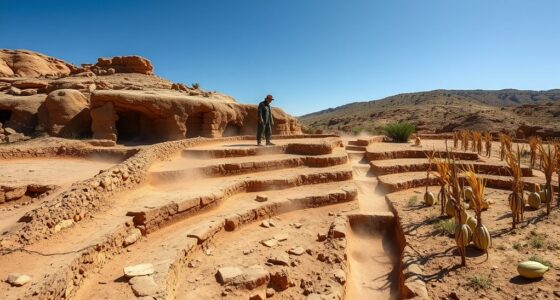
In desert gardens, incorporating waffle beds and shade structures considerably boosts water efficiency and plant resilience. Waffle beds help retain moisture and improve soil drainage, making watering more targeted and effective. Shade structures protect plants from harsh sun and reduce evaporation, essential in arid climates. Combining these features supports low-maintenance, sustainable landscapes. To discover more about designing a thriving desert garden with these techniques, keep exploring how they work together for ideal results.
Key Takeaways
- Waffle beds improve water retention and drainage, making them ideal for desert garden soil management.
- Incorporate native plants into waffle beds for low-water, drought-tolerant landscaping.
- Shade structures or trees provide relief from intense sun, protecting plants and reducing soil evaporation.
- Combining waffle beds with shaded areas enhances water efficiency and creates comfortable garden spaces.
- Properly designed shade and bed layouts optimize water use and support resilient desert plant growth.
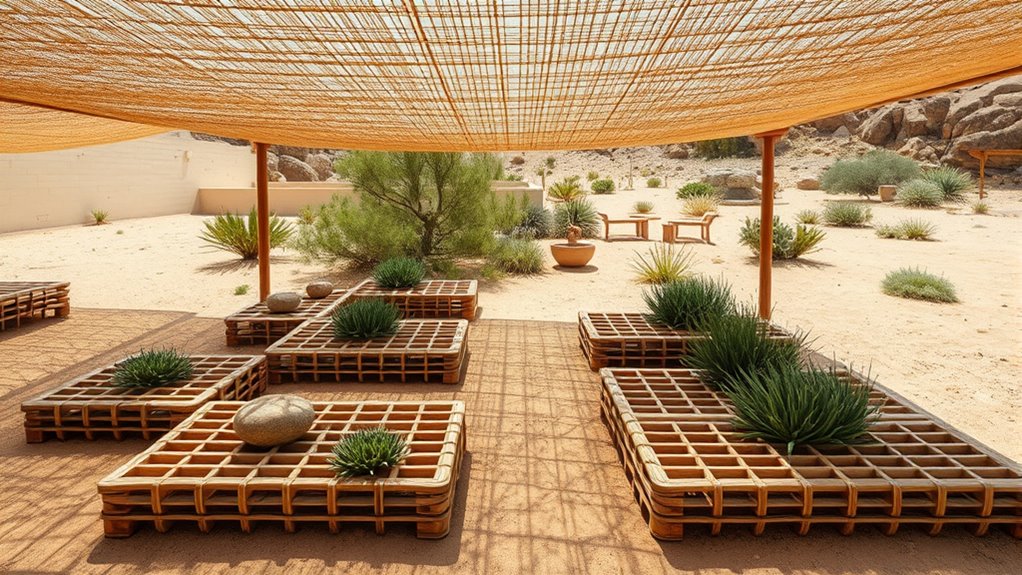
Have you ever wondered how lush gardens can thrive in the harshest desert environments? The secret lies in smart design and strategic choices that maximize water efficiency and plant resilience. One of the most critical aspects is understanding which irrigation techniques work best in arid conditions. Drip irrigation, for example, delivers water slowly and directly to the roots, minimizing evaporation and runoff. Soaker hoses can also be effective, allowing water to seep into the soil gradually. These methods ensure your plants get enough moisture while conserving water—a crucial factor in desert gardening. Incorporating efficient irrigation techniques isn’t just about technology; it’s about tailoring your watering system to your garden’s specific needs. Adjusting watering schedules based on weather patterns and soil moisture levels can make a substantial difference.
Equally important is native plant selection. Choosing plants that naturally thrive in desert climates reduces the need for extra watering, fertilizers, or pest control. These hardy species are adapted to withstand extreme temperatures and poor soil conditions, making them ideal for creating a low-maintenance, sustainable garden. By focusing on native plants such as desert marigolds, succulents, or mesquite trees, you set your garden up for success. They often require less water and are more resistant to local pests and diseases. Plus, they support local ecosystems, attracting native pollinators and wildlife. When selecting plants, consider their growth habits, sunlight needs, and water requirements to ensure they will flourish together.
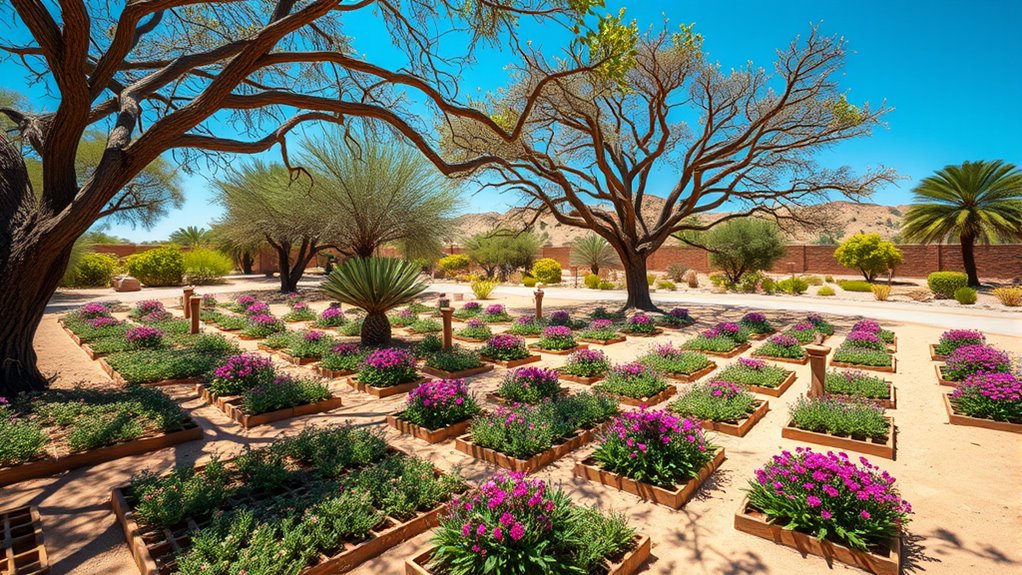
Incorporating native plants also influences the design of your garden’s layout. For instance, you might create shaded areas using strategically placed shade structures or plant shade trees to protect more delicate species. Waffle beds, which are raised planting areas with a grid pattern, can help with water retention and improve soil drainage, especially if you combine them with native plants that are accustomed to well-drained soils. These beds can also be designed with integrated irrigation systems, ensuring that each section receives adequate moisture without waste.

Vita Gardens 4×4 Garden Bed with Grow Grid, Packaging may vary
Requires no tools for assembly
As an affiliate, we earn on qualifying purchases.
As an affiliate, we earn on qualifying purchases.
Frequently Asked Questions
What Are the Best Plants for Waffle Beds?
You should choose drought-tolerant plants like succulents, cacti, and native desert species for waffle beds. Focus on plant selection strategies that prioritize low water needs and sun tolerance. Use efficient irrigation techniques, such as drip watering, to guarantee your plants thrive without overwatering. This approach helps you maintain a sustainable, beautiful desert garden, saving water while creating visual interest with a variety of textures and colors suited to arid conditions.
How Do Shade Structures Affect Desert Garden Ecosystems?
Shade structures substantially impact desert garden ecosystems by providing microclimate regulation, which helps reduce heat stress for plants and animals. You’ll want to choose shade structure materials like shade cloth or metal that effectively block harsh sunlight while allowing airflow. This creates cooler, more stable conditions, encouraging diverse plant growth and supporting local wildlife. By managing shade, you foster a healthier, more resilient desert ecosystem that thrives even in extreme temperatures.
Can Desert Gardens Support Native Wildlife?
Yes, desert gardens can support native wildlife by providing essential wildlife habitat. You attract native pollinators like bees and butterflies, which thrive on native plants. Incorporate diverse, drought-tolerant species to create a sustainable environment. By designing your garden with native plants and shade structures, you offer food and shelter, encouraging wildlife to visit and stay. This way, your desert garden becomes a crucial refuge for local ecosystems.
What Soil Types Are Ideal for Desert Garden Beds?
Your desert garden thrives best in sandy or gravelly soils that drain like a waterfall, preventing root rot. You should incorporate soil amendments like compost or organic matter to boost nutrients. Good drainage solutions are essential; consider adding grit or coarse sand to improve flow. These ideal soil types mimic natural desert conditions, ensuring your plants stay healthy, vibrant, and resilient in the harshest environments.
How Often Should I Water Desert Garden Plants?
You should water desert garden plants deeply once every 1-2 weeks, adjusting based on your local climate and drought tolerance of the plants. During hot, dry periods, you might need to water more often, but always avoid overwatering. Establish a consistent watering schedule that allows the soil to dry out between sessions. This approach helps maintain drought tolerance and keeps your plants healthy without promoting root rot.

TREEVEX 55% Shade Cloth for Garden, Sunblock Mesh UV Resistant Net for Vegetables Flowers Greenhouse Raised Bed, Plant Shade Cover from Sun, Black (6.5X10 FT)
SIZE: Measures 6.5 feet in width and 10 feet in length (2 meters x 3 meters). you can…
As an affiliate, we earn on qualifying purchases.
As an affiliate, we earn on qualifying purchases.
Conclusion
You now see how desert gardens thrive with creative techniques like waffle beds and ample shade. Did you know that shade structures can reduce soil temperatures by up to 20%? This shows how thoughtful design helps plants survive extreme heat. With these strategies, you can turn even the harshest deserts into lush, vibrant gardens. So go ahead—embrace these ideas and create your own desert oasis that’s both beautiful and resilient.

Irrigation Hose Garden Hose for 120ft Drip Irrigation System, Garden Watering System DIY Automatic Irrigation Equipment Set for Lawn Raised Bed Greenhouse Plant Watering
🌷 Customize 4 watering zones across 120 feet! Our expandable tubing system reaches every plant—from patio pots to…
As an affiliate, we earn on qualifying purchases.
As an affiliate, we earn on qualifying purchases.
The Drought-Defying California Garden: 230 Native Plants for a Lush, Low-Water Landscape
As an affiliate, we earn on qualifying purchases.
As an affiliate, we earn on qualifying purchases.