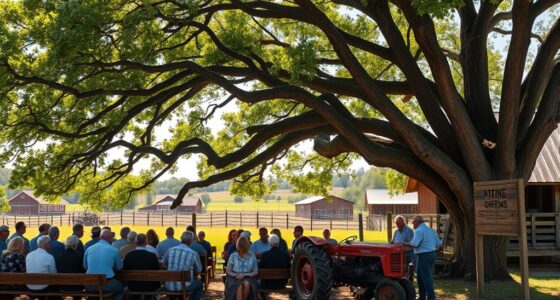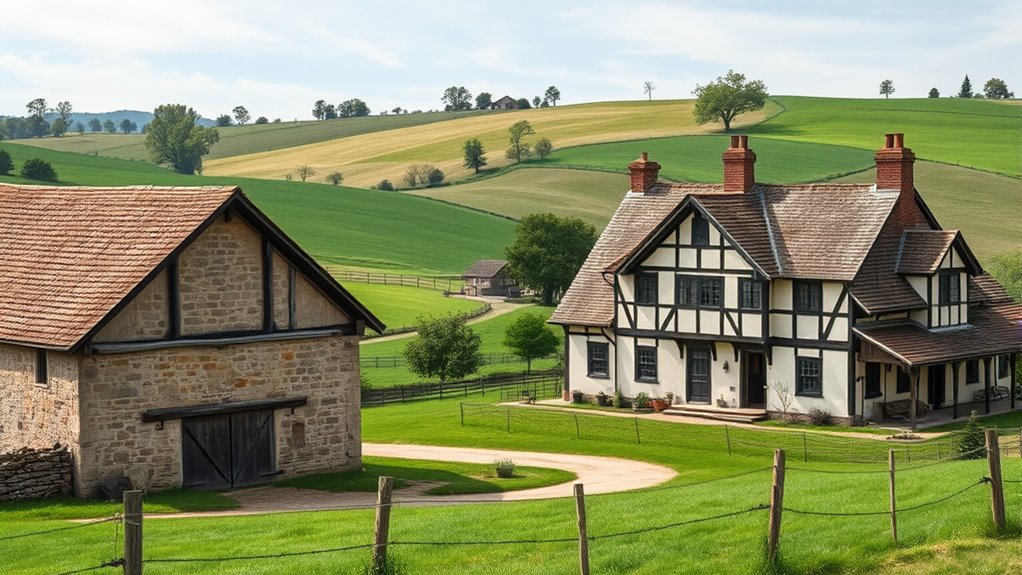

Colonial farmsteads across America vary based on regional climates, indigenous influences, and local materials. In New England, you’ll notice steep roofs and small windows designed to handle cold winters, with native techniques like raised floors evident. Southeastern farmsteads feature large porches and raised floors to combat humidity, while frontier areas use locally sourced stone and quick-build methods. These regional styles showcase how settlers adapted indigenous knowledge and resources to their environment—exploring further reveals even more fascinating differences.
Key Takeaways
- Regional climates influenced farmstead designs, such as steep roofs in New England and large porches in the Southeast.
- Indigenous techniques and local materials shaped distinctive regional construction methods and appearances.
- Farmstead layouts reflect cultural exchange, with Chesapeake farms emphasizing communal spaces and resource sharing.
- Use of native materials like timber, stone, or clay enhanced durability and sustainability across regions.
- Architectural adaptations demonstrate resilience to environmental challenges, creating unique regional identities.
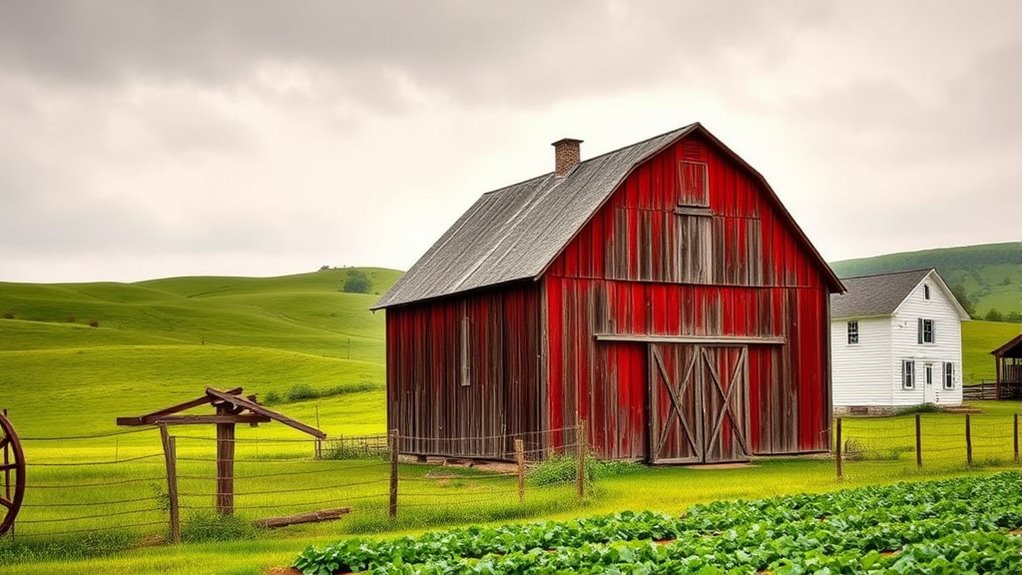
Colonial farmsteads vary considerably across regions, shaped by climate, available resources, and cultural influences. As you explore these farmsteads, you’ll notice how local indigenous influences played a significant role in shaping their design and construction. Indigenous peoples often contributed architectural adaptations that suited the environment and reflected their cultural practices. For example, in the Southeast, settlers incorporated native techniques like raised floors and large porches to cope with humidity and pests, blending indigenous methods with European building styles. These adaptations not only addressed practical concerns but also created a distinct regional identity for farmsteads.
Indigenous influences shaped colonial farmsteads, blending native techniques with European design for regional adaptation and resilience.
In regions where wood was abundant, such as New England, farmers built sturdy, timber-frame structures that could withstand harsh winters. The design often included steeply pitched roofs and small-pane windows, reflecting both indigenous influences—like the use of local materials—and adaptations to the cold climate. The colonial farmstead in this area typically featured a central hearth for heating and cooking, a design influenced by indigenous practices of efficient space use. These architectural adaptations demonstrate how settlers integrated native techniques with European building traditions, resulting in farmsteads that were both functional and regionally distinctive.
Moving southward, you’ll see farmsteads that adapted to warmer, more humid conditions. In the Chesapeake Bay area, for instance, the architecture often included wide verandas and larger windows to promote airflow and keep interiors cool. Indigenous influences, such as the use of natural materials and specific construction techniques, influenced these adaptations. The layout of the farmsteads also reflected indigenous practices of communal living and resource sharing, with outbuildings and field arrangements designed for ease of access and efficiency. These features highlight how indigenous knowledge helped settlers modify European designs to better suit their new environment.
In the frontier regions of the Ohio Valley and beyond, farmsteads often showcased a blend of indigenous influences and practical adaptations to a more open landscape. Structures were simpler, with fewer decorative elements, emphasizing durability and ease of construction. Indigenous techniques, like using locally sourced stone or clay for foundations and walls, became integrated into colonial building practices. These adaptations allowed settlers to quickly establish productive farms in rugged terrain, mirroring indigenous methods of sustainable resource use and construction.
Across these regions, the common thread is how indigenous influences and architectural adaptations shaped colonial farmsteads into unique expressions of adaptation and resilience. Additionally, the use of local materials played a crucial role in these architectural responses, demonstrating resourcefulness in each environment. As you observe these varied farmsteads, you’ll appreciate the ingenuity and cultural exchange that crafted the diverse landscape of colonial America.

Conversing by Signs: Poetics of Implication in Colonial New England Culture
As an affiliate, we earn on qualifying purchases.
As an affiliate, we earn on qualifying purchases.
Frequently Asked Questions
How Did Indigenous Building Techniques Influence Colonial Farmstead Designs?
You can see indigenous craftsmanship in colonial farmstead designs through the use of local materials and construction techniques that matched settlement patterns. Indigenous builders influenced settlers to adopt methods like log cabins and post-and-beam structures, which suited the environment. These techniques helped shape efficient layouts and durable buildings, blending indigenous knowledge with colonial needs, ensuring farmsteads were well-adapted and sustainable in their regional contexts.
Were There Significant Differences in Farmstead Layouts Between Coastal and Inland Regions?
Think of coastal and inland farmsteads as two different melodies. Coastal layouts often feature compact, vertical farm designs to withstand salty breezes, while inland farms spread out more, with large crop storage methods suited for abundant harvests. These differences shape how farms are structured, with coastal farms emphasizing resilience and verticality, and inland farms prioritizing space and storage, reflecting their unique environments and resources.
How Did Climate Variations Affect Construction Materials Used in Different Regions?
Climate variations directly influence construction materials by shaping your choices based on native flora and soil composition. In warmer, wetter regions, you might use timber from local trees or clay-rich soil for bricks, while cooler, drier areas favor stone or timber. You adapt to the environment, utilizing materials readily available, which reflects how climate influences regional building practices. Your choices ensure durability while harmonizing with the surrounding landscape.
Did Religious or Cultural Factors Impact Regional Farmstead Architectural Styles?
Religious influences and cultural traditions substantially shape regional farmstead architectural styles. You’ll notice that communities often build structures reflecting their spiritual beliefs or cultural values, such as churches or specific decorative elements. These influences affect layout, design, and material choices, ensuring the farmstead aligns with local customs. By embracing religious and cultural factors, you create a space that honors your community’s identity and heritage, making your farmstead uniquely reflective of your traditions.
How Did Regional Trade Routes Influence the Availability of Building Materials?
Trade routes act like rivers feeding a landscape, shaping what’s available. Your farmstead’s building materials depend on trade route accessibility, which determines how easily you can source resources. Material sourcing limitations mean you might use locally available wood or stone, while distant imports could bring in brick or specialty supplies. These routes directly influence your choices, making your farmstead unique to its region’s trade network and resource flow.
indigenous building techniques replica
As an affiliate, we earn on qualifying purchases.
As an affiliate, we earn on qualifying purchases.
Conclusion
As you explore colonial farmsteads, you’ll notice how regional variations tell unique stories—stone walls and timber frames echo different climates and resources. While some farmsteads boast expansive fields and proud barns, others reveal intimate, tightly built structures adapted to harsh weather. These contrasts highlight both diversity and shared resilience. In every detail, from materials to layout, you see a tapestry woven by geography and culture—reminding you that regional differences shape, yet unify, the colonial farming experience.
colonial farmstead furniture set
As an affiliate, we earn on qualifying purchases.
As an affiliate, we earn on qualifying purchases.

Revell RV05432 1:350 Scale, Gorch Fock, Model Kit Unpainted…
1:350 Scale Plastic Model Kit, 75 parts
As an affiliate, we earn on qualifying purchases.
As an affiliate, we earn on qualifying purchases.