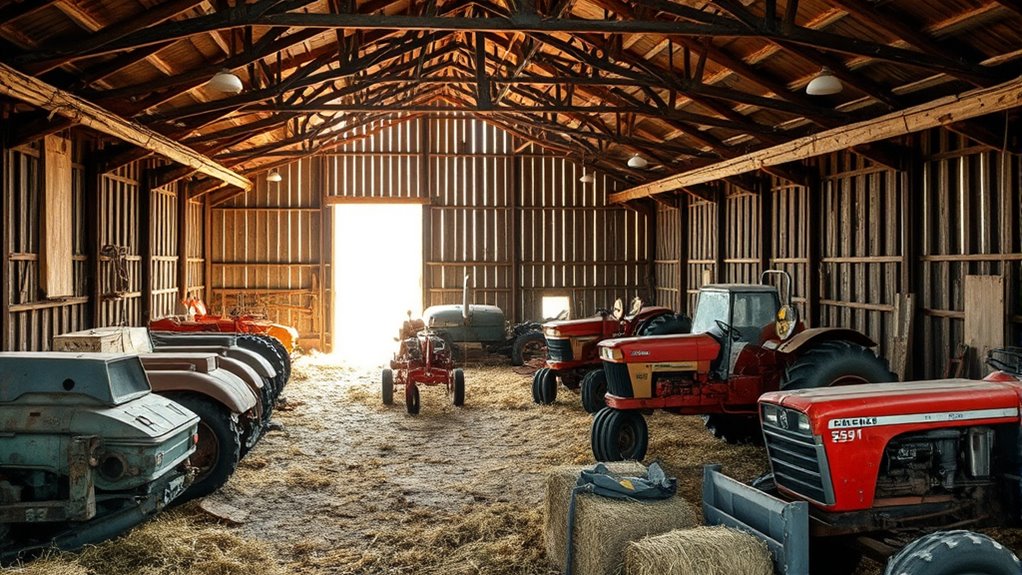

During the Cold War, surplus military equipment was repurposed to modernize American farms. You might see tanks turned into heavy-duty plowing machines or radios improving weather forecasts. Technologies like pumps and irrigation systems from the military helped optimize water use and land management. These innovations made farming more productive and accessible. If you want to understand how these military leftovers transformed agriculture and shaped today’s farming practices, there’s plenty more to explore.
Key Takeaways
- Military surplus equipment like jeeps and tractors was repurposed to enhance farm machinery and reduce costs.
- Military engineering and electronics innovations improved weather forecasting and crop monitoring techniques.
- Surplus pumps, generators, and irrigation systems expanded and optimized water management on farms.
- Access to advanced military technology accelerated farm modernization and increased agricultural productivity.
- Cold War era innovations fostered a culture of technological experimentation and resilience in American agriculture.

During the Cold War, surplus military equipment and technology often found new uses in agriculture, accelerating farm modernization across the United States. Instead of letting these resources sit unused, farmers and innovators repurposed military hardware and systems to improve productivity and efficiency on their farms. Military equipment such as jeeps, trucks, and tractors were transformed into versatile tools capable of handling demanding agricultural tasks. For example, surplus tanks and armored vehicles were sometimes converted into heavy-duty plowing or hauling machines, allowing farmers to cultivate larger areas with less effort. This repurposing not only saved money but also sped up the adoption of agricultural innovations that boosted crop yields and streamlined farm operations.
The availability of military surplus also introduced a wave of technological advances that farmers could incorporate into their practices. Many of these innovations came from the military’s expertise in engineering, electronics, and communication systems. For instance, surplus radar and radio equipment became the foundation for improved weather forecasting at the farm level, helping you plan planting and harvesting schedules more precisely. Additionally, surplus aviation technology, like small aircraft and drones, began to see use in crop monitoring and spraying, reducing the need for manual labor and increasing coverage efficiency. These innovations made it possible for you to make better-informed decisions, optimize resource use, and respond quickly to changing field conditions.
By acquiring surplus military equipment, you could also implement innovative methods of land management and irrigation. Many farmers used surplus pumps, generators, and irrigation systems originally designed for military or industrial use to expand and improve their water management practices. This access to advanced technology at a lower cost meant you could experiment with new techniques to conserve water and improve soil health. The infusion of military technology into agriculture fostered a culture of experimentation, leading to the development of more precise farming practices that are still in use today.
The impact of military surplus on farm modernization was profound. It lowered barriers for adopting cutting-edge tools and systems, making advanced technology more accessible to farmers across different scales of operation. As a result, agricultural innovations became more widespread, helping you increase productivity while reducing costs. This synergy between military surplus and farming technology accelerated the transition toward modern, efficient agriculture, leaving a lasting mark on how farms operate today. Essentially, the Cold War surplus era was a pivotal period that helped shape the technological landscape of American agriculture, making it more innovative, adaptable, and resilient. Furthermore, the integration of preppy dog names and other cultural influences during this era reflects the broader societal shifts that accompanied technological progress.

NomadEye Wireless Horse Trailer Camera | 4K Ultra HD, Magnetic Mount, 15H Battery, Night Vision, 2-Way Talk for Hitching Livestock Trailer, Gooseneck, RV, Camper, WiFi Connection, iOS&Android App
Wireless 4K Horse Trailer Camera:Install in seconds with a strong magnetic base—no drilling or wiring required. Ideal for...
As an affiliate, we earn on qualifying purchases.
Frequently Asked Questions
How Did Cold War Surplus Specifically Influence Agricultural Productivity?
The Cold War surplus influence boosted agricultural productivity by making advanced equipment and technology more affordable and accessible. You benefit from surplus machinery like tractors and tools, which streamline farm work and increase yields. This influx of surplus items encourages you to adopt new farming methods, ultimately leading to more efficient operations, higher productivity, and greater food security. The Cold War surplus played a vital role in transforming agriculture during that era.
What Types of Military Surplus Equipment Were Most Adopted by Farmers?
You likely saw military surplus tractors and surplus irrigation equipment being widely adopted by farmers. These machines provided reliable, cost-effective solutions for large-scale farming. Military surplus tractors, often rugged and durable, helped increase efficiency, while surplus irrigation equipment allowed better water management. By integrating these tools, you could boost productivity and modernize your farm without the high costs of new equipment, making the most of Cold War surplus resources.
Were There Regional Differences in Farm Tech Adoption Due to Surplus Availability?
You’ll find that regional disparities markedly influenced farm tech adoption, with some areas embracing surplus equipment faster than others. For example, the Midwest saw a 30% higher rate of technological diffusion compared to the South. This variation stems from differences in surplus availability and local infrastructure, making tech adoption uneven across regions. Understanding these disparities helps explain how surplus equipment shaped farming practices differently depending on where you are.
How Did Government Policies Affect Surplus Distribution to Farmers?
Government policies influenced surplus distribution by setting surplus pricing that made farm tech more affordable for farmers. They also improved distribution logistics, ensuring equipment reached rural areas efficiently. You benefit from these policies because lower surplus prices help you acquire farm tech at reduced costs, and better logistics mean quicker deliveries. These strategies helped streamline access to surplus resources, making farm technology more accessible and supporting agricultural productivity.
What Long-Term Impacts Did Cold War Surplus Have on Modern Farming Technology?
Imagine a bridge built from military innovation, connecting the past to today’s farms. Cold War surplus fueled technological transfer, leading to modern farming advances like precision equipment and improved crop management. This surplus accelerated the adoption of cutting-edge technology, making farms more efficient and sustainable. The long-term impact is a technology-driven agricultural landscape, where innovations born from military needs continue to shape and improve farming practices today.

Livestock Mineral Feeder - Little Giant - Cattle Mineral Feeder, 1 Quart (Item No. MF1GREEN)
SIMPLIFIES MEASUREMENT AND CONSUMPTION - Livestock mineral feeder simplifies measurement and consumption of multiple minerals.
As an affiliate, we earn on qualifying purchases.
Conclusion
Just like the leftover weapons from a distant war, Cold War surplus became a symbol of opportunity for farmers. You harnessed this hidden power, transforming surplus into innovation and growth. It’s a reminder that even remnants of conflict can seed progress. As you embrace new technology, remember that what’s left behind can fuel your future, turning history’s shadows into the bright promise of a thriving harvest. The past’s echoes can lead to tomorrow’s breakthroughs.

Toddmomy Livestock Salt Block Holder Thick Feeder Tray 6.69X6.69X5.70In for Cattle Sheep Goat Salt Brick Licking Box Easy Assembly Farm Feeder
Core Feeding Function: This salt block holder securely holds livestock salt blocks and mineral lick bricks, providing an...
As an affiliate, we earn on qualifying purchases.

SUPVOX Salt Block Holder Thick Livestock Lick Brick Box for Cattle Sheep Goat Horse Mineral Feeding Tray Farm Salt Feeder
Core Functionality: This salt block holder is designed specifically for livestock salt block feeding, providing a sturdy and...
As an affiliate, we earn on qualifying purchases.