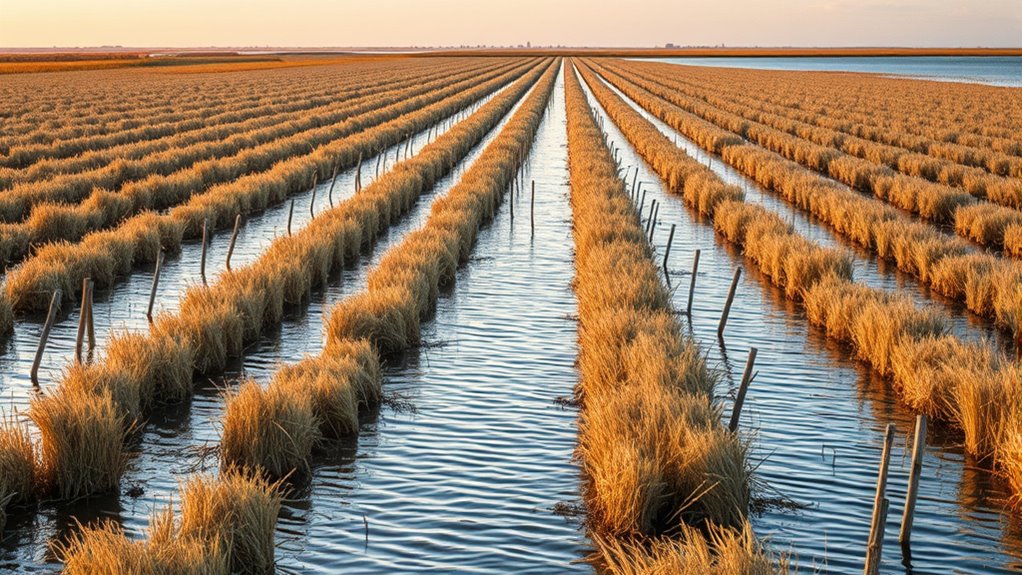

Coastal salt marsh haying involves harvesting marsh hay while balancing wildlife needs and environmental health. To do this sustainably, you should time your harvest to avoid nesting or migration periods, use traditional hand tools, and limit the amount of hay taken each season. Collaborating with conservation groups and following guidelines helps protect these essential habitats. If you want to learn how to harvest responsibly and support ecosystem resilience, keep exploring these best practices.
Key Takeaways
- Sustainable salt marsh haying involves timing harvests to avoid breeding seasons and minimize wildlife disturbance.
- Use traditional hand tools and limit machinery to protect marsh structure and prevent soil erosion.
- Collaborate with conservation agencies to develop guidelines that promote ecological health and sustainable practices.
- Monitoring weather and wildlife activity helps ensure harvests do not harm habitat quality or biodiversity.
- Responsible management maintains salt marsh resilience, supporting both hay production and vital wildlife habitats.
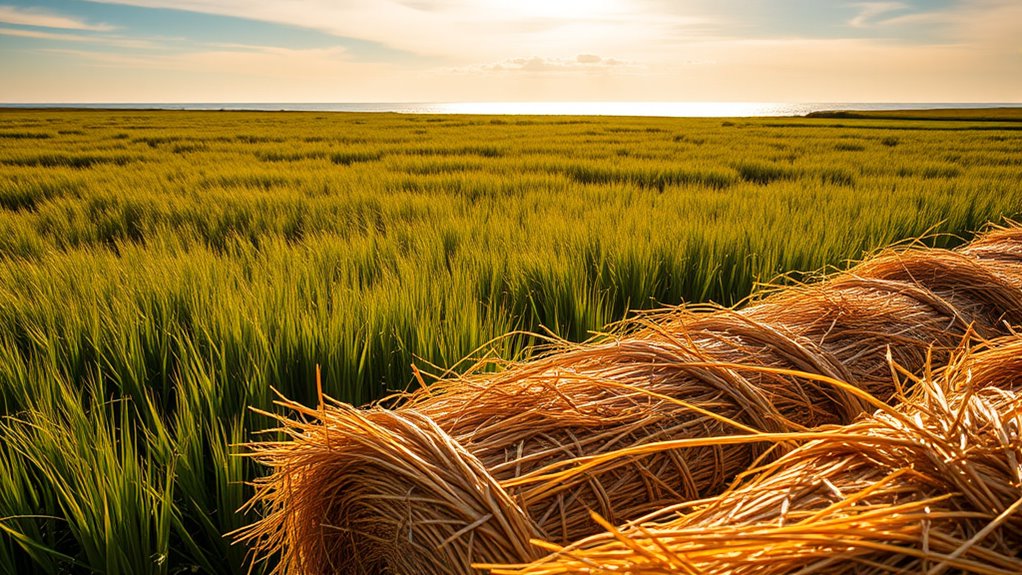
Have you ever wondered how coastal communities sustainably harvest hay from salt marshes? It’s a process that balances human needs with the preservation of delicate ecosystems. Salt marshes are essential wildlife habitats, supporting a variety of birds, fish, and invertebrates. When harvesting hay, local farmers and communities use sustainable practices that guarantee these habitats remain healthy and productive for future generations. They understand that overharvesting or careless methods could disrupt the marsh’s ecological balance, so they adopt techniques that allow them to gather hay without damaging the environment.
One key aspect of sustainable salt marsh haying is timing. Harvesting typically occurs during specific times of the year when plant growth is at its peak but before wildlife begins nesting or migrating. This careful scheduling minimizes disturbance to the habitat and allows plants to recover quickly, maintaining the marsh’s health. Farmers often monitor weather patterns and wildlife activity closely, guaranteeing they don’t cut hay during critical breeding seasons or when the marsh is particularly vulnerable. This thoughtful approach helps protect the habitat’s biodiversity and guarantees that wildlife can thrive alongside human activity.
Timing hay harvests to avoid nesting seasons protects biodiversity and promotes healthy marsh ecosystems.
Using traditional tools and methods also plays a significant role in maintaining sustainability. Instead of large machinery that can compact the soil or damage plant roots, many harvesters rely on hand tools or small-scale equipment. This reduces soil disturbance and prevents erosion, which are indispensable for preserving the marsh’s structure and water quality. Additionally, by limiting the amount of hay harvested each season, they give the marsh time to regenerate naturally, supporting the ongoing health of the ecosystem. These practices reflect an understanding that the marsh’s value isn’t just in the hay it produces but in the habitat it provides for countless species.
Communities practicing salt marsh haying often work closely with environmental agencies and conservation groups. This collaboration helps develop guidelines that promote sustainable use while safeguarding the marsh’s ecological integrity. Education and awareness are essential, as landowners and harvesters learn how their actions impact the broader environment and how to minimize any negative effects. As a result, salt marsh haying becomes a model of sustainable resource management—one that respects the marsh’s role as a wildlife habitat and recognizes its importance for ecological resilience. Additionally, integrating modern sustainable practices can further reduce environmental impacts and ensure the long-term health of these vital ecosystems.
Frequently Asked Questions
How Does Haying Affect Local Wildlife in Salt Marshes?
Haying can disturb wildlife and alter habitats in salt marshes. When you hay, you might scare away birds, amphibians, and insects, disrupting their feeding and nesting. The habitat changes as vegetation is removed, which can impact species that rely on dense marsh grasses for shelter. Your activity can unintentionally cause wildlife disturbance and habitat alteration, so it’s important to manage haying carefully to minimize these effects.
Are There Specific Permits Required for Salt Marsh Haying?
You need to check regulatory compliance and permit requirements before haying in salt marshes. Specific permits are often required from local, state, or federal agencies to make certain environmental protections are met. You must obtain these permits to avoid fines, protect wildlife, and maintain sustainable practices. Always consult with the appropriate authorities, submit necessary applications, and follow the rules carefully—doing so helps you responsibly manage salt marsh resources while staying within legal boundaries.
What Equipment Is Best Suited for Salt Marsh Haying?
You should use specialized harvester machinery designed for salt marsh haying to efficiently gather the hay without damaging the sensitive environment. Make certain to wear protective gear, such as gloves and waterproof clothing, to stay safe from salt and moisture. Opt for equipment with gentle cutting mechanisms that minimize disturbance to the marsh, and always keep your gear well-maintained to ensure smooth and eco-friendly operations.
How Does Haying Impact Salt Marsh Plant Diversity?
Haying can drastically transform salt marshes, like flipping a switch on plant species diversity and habitat resilience. When you harvest hay, you might unintentionally wipe out vital plant varieties, shrinking the lush tapestry of life and weakening the marsh’s ability to bounce back from storms. By carefully managing your practices, you can protect this delicate ecosystem, ensuring that plant diversity flourishes and resilience remains strong for generations to come.
What Are the Best Times of Year to Hay Salt Marshes?
You should hay salt marshes during late summer to early fall, when seasonal growth peaks and plants have matured enough for harvesting. This timing minimizes disruption to plant diversity and wildlife. Use careful harvesting techniques, like cutting above the root zone and avoiding sensitive areas, to protect the marsh’s health. Timing and techniques are vital for sustainable haying that supports the ecosystem while providing the needed forage.
Conclusion
By participating in coastal salt marsh haying, you play a essential role in preserving these fragile ecosystems. Your efforts help maintain the delicate balance of nature, ensuring these habitats thrive for generations to come. Remember, your actions can be as impactful as a ripple turning into a tidal wave—showing that even small steps can create enormous change. Keep caring for the marshes, because their health is truly the heartbeat of our coastlines.