Chili ristras are vibrant symbols of the harvest season, showcasing the bounty of ripe chilies hung to dry. You’ll notice them decorating farmsteads, markets, and homes, reflecting centuries-old traditions. They serve practical and cultural purposes—preserving colorful peppers for months and celebrating community harvests. As the weather cools, ristras sway gently, embodying patience and resilience. Keep exploring to discover how these beautiful garlands connect culinary heritage and seasonal festivities.
Key Takeaways
- Chili ristras symbolize autumn’s harvest bounty and are prominently displayed during harvest festivals and seasonal celebrations.
- They serve as practical, long-lasting methods for drying and storing chilies, enhancing culinary flavors for months.
- Making ristras involves threading vibrant chilies, reflecting cultural traditions and community participation in harvest time.
- Ristras represent resilience, patience, and the preservation of culinary heritage through seasonal drying practices.
- They act as visual cues of seasonal abundance, celebrating the land’s bounty and the ingenuity of harvesters.
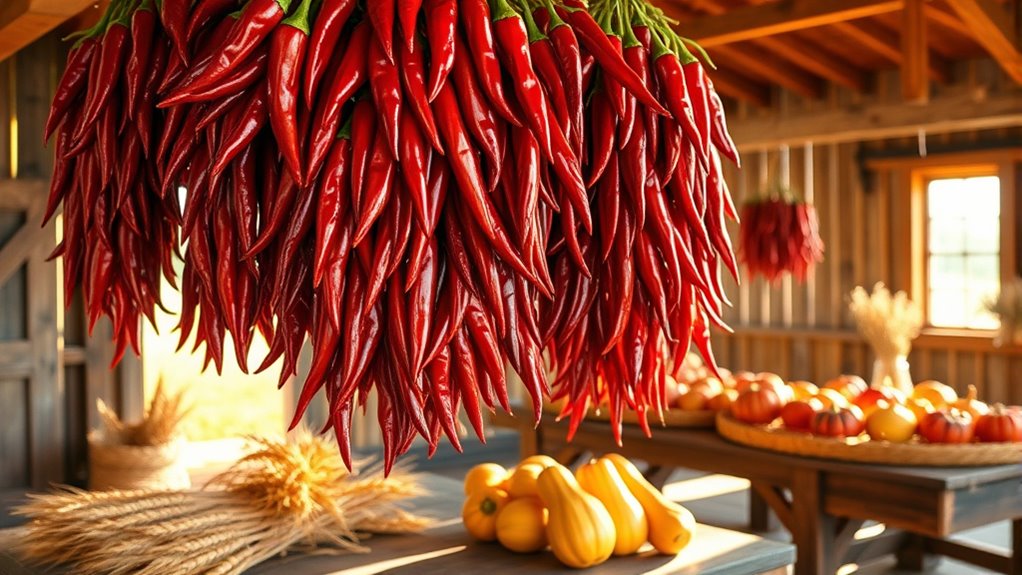
As harvest season arrives, chili ristras become a vibrant symbol of autumn’s bounty and tradition. You notice them hanging in farmsteads, markets, and homes, their bright reds and deep greens catching the eye. These strings of dried chilies aren’t just decorative; they embody centuries of dried chili preservation techniques and harvest festival traditions that tie communities together. When you see a chili ristra, you’re witnessing a practical way to store and enjoy the harvest long after the season ends. Dried chilies are a staple in many cuisines, especially in the Southwest, where they add flavor and heat to countless dishes. By hanging them in ristras, farmers and cooks ensure the chilies stay fresh and usable for months, preserving their fiery essence through the drying process. This method not only extends the chilies’ shelf life but also allows the flavors to deepen, making them a prized ingredient for future cooking.
Participating in the tradition of creating chili ristras connects you to a rich cultural heritage. During harvest festivals, communities celebrate with lively displays of seasonal produce, and hanging ristras is a common sight. You might join in the tradition by helping to string the chilies, carefully threading them to ensure they dry evenly. The process often involves selecting the best, most vibrant chilies—whether they’re fiery red or deep purple—then hanging them in a well-ventilated space to dry naturally. This act of preparing ristras is more than just practical; it’s a communal ritual that marks the end of the harvest and the beginning of a season of warmth, flavor, and gratitude. Proper downrod installation can also help ensure the drying space is well-ventilated and free from moisture, which is essential for preserving the quality of the chilies. The sight of a ristra swaying gently in the breeze is a symbol of hard work, patience, and the preservation of culinary heritage.
When you hang chili ristras, you’re participating in a time-honored tradition that celebrates both the bounty of the land and the ingenuity of those who harvest it. This method of dried chili preservation keeps the heat and flavor alive long after harvest festivals conclude. It also serves as a visual reminder of the season’s abundance, inspiring you to incorporate these fiery peppers into your own cooking. Whether used to spice up stews, sauces, or salsas, the dried chilies from your ristra carry the spirit of the harvest season, connecting you to generations of farmers and cooks who have relied on this simple yet effective method to enjoy the fruits of their labor. In this way, chili ristras are more than just decorations—they’re a symbol of tradition, resilience, and the enduring joy of harvest time.
Top picks for "chili ristra harvest"
Open Amazon search results for this keyword.
As an affiliate, we earn on qualifying purchases.
Frequently Asked Questions
How Long Do Chili Ristras Typically Last?
Chili ristras typically last several months to up to a year, depending on how well you care for them. Dried chili longevity is quite good if kept in a cool, dry place, preventing mold and moisture. You can enjoy their vibrant, decorative chili uses for a long time, making them perfect for year-round displays. Regularly check for any signs of spoilage and verify proper airflow to extend their beauty and usefulness.
Can Chili Ristras Be Used for Cooking?
Yes, you can use chili ristras for cooking. They’re great for flavor enhancement in various dishes, like stews, soups, or sauces. Just remove the dried chilies from the string and crush or chop them as needed. Keep in mind, dried chilies can be quite spicy, so adjust the amount based on your heat preference. Using chili ristras in cooking adds authentic flavor and a touch of visual appeal to your meals.
What Are the Best Storage Methods for Dried Chilies?
Think of dried chilies as treasure that needs safeguarding. To keep them fresh, store them in airtight storage containers that prevent moisture from sneaking in. Make sure to keep them in a cool, dark place to avoid spoilage. Proper moisture control is key—avoid humidity that can cause mold. By using the right containers and storing in ideal conditions, your dried chilies will stay flavorful and vibrant for months.
Are There Different Chili Varieties Used in Ristras?
You’ll notice different chili varieties used in ristras, each with unique chili variety differences like shape, size, and heat level. The chili color significance is also important; for example, red chilies often symbolize good luck and are more visually striking, while green ones might indicate freshness. Choosing specific varieties and colors can enhance the ristras’ appearance and cultural meaning, making your display both vibrant and meaningful.
How Do Climate Changes Affect Harvest Season Timing?
Climate variability acts like a shifting tide, impacting your harvest timing unpredictably. As temperatures and rainfall patterns change, they can either hasten or delay crop maturity. You might find your harvest season arriving earlier or stretching longer than usual. This unpredictability challenges planning and crop quality, making it vital to monitor weather patterns closely. Adapting your practices helps you stay resilient amid these climate shifts and guarantees a successful harvest.
Conclusion
As the vibrant vibrancy of your chili ristras signals the season’s success, savor the satisfying scent of harvest and home. Let the lively, layered colors of chilies charm your chimes of cheer, reminding you of nature’s nurturing nature. With wild winds whispering through the waning woods, welcome the warmth of harvest’s harvest, holding onto hearty memories. Celebrate this seasonal symphony, where nature’s nuances nourish both your spirit and your space.