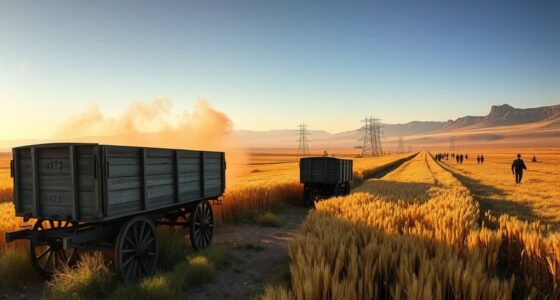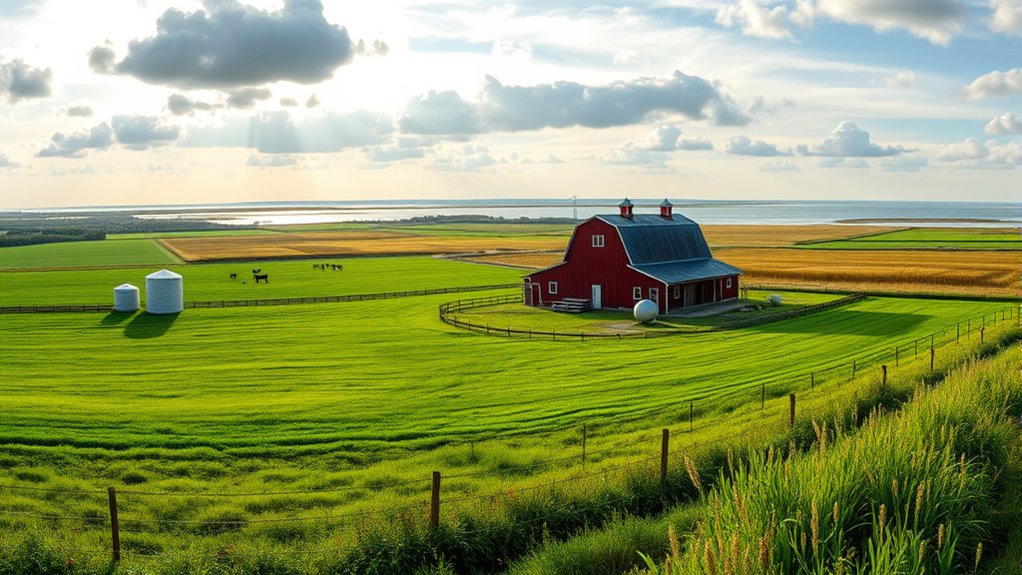

Chesapeake farmsteads and tidewater fields reveal a landscape shaped by resilience and innovation. You’ll find traditional structures built with durable local materials, designed to withstand Maryland’s humid climate and shifting tides. These farms use clever water management techniques, like tide gates and irrigation, to adapt to unpredictable weather. Their architecture and practices reflect a deep connection to the environment and community. To explore how these methods and structures evolved over time, keep exploring this rich heritage.
Key Takeaways
- Chesapeake farmsteads feature durable architecture like barns and farmhouses designed for Maryland’s humid, tidal environment.
- Architectural elements such as large haylofts and porches reflect practical farming needs and community life.
- Tidewater fields utilize water management techniques like sluices and tide gates for effective irrigation and flood control.
- Traditional farming practices include crop rotation and tidal irrigation, showcasing adaptation to environmental rhythms.
- Preservation of historic farm structures and practices highlights Chesapeake’s agricultural heritage and resilience.
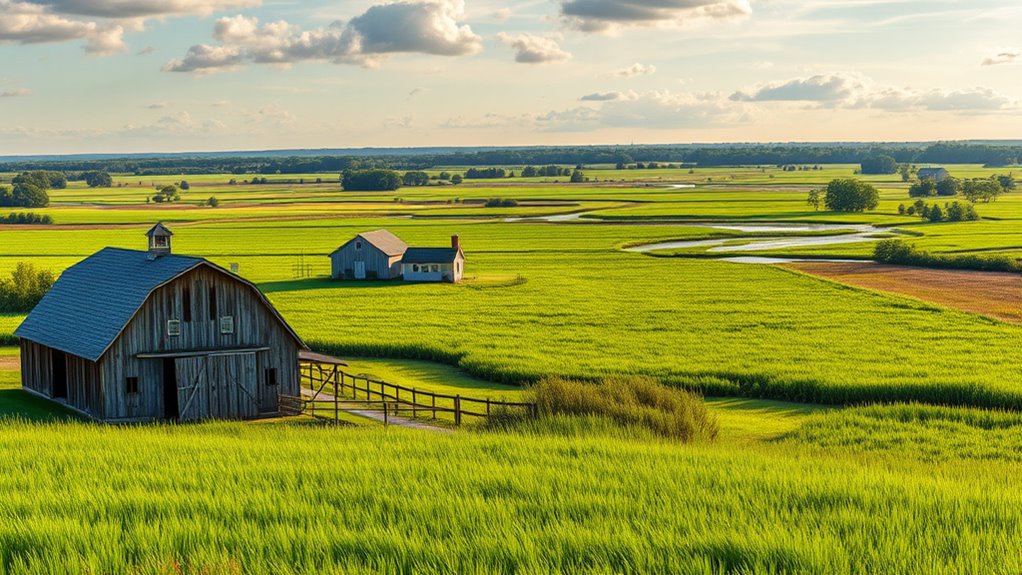
Nestled along Maryland’s coast, Chesapeake farmsteads and tidewater fields embody a rich tradition of agriculture and community resilience. As you explore this landscape, you’ll notice the distinctive historic architecture that tells stories of generations past. These structures, from sturdy barns to simple farmhouses, reflect the ingenuity of early settlers who built to withstand the region’s humid climate and shifting tides. The use of local materials, such as weathered cedar and brick, not only offers durability but also preserves a sense of place, connecting you to the area’s heritage. Walking through these farms, you’ll see how their designs have evolved—yet many retain the essential features that define Chesapeake’s rural character.
Your journey also reveals the deep connection between historic architecture and agricultural practices. Many farmsteads were originally designed with efficiency in mind, incorporating features like large haylofts, wide porches for social gatherings, and strategic orientations for sunlight and wind. These architectural choices weren’t just functional; they embodied the community’s values and adaptation to the environment. Today, these structures serve as living museums, illustrating how early farmers maximized their resources and worked in harmony with nature. Preserving these buildings isn’t just about maintaining old walls; it’s about honoring the ingenuity that sustained generations of Chesapeake farmers.
As you continue, you’ll notice the fields themselves, shaped by centuries of agricultural practices honed to suit the tidewater environment. The use of crop rotation, tidal irrigation, and selective planting helped farmers adapt to unpredictable weather and fluctuating water levels. These practices allowed them to cultivate crops like corn, soy, and vegetables while managing the challenges of the coastal landscape. You might also see evidence of historic water management systems—ditches, sluices, and tide gates—that controlled water flow, protecting crops during floods and droughts alike. These techniques demonstrate a deep understanding of the land’s rhythms, which continues to influence farming today. Additionally, the integration of modern irrigation techniques with traditional methods highlights how innovation continues to shape Chesapeake agriculture.
In exploring Chesapeake farmsteads, you’re witnessing a living legacy of resilience, ingenuity, and stewardship. The combination of historic architecture and traditional agricultural practices creates a landscape that’s both beautiful and functional. It’s a testament to the hard work and adaptability of those who farmed these lands long before modern technology took hold. As you take in the sights and stories of these tidewater fields, you’ll come to appreciate how they embody a unique blend of history and practicality—an enduring symbol of Chesapeake’s rural heritage.
Frequently Asked Questions
What Are the Origins of Chesapeake Farmstead Architecture?
You’ll find that Chesapeake farmstead architecture originates from colonial influences brought by early settlers. They used local building materials like wood and brick, which shaped the style’s rustic charm. These structures emphasize practicality, with simple, sturdy designs suited for the region’s climate. Over time, the architecture evolved, blending traditional methods with regional adaptations, creating a distinctive look that reflects the area’s history and natural resources.
How Do Tidewater Fields Influence Local Ecosystems?
You see Tidewater Fields shaping your local ecosystems through their marshland biodiversity and floodplain dynamics. They nurture diverse plant and animal species, creating vibrant habitats that support life. These fields also absorb floodwaters, reducing erosion and protecting nearby communities. By maintaining healthy floodplain dynamics, Tidewater Fields foster resilience, ensuring your environment stays balanced and thriving for generations to come.
What Traditional Farming Methods Are Still Used Today?
You still use traditional farming methods like sustainable practices and crop rotation. These methods help maintain soil health, prevent pests, and reduce chemical use. Crop rotation involves changing crops each season to avoid soil depletion, while sustainable practices focus on conserving water and avoiding harmful chemicals. By sticking to these time-tested techniques, you promote healthier land and better yields, ensuring farming remains productive and eco-friendly for future generations.
Are There Any Preservation Efforts for Historic Farmsteads?
You’ll find dedicated preservation initiatives that act like guardians for historic farmsteads, safeguarding their stories like treasured heirlooms. Heritage conservation efforts breathe new life into these old structures, ensuring they stand tall against time’s relentless march. These initiatives celebrate tradition while intertwining the past with the present, allowing you to walk through living museums of history. By supporting these efforts, you help preserve the soul of rural heritage for generations to come.
How Has Climate Change Impacted Chesapeake Agriculture?
Climate change has profoundly impacted Chesapeake agriculture by causing unpredictable weather patterns and rising sea levels. You need to focus on building climate resilience by adopting crop adaptation strategies, such as selecting hardy varieties and adjusting planting schedules. These measures help protect your farm from extreme weather events and long-term shifts, ensuring sustainable productivity. Staying informed about climate trends and implementing adaptive practices are essential for maintaining healthy, resilient farms in the Chesapeake region.
Conclusion
Just as a steadfast ship navigates shifting tides, your journey through Chesapeake farmsteads and tidewater fields anchors you in their enduring story. These landscapes are like ancient tapestries, woven with threads of history and nature, inviting you to become part of their ongoing tale. By understanding their rhythms, you become a essential stitch in this living fabric, ensuring that their legacy continues to flow like the endless tide—constant, resilient, and full of life.