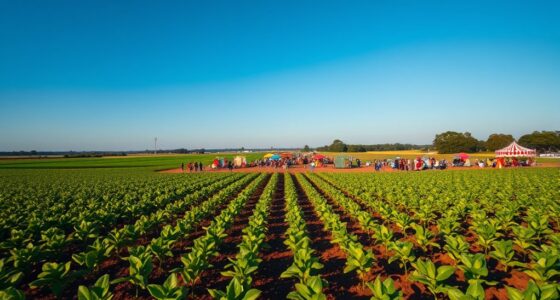
Cane syrup kettles and fall grinds are essential parts of traditional sugarcane processing, celebrating community and craftsmanship. During fall, local gatherings host community festivals where farmers use large copper or stainless steel kettles to cook freshly harvested cane juice. These events highlight time-honored techniques like slow simmering and stirring, creating rich, flavorful syrup. If you want to explore the cultural significance and the steps involved, there’s plenty more to discover about this cherished tradition.
Key Takeaways
- Cane syrup kettles are traditional vessels used for boiling and reducing cane juice into syrup during harvest.
- Fall grinds are community festivals celebrating sugarcane harvest and syrup-making traditions.
- Kettles symbolize craftsmanship and are central to cultural gatherings during fall grinds.
- The fall harvest season marks the time for using kettles and holding fall grind celebrations.
- These events preserve centuries-old techniques connecting communities to their land and sugarcane heritage.
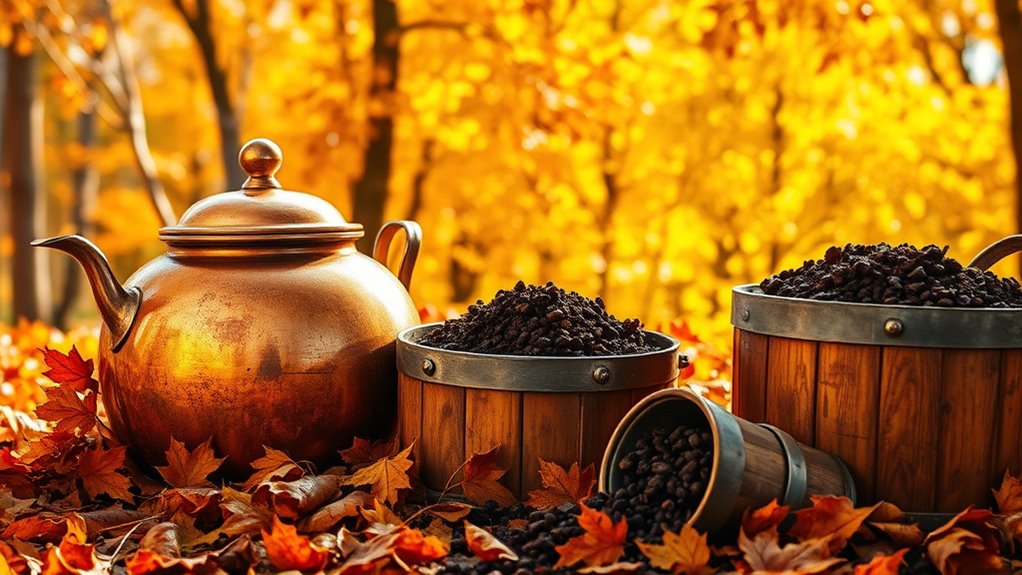
Have you ever wondered how the rich, golden flavor of cane syrup is crafted? It all begins with sugarcane cultivation. Farmers carefully tend to their fields, planting and nurturing tall, green stalks that are packed with natural sugars. The quality of the cane directly influences the taste and color of the syrup, so diligent care goes into selecting the best varieties and ensuring ideal growing conditions. Once the harvest season arrives, usually in late summer or fall, the sugarcane is cut and prepared for processing.
From there, the focus shifts to syrup production techniques. The freshly harvested cane is crushed to extract the juice, often using large, traditional cane mills or modern machinery. As the juice flows out, it’s filtered to remove any debris or impurities that could affect the final product’s purity. This juice is then cooked down in large cane syrup kettles—a key element of traditional syrup production. These kettles are usually made of copper or stainless steel, chosen for their heat conductivity and durability. Over an open flame or controlled heat source, the juice is slowly simmered, stirring continuously to prevent burning and to promote even evaporation.
Fresh cane juice is filtered and simmered in copper or stainless steel kettles over heat.
The process requires patience and skill. As the juice reduces, it thickens into a syrup that gradually develops its characteristic golden hue and rich aroma. The temperature is carefully monitored to reach the precise point where the syrup attains the perfect consistency—thick but pourable. This stage is vital because overcooking can lead to a darker, more caramelized syrup, while undercooking might result in a thinner, less flavorful product. Traditional syrup production techniques often involve tasting and visual cues, with seasoned syrup makers knowing just when to remove the kettle from heat. Additionally, the quality of the sugarcane used significantly impacts the final flavor and color of the syrup.
During fall grinds, the focus on quality intensifies. This is the time when syrup makers often host local festivals and gatherings to celebrate the harvest and showcase their craft. The kettles are central to these events, as they symbolize the effort and tradition behind each jar. You might observe the rhythmic stirring, smell the sweet fragrance of boiling cane juice, and witness the transformation from raw juice to luscious syrup. This seasonal activity not only sustains local economies but also preserves centuries-old techniques that connect communities to their agricultural roots.
In essence, the craft of making cane syrup in kettles during fall grinds combines the meticulous art of sugarcane cultivation with time-honored syrup production techniques. It’s a process rooted in tradition, patience, and a deep appreciation for the natural sweetness that comes from the land.
Frequently Asked Questions
How Long Does It Typically Take to Make Cane Syrup?
Making cane syrup usually takes about 4 to 6 hours, depending on the syrup boiling duration and how much juice you’re processing. You need to observe the boil closely, stirring often to prevent burning. Harvest timing also affects the process; harvesting at the right time guarantees the juice is fresh and sweet, which shortens the boiling time and results in a better syrup. Patience and attention are key to perfect syrup.
What Types of Wood Are Best for Fall Grinds?
For fall grinds, you want wood that burns slow and produces rich flavor, like hickory or oak. These woods enhance the aroma and extend fall grind timing, giving you more control over the process. While softer woods burn quickly and yield less flavor, hardwoods provide steady heat and deep smoke. Choosing the right wood makes all the difference, ensuring your fall grind is both efficient and flavorful, every single time.
Can Cane Syrup Kettles Be Used for Other Purposes?
Yes, you can use cane syrup kettles for alternative purposes. With some kettle modifications, such as adding temperature controls or cleaning features, you could repurpose them for tasks like boiling sap, making jams, or brewing large batches of beverages. Just verify the kettle’s material is suitable for your intended use and that you clean it thoroughly between different functions to avoid contamination or flavor transfer.
How Do Weather Conditions Affect Fall Grind Timings?
Weather impact plays a vital role in fall grind timings. If you experience heavy rain or unseasonably warm temperatures, it can delay harvest because crops need ideal conditions to mature and be harvested efficiently. Conversely, dry, cool weather accelerates the process, allowing you to stick to your planned harvest schedule. Always monitor weather forecasts closely to adapt your harvest timing, ensuring the best quality and yield for your fall grind.
Are There Safety Precautions for Operating Cane Syrup Kettles?
Imagine the swirling steam rising from a bubbling kettle, glowing like molten gold. To stay safe, always wear proper safety gear—gloves, goggles, and aprons—to protect against splashes and burns. Follow emergency procedures diligently, knowing where your fire extinguisher and first aid kit are. Stay alert and cautious, because the intense heat and boiling syrup demand respect, ensuring you avoid accidents and keep the process safe for everyone involved.
Conclusion
So, as you savor the rich history of cane syrup kettles and fall grinds, remember—they’re more than just traditions; they’re the heartbeat of the season. Like a melody that lingers, these flavors connect you to the land and its stories. Embrace the magic, feel the warmth, and let each sip and bite remind you that some things, like true craftsmanship, never go out of style. After all, isn’t life better when you cherish the simple, sweet moments?