Before buying an electric tiller, consider its battery life to match your garden size, ensuring it won’t stop mid-task. Check noise levels if you prefer a quieter operation around neighbors or early mornings. Focus on weight and ergonomic features for easier handling, especially on uneven ground. Make sure the motor power suits the soil and tasks you need, and look into adjustable tines for versatility. Keep these factors in mind to find a tiller that fits your needs — more tips await to help you make the best choice.

Get furniture and decor delivered free with Prime
- Fast, free delivery on millions of items
- Prime Video, Amazon Music and more included
- Member-only deals all year
Key Takeaways
- Ensure the battery capacity matches your garden size for continuous operation.
- Consider noise levels to maintain a peaceful environment during use.
- Choose a lightweight, ergonomic model for easier handling and reduced fatigue.
- Match motor power and tine configuration to your specific gardening tasks.
- Prioritize battery life and performance over other features for reliable, hassle-free use.
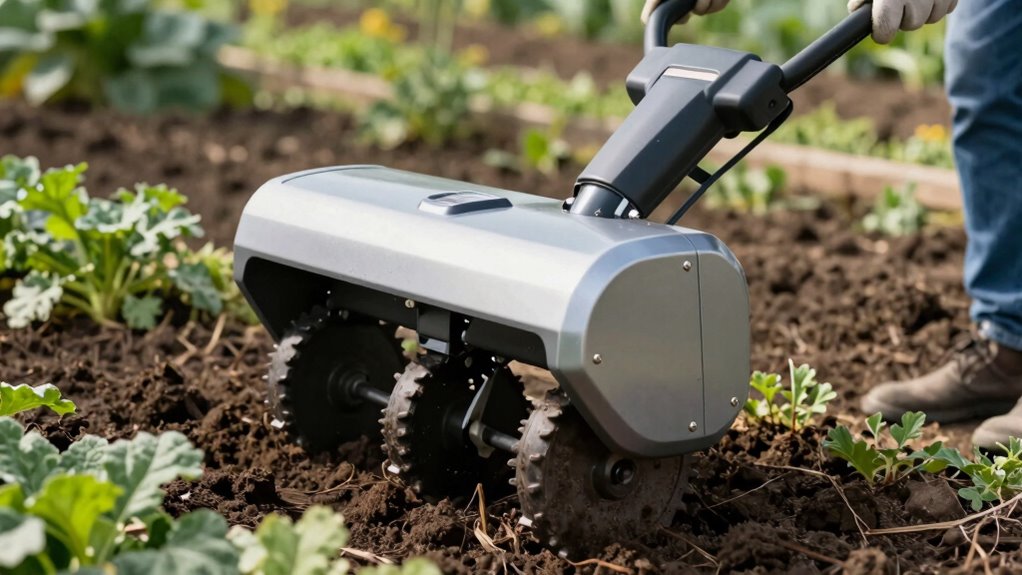
Are you aware of the key factors to take into account before purchasing an electric tiller? One of the most important considerations is its battery life. You want a tiller that can handle your garden’s size without constantly needing a recharge. If you have a large plot, look for models with longer-lasting batteries, so you won’t be interrupted halfway through your work. Keep in mind that battery performance can vary depending on usage and terrain. A heavier, more demanding soil might drain the battery faster, so consider a tiller with a higher-capacity battery or multiple batteries for extended use. The convenience of cordless operation is significant; it provides mobility and flexibility, but only if the battery life meets your needs. Additionally, battery performance can be affected by factors like terrain and soil type, so choose a model suited for your specific gardening conditions. Moreover, understanding the technology behind battery efficiency can help you select a tiller that maintains consistent power over time. It’s also worth noting that proper maintenance of the battery can extend its lifespan and overall performance.
Another vital factor is noise levels. Electric tillers tend to be quieter than gas-powered ones, but some models still produce noticeable noise. If you have close neighbors or prefer a quieter gardening experience, it’s worth paying attention to noise ratings. A lower decibel level means less disturbance, allowing you to work early in the morning or late in the evening without bothering others. Some models are specifically designed to operate quietly, making them ideal for residential areas. Additionally, quieter operation often indicates a smoother, more refined motor, which can contribute to better performance and longer-lasting components.
Beyond battery life and noise levels, you should also consider the tiller’s weight and ease of maneuverability. An electric tiller is meant to simplify gardening, so choosing a lightweight model that you can handle comfortably is essential. If it’s too heavy or unwieldy, you might find it difficult to control, especially over uneven terrain. Look for features like adjustable handles and ergonomic designs that reduce fatigue and increase precision. A well-designed tiller with ergonomic features can significantly improve your gardening experience and reduce physical strain.
Furthermore, evaluate the tiller’s power and tines. A more powerful motor can handle tougher soil and thicker roots, making your work more efficient. The type and size of tines also matter; some models offer adjustable or interchangeable tines suited for different tasks, whether breaking up compacted soil or aerating lawns.
In the end, what really matters before you buy an electric tiller is balancing these factors according to your specific needs. Focus on battery life to guarantee uninterrupted work sessions, pay attention to noise levels for a peaceful environment, and don’t overlook weight and power capabilities to make gardening easier and more effective. Making an informed choice will help you enjoy your garden chores with less hassle and more satisfaction.
electric tiller with long battery life
As an affiliate, we earn on qualifying purchases.
As an affiliate, we earn on qualifying purchases.
Frequently Asked Questions
How Long Is the Warranty Typically Included?
Warranty coverage for electric tillers usually lasts between one to three years, depending on the manufacturer. You should check the specific warranty details, as some brands offer longer coverage for parts and repairs. Good customer support is essential if issues arise during the warranty period. Make sure to review the warranty terms carefully and keep your receipt, so you can easily access support or claim repairs when needed.
Can It Handle Rocky or Uneven Soil?
An electric tiller may struggle with rocky or uneven soil because soil texture impacts its performance. If your soil has lots of rocks or is very uneven, the tiller’s durability could be compromised, and it may not effectively break through tough patches. Look for models specifically designed for challenging conditions, with reinforced parts and sturdy motors, to guarantee it handles rocky or uneven soil well and lasts longer in tough terrain.
Is There a Recommended Storage Method?
Did you know proper storage extends your tiller’s lifespan by up to 30%? When storing your electric tiller, follow essential storage tips like cleaning it thoroughly and keeping it in a dry, sheltered place. Regular maintenance routines, such as inspecting cords and lubricating moving parts, also prevent damage. Always unplug and disconnect the battery before storage, ensuring it’s ready for your next gardening adventure.
Are Replacement Parts Readily Available?
Replacement parts for electric tillers are generally available, but it varies by brand. You should check the battery life and read user reviews to see if parts are easy to find and replace. Well-known brands tend to have better support, making it easier to find essential parts when needed. Ensuring parts are readily available helps keep your tiller running smoothly and extends its overall lifespan.
How Noisy Is the Electric Tiller During Operation?
The noise levels of an electric tiller can be quite noticeable during operation, often producing a loud, mechanical hum. Its operational sound varies, but generally, you’ll find it noisier than a gentle garden tool yet quieter than traditional gas-powered tillers. If peace and quiet matter, check the decibel ratings; a quieter machine helps you work without disturbing neighbors or family. Always consider how much noise you’re willing to tolerate beforehand.
Conclusion
Before you buy an electric tiller, remember it’s like choosing the right partner for your garden’s journey. Think about your needs, power, and features to guarantee it’s a match made in soil. Don’t rush into a decision—take your time and pick the one that’ll help your garden flourish. When you choose wisely, your tiller becomes a trusty steed, turning tough terrain into a smooth path for growth. Happy planting!
Fall Picks
fall essentials
As an affiliate, we earn on qualifying purchases.