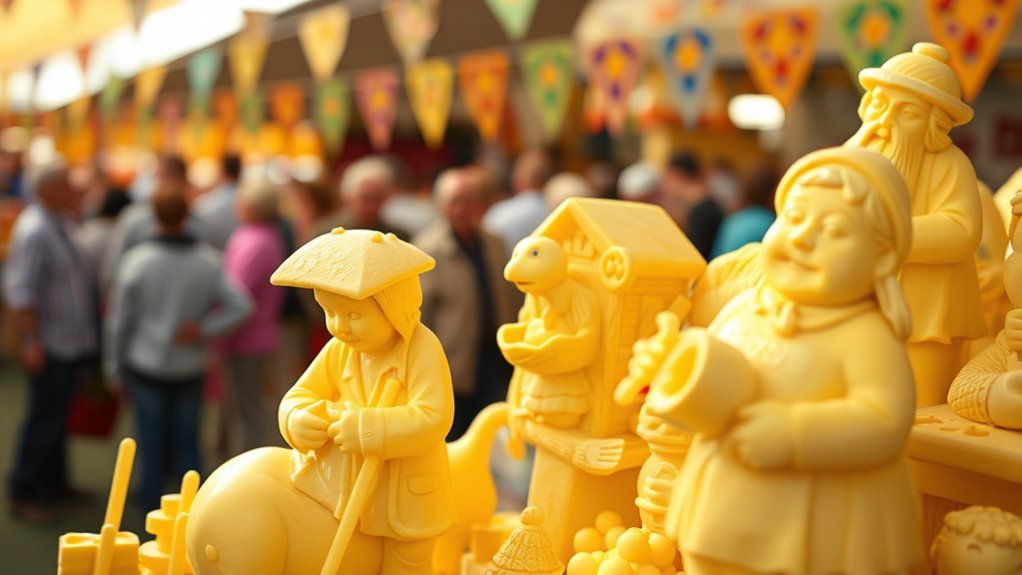

County fair butter sculptures celebrate rural heritage by turning dairy into impressive works of art that highlight local craftsmanship and traditions. You’ll see intricate designs that showcase years of skill, often depicting seasonal themes, historical moments, or community stories. These sculptures connect you to the history and festive spirit of agricultural fairs, holding a special place in local lore. If you continue exploring, you’ll uncover more about the history and artistry behind these unique creations.
Key Takeaways
- County fair butter sculptures originated in 19th-century Europe and evolved as a form of artistic expression celebrating agricultural heritage.
- They gained popularity in American Midwest fairs, symbolizing rural traditions and community craftsmanship.
- Renowned artists like Norma “Duffy” Lyon elevated butter sculpting to a respected art form with intricate, storytelling designs.
- Crafting sculptures requires mastery of butter’s properties, temperature control, and collaborative effort, often showcased in competitive settings.
- Today, butter sculptures continue to draw crowds, honoring fair traditions, craftsmanship, and regional lore through detailed, creative displays.
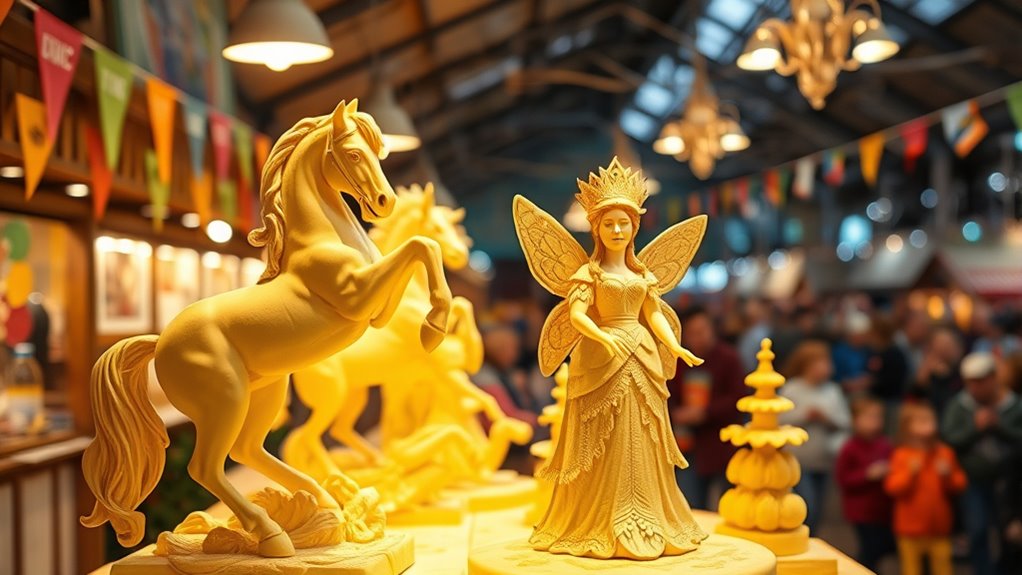
Every year at the county fair, visitors marvel at the intricate butter sculptures that showcase artistic talent and local traditions. These stunning creations aren’t just fleeting displays; they have a rich history rooted in centuries of rural and agricultural communities celebrating their harvests. The origins of butter sculpture date back to the 19th century, particularly in Europe, where dairy farming was a essential part of daily life. Farmers would often craft small figures from leftover butter as a way to showcase their dairy products and attract customers at markets and fairs. Over time, this simple practice evolved into a form of artistic expression, with skilled artisans transforming blocks of butter into elaborate scenes and figures. In America, butter sculpture gained popularity at state fairs, especially in the Midwest, where dairy farming thrived. The tradition became a way to celebrate agricultural heritage and draw crowds to local events.
Throughout history, many famous artists have contributed to the craft of butter sculpting, elevating it from a rustic pastime to a respected art form. These artists often gain recognition not only for their technical skill but also for their ability to tell stories through their sculptures. Some renowned butter sculptors, like Norma “Duffy” Lyon, became household names within the fair community. Lyon, in particular, was celebrated for her detailed and expressive works, earning numerous awards and elevating butter sculpting to new artistic heights. Her work often depicted historical figures, cultural icons, or seasonal themes, showcasing her mastery and creativity. Her influence inspired many aspiring sculptors to pursue the craft, and her legacy continues to be felt in the tradition of fair butter sculptures today. These artists often dedicate years to perfecting their techniques, mastering the delicate balance of temperature, timing, and skill needed to carve such detailed figures from soft butter.
The craft requires more than just artistic talent; it demands an understanding of the science behind butter’s properties and how to manipulate it without melting or cracking. Many famous artists spend countless hours preparing, practicing, and innovating new techniques. Their work often involves collaborative efforts, with teams working together to complete large, complex sculptures within tight deadlines. As a result, butter sculpture competitions at fairs have become a showcase of both artistic prowess and technical mastery. Today, these sculptures continue to draw crowds, not only for their beauty but also for the stories they tell—stories that connect us to our agricultural roots and honor the craftsmanship of generations past.
Frequently Asked Questions
When Did Butter Sculpting First Become Popular at Fairs?
You might be surprised, but butter sculpting first gained popularity at fairs in the late 19th century. Its history origins trace back to European traditions, where it symbolized abundance and prosperity. Over time, the cultural significance grew, turning butter sculpting into a festive art form that celebrates local pride. Today, you can see impressive sculptures at fairs, showcasing creativity and skill while honoring this unique tradition.
How Do Artists Prevent Butter Sculptures From Melting?
To prevent butter sculptures from melting, you use butter preservation and climate control techniques. You keep the sculptures in cool, climate-controlled environments, often refrigerated or air-conditioned, to maintain their shape. Additionally, artists may apply a thin coating of wax or use special sprays to slow melting. By carefully managing temperature and humidity, you guarantee the sculptures stay intact and impressive throughout the event.
Are There Any Safety Concerns With Butter Sculpture Displays?
You might think butter sculptures are harmless, but they can pose serious safety concerns. Food safety is vital; if temp or hygiene isn’t maintained, bacteria can thrive. Plus, animal welfare matters—using real animal products or misleading the public about their origin raises ethical issues. Always guarantee proper refrigeration and transparency to protect viewers and uphold ethical standards, preventing any health or moral hazards from turning a beautiful display into a risky situation.
What Tools Are Used to Carve Butter Sculptures?
You use specialized tools like palette knives, wire loops, and chisels for butter carving techniques. These tools help you shape and detail the sculpture precisely. To guarantee sculpture preservation methods, you keep the butter cool and work quickly to prevent melting. Regularly smoothing surfaces with spatulas and maintaining a controlled environment helps keep your sculpture intact and looking fresh throughout the display.
How Long Do Butter Sculptures Typically Last at Fairs?
You might wonder how long butter sculptures stay intact at fairs. Typically, their durability hinges on butter preservation methods and ambient conditions. Under proper refrigeration, they can last several days, but heat and humidity quickly diminish their form. So, if you want to see these fleeting works of art, you’ll need to act fast—because the sculpture’s fragile beauty often vanishes within a matter of days, leaving only memories behind.
Conclusion
As you walk away from the county fair, remember that the butter sculptures are more than just fleeting art—they’re a reminder that even the most delicate creations can leave a lasting impression. Like a whisper in the wind, their stories and lore linger in your mind, proving that beauty and tradition can melt together in a moment of shared wonder. Hold onto these memories; they’re the sweet cream that enriches your life’s tapestry.