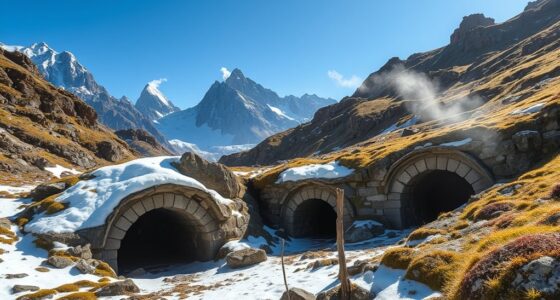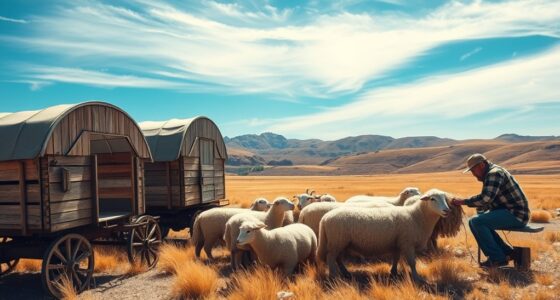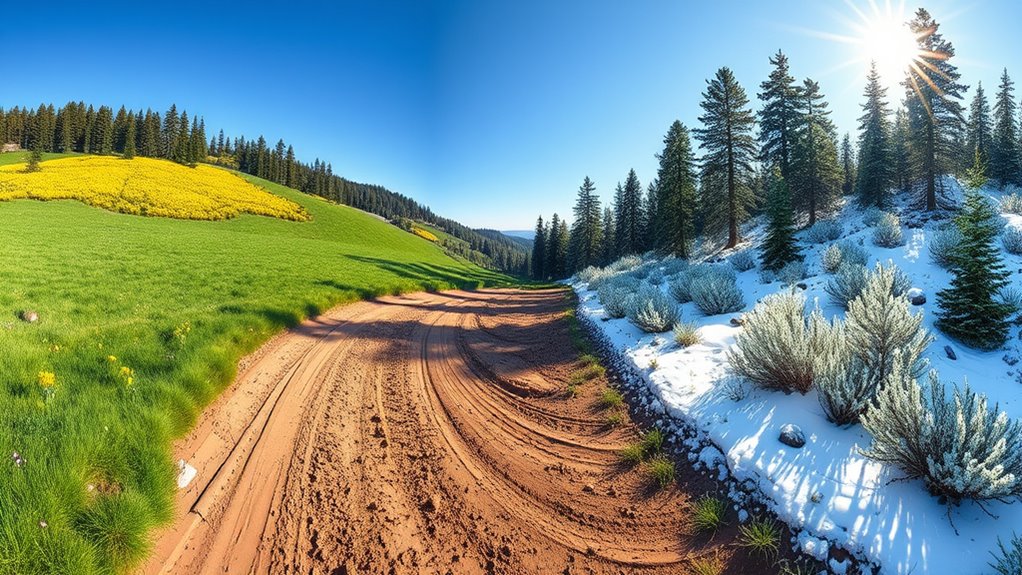

Rural areas are shifting from buggy roads used for farming or forestry to ski roads for winter tourism, reflecting broader transformations. As younger generations migrate to cities, these regions embrace outdoor activities like skiing and mountain biking to attract visitors and new residents. High-speed internet and innovative infrastructure enable remote work, boosting local economies. If you keep exploring, you’ll see how these changes make rural communities more vibrant and resilient than ever before.
Key Takeaways
- Rural areas are repurposing scenic roads into outdoor adventure routes to attract tourism and boost local economies.
- Investment in infrastructure and connectivity supports the development of ski resorts and adventure tourism hubs.
- Transitioning from traditional industries to tourism and recreation creates new employment opportunities.
- Rebranding rural spaces as vibrant, activity-rich destinations helps counter demographic decline and aging populations.
- Sustainable growth strategies incorporate innovative solutions, enhancing accessibility and establishing resilient, modern rural communities.

Have you ever wondered how rural communities are changing in response to modern challenges? One of the most noticeable shifts is how these areas are adapting to the pressures of urban migration. As younger generations move to cities seeking better job opportunities, rural populations tend to dwindle. This exodus leaves behind an aging demographic, which can threaten the sustainability of local services and economies. But rather than accepting decline, many rural communities are actively seeking ways to reinvent themselves, turning the challenge of urban migration into an opportunity for economic diversification. Instead of relying solely on traditional industries like farming or forestry, they’re embracing new sectors, such as tourism, renewable energy, and small-scale manufacturing. This diversification helps to create new jobs and attract residents who might have otherwise overlooked rural areas.
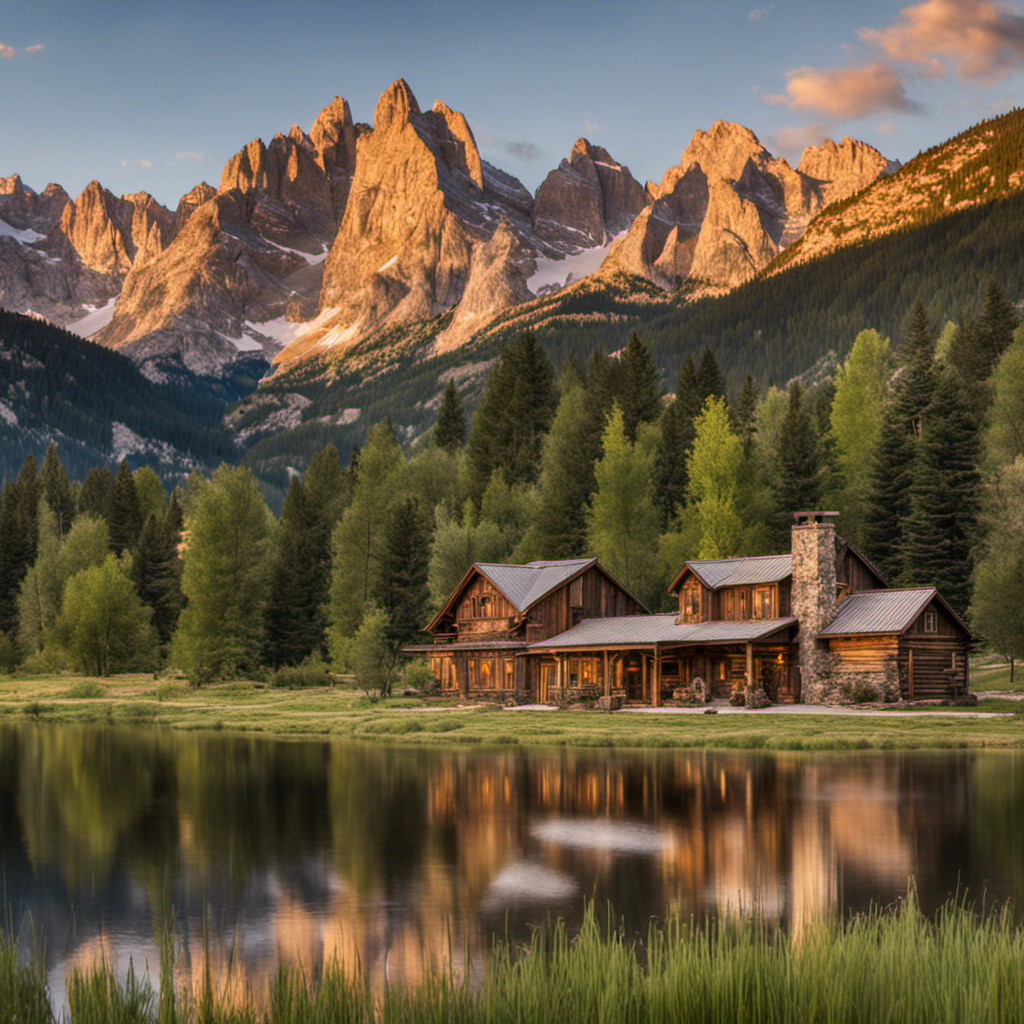
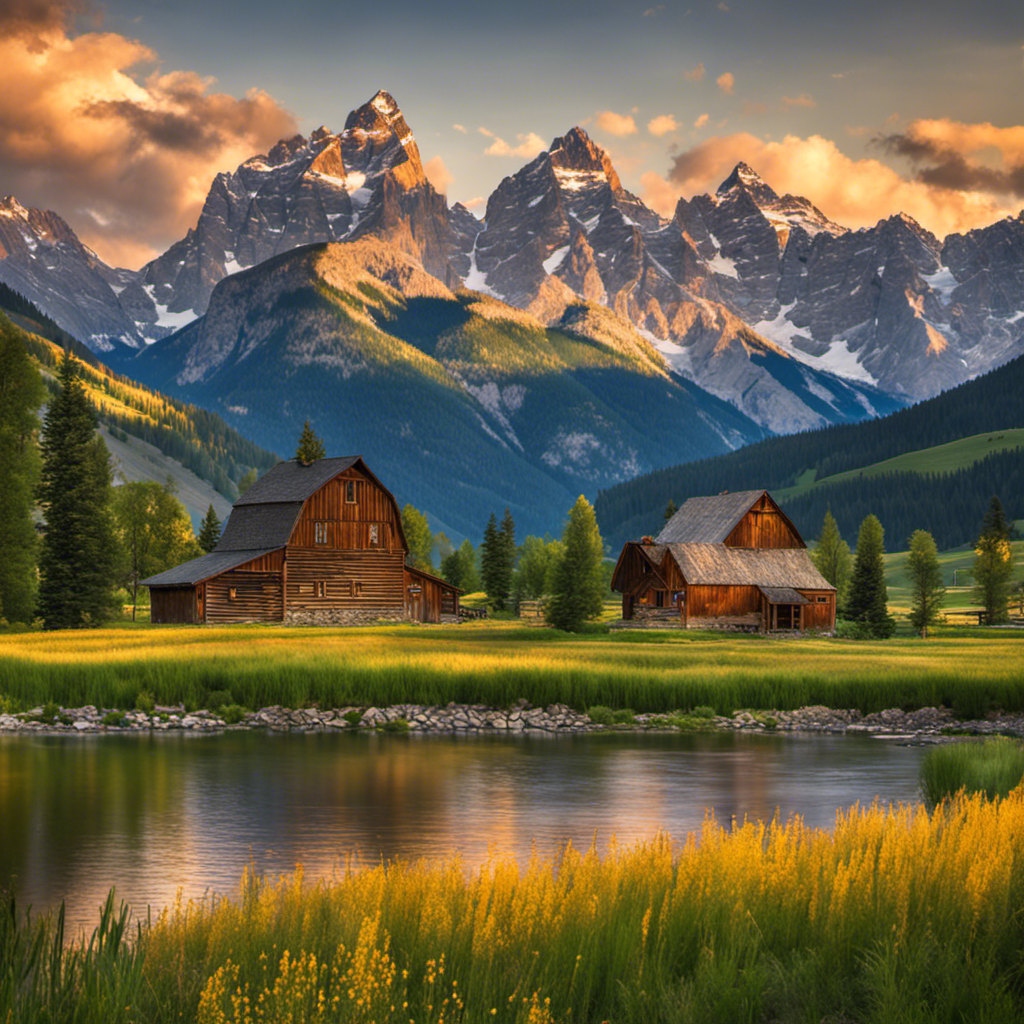
In many cases, rural towns are shifting their identities to appeal to niche markets. For example, some regions are transforming their scenic landscapes into outdoor adventure hubs, drawing visitors interested in skiing, mountain biking, or hiking. These initiatives are part of a broader effort to reinvent rural spaces as vibrant destinations, not just sleepy backwaters. By investing in infrastructure to support these activities, communities can boost local businesses and create a more resilient economy. This also encourages younger residents to stay or return, knowing there are new opportunities beyond traditional industries.
Furthermore, rural communities are leveraging technology and connectivity to bridge the gap created by urban migration. High-speed internet has become a game-changer, allowing residents to work remotely or start online businesses. This digital shift reduces the need for physical proximity to city centers and opens up new pathways for economic development. It also attracts remote workers and entrepreneurs who want the tranquility of rural life but don’t want to sacrifice career opportunities. As a result, rural areas are experiencing a kind of renaissance, where they become attractive places to live and work, rather than just places to farm or mine. Self Watering Plant Pots are an example of how innovative solutions can support sustainability and growth in any setting.

Sklon Ski Strap and Pole Carrier | Avoid The Struggle and Effortlessly Transport Your Ski Gear Everywhere You Go | Features Cushioned Shoulder Sling | Great for Families – Men, Women and Kids – Orange
THE “WOW, I WISH I KNEW ABOUT THIS EARLIER” SKI ACCESSORY OF THE YEAR – Forget awkwardly lugging…
As an affiliate, we earn on qualifying purchases.
As an affiliate, we earn on qualifying purchases.
Frequently Asked Questions
How Do Rural Communities Finance Ski Resort Development?
You can finance ski resort development through a mix of public-private partnerships and community funding. Local governments often provide grants or incentives, while private investors contribute capital. Community funding initiatives, like crowdfunding or local taxes, also help generate support. By collaborating with public and private entities, you guarantee sustainable financing that benefits the entire community, promotes economic growth, and creates jobs, turning rural areas into thriving ski destinations.
What Environmental Impacts Do Ski Roads Have on Rural Areas?
You might notice that ski roads can cause wildlife disruption by fragmenting habitats and disturbing animal movement. Additionally, increased water runoff from the paved surfaces can lead to soil erosion and water pollution in rural areas. These environmental impacts threaten local ecosystems and water quality, making it essential for communities to implement sustainable planning and mitigation measures to minimize harm while developing ski resorts.
How Do Local Residents Benefit From Transitioning to Ski Roads?
You benefit from shifting to ski roads through local job creation, which boosts your community’s economy and provides new employment opportunities. Additionally, the change helps preserve your local culture by attracting tourists and supporting traditional practices. This transition fosters a stronger sense of community and cultural pride, while offering economic stability. Overall, ski roads can enhance your quality of life by creating sustainable growth and maintaining your area’s unique heritage.
What Are Common Challenges in Converting Buggy Roads to Ski Roads?
Converting buggy roads to ski roads is like transforming a dirt trail into a smooth highway, facing challenges like uneven terrain and limited infrastructure. You’ll need to focus on proper road grading to make certain safe, navigable paths and install clear signage for skier safety. Balancing environmental concerns with infrastructure upgrades can be tricky, but with careful planning, you can turn a rough route into an inviting winter destination for visitors.
How Does Infrastructure Change During Rural Ski Road Development?
During rural ski road development, you’ll see infrastructure upgrades like improved signage, widened pathways, and enhanced safety features. These changes support better access and safety for visitors. Community engagement plays a crucial role, as locals often provide input on design and priorities, ensuring the development benefits everyone. You’ll notice that these upgrades not only boost tourism but also improve everyday transportation, making the area more accessible and connected.

ROCKBROS Bike/Bicycle Phone Front Frame Bag, Waterproof, Tube Bag,Cycling Pouch, Bike Accessories for Men Compatible Phone Under 7”
LARGE SPACE: Bike bag has enough inside room for long rides, holds a lot of stuff like phone,…
As an affiliate, we earn on qualifying purchases.
As an affiliate, we earn on qualifying purchases.
Conclusion
As you see, transforming buggy roads into ski routes can revitalize rural areas. Imagine a small mountain town turning its rough trails into popular ski destinations, bringing in tourists and boosting the local economy. This shift not only preserves the area’s natural beauty but also creates new opportunities for residents. Embracing these conversions can truly turn a simple rural landscape into a thriving, dynamic community—showing that change can lead to exciting new beginnings.

Skiing The Instruction Manual: Getting started: Equipment, techniques, safety, competition (Haynes Manuals)
As an affiliate, we earn on qualifying purchases.
As an affiliate, we earn on qualifying purchases.

STARLINK Standard Kit AX 4 X Tri Band Wi-Fi System – High-Speed, Low-Latency V4 Internet Band AC Wi-Fi Router and Satellite Dish System – High-Speed Portable Internet – White
Starlink provides reliable high-speed, low-latency, internet wherever you live
As an affiliate, we earn on qualifying purchases.
As an affiliate, we earn on qualifying purchases.