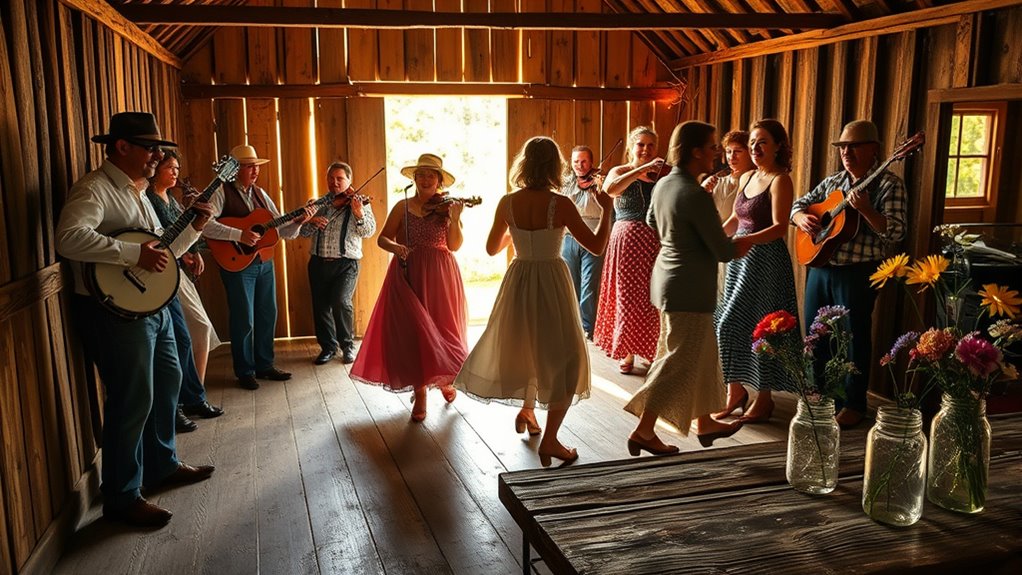

Bluegrass pickin’ and barn dances are lively traditions where communities come together to play energetic instruments like banjo, fiddle, and mandolin, creating improvisational, joyful music. You’ll experience lively participation, with everyone encouraged to join in, dance, and share skills across generations. Modern tools like amplification help keep the sound vibrant for outdoor gatherings. If you stay curious, you’ll discover how these traditions keep Appalachian culture alive and thriving today.
Key Takeaways
- Bluegrass pickin’ involves fast, intricate fingerpicking techniques like Scruggs style on instruments such as banjo and mandolin.
- Barn dances are lively community events where musicians and dancers actively participate, preserving regional culture.
- Amplification, including solar-powered systems, helps project sound during outdoor gatherings, enhancing the communal experience.
- These traditions emphasize passing down playing techniques and stories, fostering community spirit and musical heritage.
- Modern tools support the preservation and sharing of bluegrass music, ensuring its ongoing vitality for future generations.
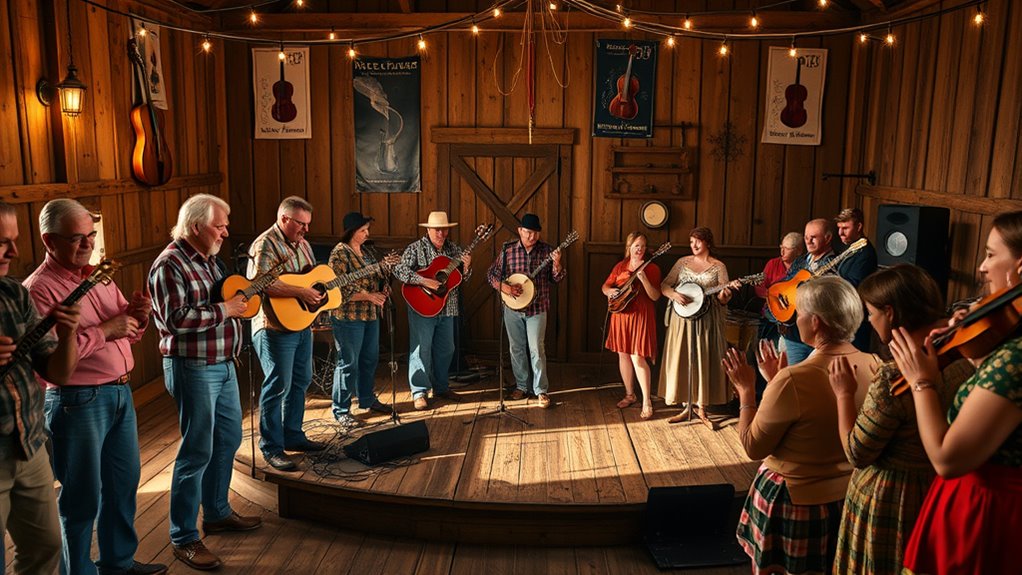
If you’ve ever stepped into a barn filled with lively music and smiling faces, you know the magic of bluegrass pickin’ and barn dances. This tradition runs deep, rooted in history and fueled by community spirit. Bluegrass music originated in the Appalachian region in the 1940s, blending elements of folk, country, and blues. Its history is rich with stories of farmers, craftsmen, and musicians coming together to celebrate their culture through song and dance. Over the decades, these gatherings became a way to preserve regional stories, share musical skills, and strengthen bonds. The tradition emphasizes more than just the music; it’s about passing down techniques, maintaining a sense of heritage, and creating a lively, inclusive atmosphere.
When you participate in a barn dance, you’ll quickly notice the importance of instrument techniques that define bluegrass sound. The banjo, fiddle, mandolin, guitar, and upright bass each have specific ways of playing that give bluegrass its distinctive twang and energy. For example, the banjo often employs a fast-paced, fingerpicking style known as “clawhammer” or “Scruggs style,” named after Earl Scruggs, a legendary player who revolutionized the instrument’s role in bluegrass. The fiddle is played with quick, precise bowing, often incorporating improvisation and ornamentation to add flair. The mandolin features rapid-fire picking patterns that keep the rhythm lively, while the guitar often provides both rhythm and solos, using flatpicking techniques to cut through the ensemble. The upright bass adds depth with upright, walking bass lines that set the foundation for the entire performance. Learning these techniques isn’t just about mastering the notes; it’s about feeling the rhythm and connecting with the music’s lively, communal spirit. Additionally, many musicians in bluegrass use solar-powered amplification to ensure their sound projects clearly during outdoor gatherings, demonstrating how modern innovations help preserve traditional music in community settings.
Barn dances are more than just performances—they’re living examples of how traditions are kept alive through hands-on participation. As you join in, you’ll see that the real magic lies in the shared experience and the transfer of skills from seasoned musicians to newcomers. Everyone, regardless of age or skill level, is encouraged to pick up an instrument or step into the circle, embodying the history and spirit of bluegrass. The techniques may differ from person to person, but the goal is the same: to create a vibrant, improvisational sound that keeps the dance floor lively. This ongoing exchange of tradition, technique, and joy guarantees that bluegrass pickin’ and barn dances will continue to thrive, inspiring new generations to carry on the musical legacy.
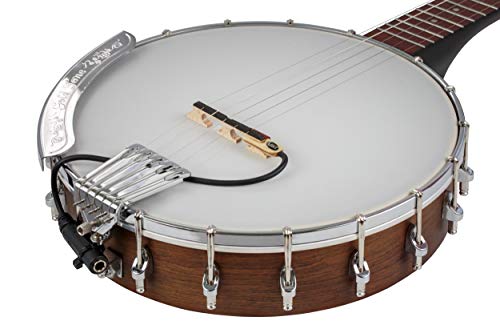
KNA BP-1 Portable Piezo Banjo Pickup – Natural Tone, Lightweight Design, Easy Installation, Passive Electronics, No Battery Required, Onboard Volume Control, Secure Clamp Mount, Handcrafted in Europe
NATURAL SOUND REPRODUCTION – Captures the authentic tone of your banjo with clarity and balance.
As an affiliate, we earn on qualifying purchases.
As an affiliate, we earn on qualifying purchases.
Frequently Asked Questions
What Are the Origins of Bluegrass Music?
You might find it fascinating that bluegrass music’s origins trace back to the 1940s in the Appalachian region. Its history blends traditional Scottish, Irish, and African American influences, evolving through artists like Bill Monroe and Earl Scruggs. You’ll see how it grew from old-time country and gospel roots, shaping a unique genre. Its evolution reflects a mix of cultural traditions, creating the lively, intricate sound you enjoy today.
How Do Barn Dances Differ From Other Dance Events?
Barn dances stand out because they emphasize country attire and a relaxed, friendly atmosphere. You’ll find a lively dance floor where everyone follows simple dance steps, respecting dance floor etiquette. Unlike formal events, barn dances encourage participation and community spirit, making everyone feel welcome. You can wear cowboy hats or boots, and the focus remains on fun and connection rather than perfection. It’s a joyful, down-to-earth experience you won’t forget.
What Instruments Are Essential for Bluegrass Pickin’?
You need a fiddle and banjo to master bluegrass pickin’. Focus on fiddle techniques like bowing and vibrato to add expression, and explore various banjo styles such as clawhammer and three-finger picking. These instruments create the lively, rhythmic sound that defines bluegrass music. Practice regularly to develop your skills, and you’ll bring authentic bluegrass energy to any jam session or performance.
Are Barn Dances Suitable for Beginners?
Like stepping into a warm, welcoming porch light, barn dances are perfect for beginners. You’ll find the dance floor etiquette simple, and everyone’s friendly, just like old friends. Focus on having fun and follow beginner dance tips—move comfortably and don’t worry about perfect steps. These dances are a great way to learn, connect, and enjoy the lively spirit of the music, making every step feel like a joyful celebration.
How Has Bluegrass Music Evolved Over the Years?
You see, bluegrass music has evolved from its roots in traditional folk and country, incorporating elements like the bluegrass fiddle to create a richer sound. Over the years, newer artists have blended genres and modernized the style. As you join barn dance events, remember barn dance etiquette, which helps maintain the lively, respectful atmosphere. This evolution keeps bluegrass fresh while honoring its deep, musical heritage.

PHOENIX Violin 4/4 Full Size Kit, Violin Fiddle Set for Beginner Adults with Rosewood Bow Extra Strings & Bridge (Entry-level, Full)
Wonderful Sound & Premium Wood: PHOENIX 4/4 violin is made of spruce top and maple backs and sides….
As an affiliate, we earn on qualifying purchases.
As an affiliate, we earn on qualifying purchases.
Conclusion
As you step back from the lively barn, think of bluegrass pickin’ and barn dances as a warm hearth in winter—drawing everyone close, sparks flying, and hearts connected. Just like fire, your music and dance light up the darkness, creating a glow that lingers long after the last chord fades. Embrace this tradition, and you’ll find yourself part of a timeless story, where every note is a spark and every dance a lasting ember in the soul.

Vangoa Mandolin Musical Instrument A Style, Acoustic Mandolin Instrument Kit Italian 8 String for Professional Beginners Adults Teens Youth Kids, Sunburst, Glossy
✔️[Premium AAA Tonewood Mandolin A-Style] Unlike mandolins made with cheap material, Vangoa mandolins are crafted from AAA-grade tone…
As an affiliate, we earn on qualifying purchases.
As an affiliate, we earn on qualifying purchases.

Bluegrass Street Sign Music Lover Musician Band Banjo | Indoor/Outdoor | 24" Wide
Sign Size: 6" X 24"
As an affiliate, we earn on qualifying purchases.
As an affiliate, we earn on qualifying purchases.