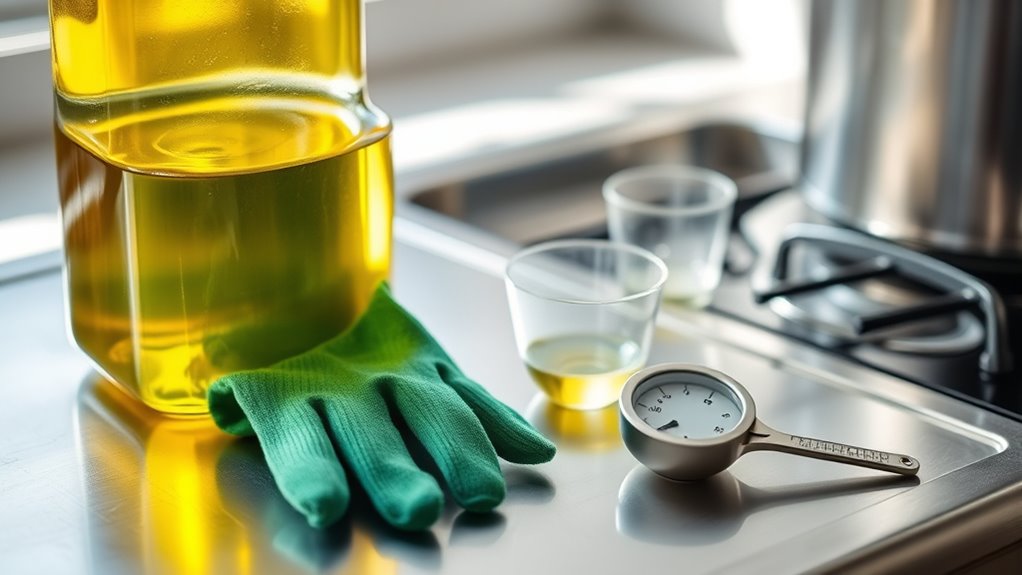

When generating biodiesel from used cooking oil, prioritize safety by wearing protective gear like gloves and goggles, working in well-ventilated areas, and handling chemicals carefully to avoid splashes. Store your fuel in approved containers away from heat or flames, and stay familiar with local regulations. Keeping emergency supplies nearby, such as fire extinguishers, further reduces risks. To guarantee a safe and successful process, you’ll find essential tips that make the journey smoother.
Key Takeaways
- Always wear protective gear and work in well-ventilated areas when handling chemicals like methanol and lye.
- Use proper filtration methods to remove contaminants from used cooking oil before biodiesel production.
- Store biodiesel in approved, airtight containers away from heat, flames, and direct sunlight.
- Familiarize yourself with local regulations and label all storage containers clearly.
- Keep emergency equipment like fire extinguishers nearby and follow safety guidelines throughout the process.

Using used cooking oil to produce biodiesel is an effective way to turn waste into a valuable fuel source. However, before you start the process, it’s essential to prioritize safety and proper handling. One of the first steps is ensuring thorough cooking oil filtration. Residual food particles, water, and impurities can compromise the quality of your biodiesel and cause issues during processing. You need to filter the oil carefully using a fine mesh or specialized filtration systems to remove solids and contaminants. This step not only improves the efficiency of your conversion but also reduces the risk of dangerous reactions, such as foaming or emissions, during processing.
Once your oil is properly filtered, it’s vital to pay attention to biodiesel storage safety. Biodiesel, especially in its raw or semi-processed form, can be flammable and sensitive to temperature fluctuations. Always store your biodiesel in approved, airtight containers made of compatible materials, like metal or certain plastics designed for fuel storage. Keep these containers in a well-ventilated area, away from heat sources, open flames, and direct sunlight. Proper storage not only minimizes fire hazards but also prevents spoilage or microbial growth that could degrade the fuel quality.
Store biodiesel in approved, airtight containers away from heat, flames, and sunlight to ensure safety and fuel quality.
Handling the chemicals involved in producing biodiesel, such as methanol and lye (sodium hydroxide), further emphasizes the importance of safety precautions. Always wear protective gear — gloves, goggles, and long sleeves — to shield yourself from splashes. Work in a well-ventilated space, and never underestimate the risks of chemical exposure. Keep your workspace organized and immediately clean up any spills, as these can be hazardous and cause accidents.
Another safety tip is to familiarize yourself with local regulations concerning biodiesel production and storage. Regulations are in place to protect both your health and the environment, and compliance ensures you avoid legal issues. Proper labeling of storage containers, understanding emergency procedures, and having fire extinguishers nearby are all part of responsible handling practices.
Additionally, understanding the importance of proper filtration techniques can help prevent contamination and ensure a safer production process. Lastly, always stay informed and cautious. Even as a beginner, taking the time to learn about proper filtration techniques and storage safety measures will greatly reduce risks. Remember, safety doesn’t mean slowing down; it means being prepared and mindful at every step. By prioritizing these safety tips, you’ll create a safer environment for yourself and produce high-quality biodiesel efficiently.

BeeCastle 10-Frames Complete Beehive Kit, 100% Beeswax Coated Bee Hive Includes Beehive Frames and Beeswax Coated Foundation Sheet (2 Layer)
[Thicker and Full Beeswax Coating] - BeeCastle hives are fully soaked in the boiled beeswax(the beeswax deeply soaks...
As an affiliate, we earn on qualifying purchases.
Frequently Asked Questions
Can Used Cooking Oil Be Safely Stored Long-Term Before Biodiesel Conversion?
You can store used cooking oil long-term before converting it to biodiesel, but you need to contemplate storage duration and oil degradation. Keep the oil in a cool, airtight container away from sunlight to slow down spoilage. Ideally, use it within a few months, as extended storage can lead to oil degradation, which reduces quality and complicates the biodiesel conversion process. Proper storage helps maintain oil quality and safety.
Are There Environmentally Friendly Disposal Options for Leftover Biodiesel Byproducts?
You might think leftover biodiesel byproducts are hard to dispose of, but eco-friendly options exist. Using biodegradable additives can make waste oil recycling safer and more sustainable, reducing environmental impact. Recycling waste oils through proper channels prevents pollution and supports renewable energy efforts. By adhering to local regulations and partnering with waste management services, you guarantee responsible disposal that benefits the planet, turning byproducts into useful resources rather than waste.
How Do Temperature Variations Affect the Biodiesel Production Process?
Temperature variations considerably impact your biodiesel production process. Proper temperature control guarantees your reaction remains ideal, directly affecting reaction efficiency. Too high or low temperatures can slow down or halt the chemical reactions, leading to incomplete conversion or poor-quality biodiesel. Keep a close eye on your temperature, use reliable thermometers, and maintain consistent heat to maximize reaction efficiency and produce high-quality biodiesel efficiently.
What Are the Legal Regulations Regarding Biodiesel Production at Home?
Think of legal regulations as the sturdy backbone supporting your biodiesel journey. You must prioritize legal compliance and understand licensing requirements before diving in. Check local laws, permits, and safety standards—ignoring these is like building on shaky ground. By adhering to regulations, you ensure your project’s success and safety. So, research thoroughly, obtain necessary licenses, and follow guidelines to turn your biodiesel dreams into a compliant, eco-friendly reality.
Is Specialized Equipment Required for Small-Scale Biodiesel Production?
You don’t need specialized equipment for small-scale biodiesel production, but certain equipment requirements are vital for safety and efficiency. You’ll need basic items like a reactor container, stirring device, and separation tools. Safety considerations include working in a well-ventilated area, wearing protective gear, and handling chemicals carefully. Using proper equipment helps prevent accidents and ensures a smoother process, making your biodiesel production safer and more effective.

10-Frame Langstroth Beehive Dipped in 100% Beeswax, Complete Bee Hives and Supplies Starter Kit Includes 2 Deep Hive Bee Boxes and 1 Bee Hive Super with Beehive Frames and Foundations
STANDARD SIZE - 2 Heavy beeswax coated deep brood boxes (16-1/4″ x 19-7/8″ x 9-5/8″) with 20 premium...
As an affiliate, we earn on qualifying purchases.
Conclusion
Remember, safely converting used cooking oil into biodiesel is like tending a garden—you need patience, attention, and the right tools. By following these safety tips, you’ll nurture your project without getting burned or overwhelmed. Think of each careful step as watering your future fuel source, helping it grow into a clean, eco-friendly alternative. Stay cautious, stay curious, and enjoy the journey of turning waste into something valuable—your own little green engine in the making.

Hoover Hives: The Original Beeswax Coated Beehive Kit. Includes 2 Deep & 1 Medium Boxes with 10 Wooden Frames & Heavy Wax Coated Foundations. Easy Assembly with Predrilled Holes& Screws (Unassembled)
Premium Quality Construction: Hoover Hives' Original Beeswax Coated Beehive Kit is crafted with precision and durability in mind,...
As an affiliate, we earn on qualifying purchases.

21.5 Quart Water Bath Canner - Large Food Grade Enamel Canning Pot with Rack, Heavy-Duty Canning Supplies for Jam, Salsa, Pickles, Fruits & Vegetables
Includes a 21.5 quart water bath canning pot with lid and a dedicated jar rack, providing all essential...
As an affiliate, we earn on qualifying purchases.