

Get furniture and decor delivered free with Prime
- Fast, free delivery on millions of items
- Prime Video, Amazon Music and more included
- Member-only deals all year
Solid Wood vs. Reclaimed: Two Paths to the Same Farmhouse Look
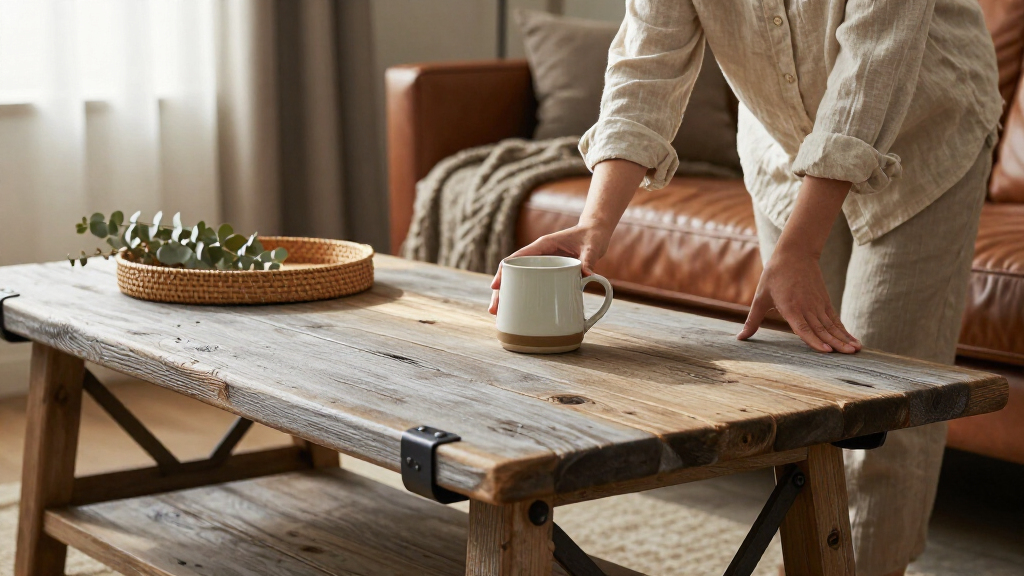
The rustic farmhouse coffee table market splits into two camps that look similar in photos but behave very differently in a living room. On one side are new solid wood tables, usually built from pine, oak, acacia, or mango wood, with a farmhouse silhouette, a clean finish, and grain that has never seen a barn. On the other side are reclaimed and heavily distressed tables, made from old barn boards, factory flooring, or new wood that has been hand-scarred, wire-brushed, and stained to look old. Shoppers compare them because they both deliver the chunky, timeworn farmhouse aesthetic, but they diverge sharply on price, durability, maintenance, and how the table will actually age over the next decade. The real decision is not ‘which looks more farmhouse’ — both do — but whether you want a table that starts perfect and earns its wear, or one that arrives pre-worn and hides everything life throws at it. This guide compares them across the criteria that actually change the buying outcome: materials and build quality, durability, appearance and character, maintenance, price and value, weight and practicality, and resale or longevity. Broadly, buyers who want a long-term heirloom piece and can pay more should lean solid wood; buyers who want maximum character per dollar, have kids and pets, or love the aged look should lean reclaimed or distressed. Neither choice is wrong, but the wrong choice for your household will show within a year.

TRIBEWOOD 47-Inch Solid Wood Farmhouse Coffee Table with Lower Shelf, Vintage Brown
- ✔ Material: Solid wood
- ✔ Color: Vintage brown
- ✔ Shape: Rectangular

Signature Design by Ashley Farmhouse Lift-Top Coffee Table with Storage
- ✔ Materials: Pine veneers, wood, and engineered wood
- ✔ Dimensions: 36 W x 36 D x 18 H inches
- ✔ Shape: Square

VASAGLE Farmhouse Coffee Table with Hidden Storage
- ✔ Material: Particleboard and MDF
- ✔ Collection: LIRY
- ✔ Shape: Square
TRIBEWOOD 47-Inch Solid Wood Farmhouse Coffee Table with Lower Shelf, Vintage Brown
Of the three tables in this lineup, the TRIBEWOOD is the only one made from solid wood, and that difference shapes everything else about it. The vintage brown finish reads as genuinely rustic rather than printed-on, and the 1.18-inch-thick tabletop gives the piece a heft and stability that veneered tables simply cannot match. With a 220-pound weight capacity, it comfortably handles books, decor, trays, and the occasional pair of feet without complaint.The open lower shelf is the more traditional farmhouse storage solution — it will not hide clutter the way the Ashley or VASAGLE compartments do, but it keeps woven baskets, blankets, and magazines within easy reach, which many farmhouse decorators actually prefer. Displayed storage is part of the aesthetic here, whereas hidden storage is the whole point of the other two picks.The main tradeoff is the footprint. At 47.24 inches wide, this is the largest table in the comparison, and it needs a real sofa-and-loveseat setup to feel proportionate. Compared with the square VASAGLE, it offers zero concealment — if you want clutter out of sight, this is not your table. Assembly is also a two-person job, though tools and instructions are included. For buyers who value authentic materials above all, those compromises are easy to accept.
Pros:
- The only solid wood table in this comparison, with a thick 1.18-inch tabletop
- 220-pound weight capacity easily handles daily use and heavy decor
- Open lower shelf suits baskets, blankets, and magazines
- Classic vintage brown finish that reads authentically rustic
Cons:
- Requires two-person assembly
- 47-inch footprint is too large for compact rooms
- No hidden storage — clutter stays visible
Best for: Buyers who want authentic solid wood construction and classic farmhouse styling with open, basket-friendly storage in a full-size living room.
Not ideal for: Small apartments or anyone who needs clutter hidden away rather than displayed on an open shelf.
Bottom line: This is the pick that best embodies what rustic farmhouse furniture is supposed to be — solid, simple, and built to last — making it our best overall choice.
“This is the pick that best embodies what rustic farmhouse furniture is supposed to be — solid, simple, and built to last — making it our best overall choice.”
Signature Design by Ashley Farmhouse Lift-Top Coffee Table with Storage
The Ashley lift-top table occupies a smart middle ground in this lineup. Its spring-assisted lift top raises the working surface and reveals a storage compartment underneath — meaning you can reach your belongings, or even eat and work from the raised top, without bending to the floor. Compared with the VASAGLE’s flip-top lids, which open from either side but stay at table height, the Ashley design is simply easier on your back and better suited to laptop-and-couch evenings.Styling is where this table earns its farmhouse credentials: a two-tone finish, plank detailing, distressed marks, and industrial brackets give it a look that is more curated than the plain TRIBEWOOD, though the distressing is applied to pine veneers and engineered wood rather than solid timber. Buyers who care about authentic materials should note that this is the same construction category as the VASAGLE, not the TRIBEWOOD.Its 36 x 36-inch square footprint sits neatly between the other two picks — roomier than the VASAGLE’s 31.5 inches, far more compact than the TRIBEWOOD’s 47-inch span. The compromise is storage depth: while the compartment is convenient, it cannot match the VASAGLE’s cavernous 56 gallons. If quick access matters more than raw capacity, though, this model makes the most sense for your living room.
Pros:
- Spring-assisted lift top raises the surface for eating, working, or easy access
- Hinged lid reveals an additional storage compartment
- Two-tone plank styling with industrial brackets is the most styled look here
- 36-inch square footprint fits most living rooms
Cons:
- Made from veneers and engineered wood rather than solid wood
- Storage capacity is smaller than the VASAGLE
- Assembly required
Best for: Couch-based workers, snackers, and families who want storage that opens effortlessly without leaving their seat.
Not ideal for: Buyers who want solid wood construction or maximum storage volume for bulky items.
Bottom line: The most functional all-rounder for everyday living, pairing convenient lift-top storage with the most finished farmhouse styling in the group.
“The most functional all-rounder for everyday living, pairing convenient lift-top storage with the most finished farmhouse styling in the group.”
VASAGLE Farmhouse Coffee Table with Hidden Storage
Storage capacity is where the VASAGLE LIRY leaves both competitors behind. Its hidden compartment holds 56 gallons — enough for bulky blankets, board games, and seasonal throws that would never fit in the Ashley’s lift-top cavity. And because it achieves this in a 31.5-inch square footprint, the smallest in our lineup, it is the clear answer for apartments and compact living rooms where every square foot counts.The design is more thoughtful than a simple chest. Two flip-top lids open independently at angles between 8 and 60 degrees, so you can reach in from either side of the couch without clearing the whole tabletop, and the lids can prop partially open rather than swinging fully. Chamfered corners with metal accents are a genuinely practical touch in tight spaces, softening the edges that shins tend to find.The honest tradeoff is material: this table is built entirely from particleboard and MDF, and its 132-pound weight limit is notably lower than the TRIBEWOOD’s 220 pounds. At 65 pounds it is also the heaviest table to move during its two-person assembly. The honey brown and rustic white finish looks the farmhouse part from across the room, but up close it does not have the grain and character of real wood. For small-space organizers, that compromise buys an enormous amount of storage — for purists, it will be a dealbreaker.
Pros:
- 56-gallon hidden compartment is the largest storage capacity in this comparison
- Two independently opening flip-top lids allow access from either side
- Smallest footprint at 31.5 inches square, ideal for tight rooms
- Chamfered corners and metal accents reduce bumps and add character
Cons:
- Made from particleboard and MDF rather than real wood
- 132-pound weight capacity is the lowest in the lineup
- Two-person assembly and a heavy 65-pound build
Best for: Apartment dwellers and small-space organizers who need maximum hidden storage in the smallest possible footprint.
Not ideal for: Buyers who want solid wood, high weight capacity, or a table light enough to rearrange solo.
Bottom line: If hidden storage per square foot is your deciding metric, nothing else in this lineup comes close — just go in knowing the materials are engineered, not solid wood.
“If hidden storage per square foot is your deciding metric, nothing else in this lineup comes close — just go in knowing the materials are engineered, not solid wood.”
As an Amazon Associate we earn from qualifying purchases.
At a Glance
| Criteria | Solid Wood Farmhouse Coffee Table (new lumber) | Reclaimed / Distressed Farmhouse Coffee Table | Winner |
|---|---|---|---|
| Materials and Construction | Kiln-dried new hardwood or pine; consistent joinery; predictable quality | Genuinely reclaimed boards vary widely, or new wood artificially distressed; quality varies by seller | A |
| Durability and Longevity | 20+ year lifespan; can be sanded and refinished multiple times | Variable; reclaimed can hide rot or old fasteners; distressed hides new damage well | A |
| Appearance and Character | Clean, uniform grain; beauty comes from wood itself | Rich patina, knots, nail holes, saw marks; maximum farmhouse character | B |
| Maintenance and Upkeep | Needs coasters and periodic oiling; shows scratches and rings | Very forgiving; new scratches blend in; rougher surfaces harder to dust | B |
| Price and Value | Mid to high; $300–$1,200 for genuine solid wood | Wide range; $150–$800; reclaimed boutique pieces can exceed solid wood | B |
| Practicality (Weight, Storage, Cleaning) | Often 60–100 lbs; many models add drawers or shelves | Similar or heavier weight; surfaces often uneven for drinks and books | A |
| Long-Term Aging and Refinishing | Ages gracefully; refinishable to like-new condition | Cannot be refinished without destroying the character; look is fixed | A |
Key Differences
Key Differences at a Glance
The most consequential difference is how each table handles time. A new solid wood table is a blank canvas: it looks pristine on day one, and every scratch, water ring, and dent it accumulates is visible. That cuts both ways — careful owners get a table that stays beautiful for decades and can be sanded back to new at any point, while busy households watch it accumulate damage they cannot unsee. A reclaimed or distressed table inverts that equation. It arrives looking like it survived a century, so the coffee cup ring from your nephew and the claw marks from the cat simply disappear into the existing texture. You give up the ability to ever restore it to a pristine state, because distressing and old patina cannot be re-created after sanding — but most buyers of this style never want to.
The second big difference is quality predictability. New solid wood tables from reputable makers come with known species, known moisture content, and consistent construction, so a mid-range acacia or oak table is a fairly safe bet. Reclaimed is the opposite: two tables from the same workshop can differ dramatically, and lower-priced ‘reclaimed-look’ pieces are often new pine with a faux-distress stencil job over particleboard cores. The word ‘distressed’ on a listing tells you almost nothing about construction — you must check whether it is solid wood all the way through. This is where the biggest buying mistakes happen: paying reclaimed-boutique prices for veneered MDF, or assuming a cheap distressed table is solid because it looks rough.
Finally, the surfaces behave differently in daily use. Solid wood tables typically have smooth, level tops that are pleasant to write on and stable for drinks, while heavily textured reclaimed tops can be uneven, with gaps, knots, and raised grain that make glasses wobble and dusting harder. Solid wood tables also more often include functional farmhouse features like drawers, lift-tops, and lower shelves, because their construction supports it. Reclaimed pieces skew toward the slab-and-trestle look with less storage.
Detailed Comparison
Materials and Construction (Solid Wood Farmhouse Coffee Table (new lumber) wins — moderate)
Materials and Construction
Option A uses kiln-dried new lumber — commonly pine for budget builds, acacia, mango, or oak for mid-range and premium — with mortise-and-tenon or dowel joinery and consistent board thickness. What you see in the product photo is close to what arrives. Option B splits into two very different products: genuinely reclaimed wood salvaged from barns and factories, and new wood that has been mechanically distressed. Genuine reclaimed has history embedded in it (nail holes, old joinery notches, weathering) but also risks — embedded metal that dulls blades, prior insect damage, and uneven board strength. Artificially distressed new wood is structurally identical to Option A but with a cosmetic treatment. Because listings blur this line, Option B’s construction quality is simply less predictable. Option A wins on consistency and verifiability; this is a moderate-to-major difference depending on the seller.
Durability and Longevity (Solid Wood Farmhouse Coffee Table (new lumber) wins — major)
Durability and Longevity
A well-built solid wood table lasts decades and survives multiple moves, and because the wood is sound throughout, it can be sanded and refinished three or four times over its life. Reclaimed tables can be equally durable if the salvage was good, but you cannot verify the wood’s history, and some reclaimed boards carry hidden weaknesses. Distressed new wood is as durable as any solid table of the same species. Here is the twist: distressed tables are more durable cosmetically in rough households, because new damage blends in, while solid wood tables are more durable structurally over the long run. For a table you plan to keep 15+ years and possibly refinish, Option A wins. For a table that must survive toddlers and dogs without looking ruined, Option B holds up better visually. Option A wins on lifespan and restorability — a major difference for long-term owners.
Appearance and Character (Reclaimed / Distressed Farmhouse Coffee Table wins — major)
Appearance and Character
This is Option B’s home turf. Genuine reclaimed wood offers patina that cannot be faked: oxidized gray-brown tones, saw marks, worm channels, and color variation between boards that gives the tabletop a patchwork, story-rich surface. Distressed new wood imitates this convincingly at a distance and acceptably up close. Option A’s beauty is more classical — clean grain, even color, crisp edges — which reads as ‘modern farmhouse’ rather than ‘century-old homestead.’ Neither look is objectively better, but if your décor leans heavily rustic, industrial, or cottage-core, Option B delivers the mood with far less effort. If your style is transitional or modern farmhouse with lighter walls and cleaner lines, Option A fits better. Option B wins on character; for style-driven buyers this is a major difference.
Maintenance and Upkeep (Reclaimed / Distressed Farmhouse Coffee Table wins — moderate)
Maintenance and Upkeep
Option A demands discipline: coasters under every drink, prompt wipe-up of spills, and resealing with oil or wax once or twice a year. In exchange, the surface is smooth and easy to dust, and damage can be repaired. Option B is nearly the opposite — scratches, dents, and water marks disappear into existing texture, so it is far more forgiving of real life — but heavily textured tops collect dust in grooves and nail holes, requiring a brush or vacuum detailer rather than a quick wipe. Rougher finishes can also snag cleaning cloths. Option B wins for low-stress ownership; the gap is moderate and matters most to families with young children or pets.
Price and Value (Reclaimed / Distressed Farmhouse Coffee Table wins — moderate)
Price and Value
Genuine solid wood farmhouse tables typically run $300–$700 for pine and mango wood, and $600–$1,200+ for oak and acacia with storage features. Distressed ‘reclaimed-look’ tables from big retailers often land at $150–$450, making them the budget-friendly path to the aesthetic. Genuine hand-built reclaimed tables from small workshops, however, can cost as much as or more than premium solid wood — you are paying for salvage labor and one-of-a-kind character, not for superior furniture. So the value story splits: distressed new wood is the best character-per-dollar; premium reclaimed is a luxury purchase; solid wood sits in the middle with the best long-term value per year of ownership. Option B wins on entry price; the gap is major for budget buyers, minor at the boutique end.
Practicality: Weight, Storage, and Daily Use (Solid Wood Farmhouse Coffee Table (new lumber) wins — moderate)
Practicality: Weight, Storage, and Daily Use
Both types are heavy — expect 60–100 lbs either way — so neither is fun to move solo. The practical differences are in the top surface and storage. Option A usually offers a flat, stable top that works for board games, laptops, and piles of books, and solid-wood construction readily supports drawers, lift-tops, and slatted lower shelves, which are common in farmhouse designs. Option B’s tops are often intentionally uneven, with raised grain and gaps that make a wobbly base for a wine glass, and the chunky slab-and-trestle aesthetic usually skips drawers. If your coffee table is a working surface, Option A is the better tool; if it is a statement piece under a tray of décor, Option B’s texture is an asset. Option A wins on everyday function; moderate difference.
Long-Term Aging and Refinishing Potential (Solid Wood Farmhouse Coffee Table (new lumber) wins — major)
Long-Term Aging and Refinishing Potential
Option A can be sanded down and refinished repeatedly — a scratched pine top can become a gray-washed table in year eight and a natural-oak table in year fifteen. That flexibility effectively gives you several tables for one purchase. Option B is locked into its look: sanding a distressed or reclaimed surface removes exactly the patina you paid for, and there is no way to re-create it convincingly. What you buy is what you keep. Buyers who redecorate every few years should weigh this heavily. Option A wins clearly; for restless decorators this is a major advantage.
Solid Wood Farmhouse Coffee Table (new lumber): Pros and Cons
Pros:
- Predictable, verifiable construction quality from reputable makers
- Refinishable multiple times — effectively several tables in one lifespan
- Smooth, stable top that works for games, laptops, and drinks
- Often includes drawers, lift-tops, or lower shelves
- Reads as modern farmhouse; fits transitional and cleaner interiors
- 20+ year lifespan with basic care
Cons:
- Shows every scratch, ring, and dent from day one
- Requires coasters, prompt spill cleanup, and annual oiling
- Higher entry price for genuine solid hardwood
- Less instant ‘rustic character’ out of the box
Reclaimed / Distressed Farmhouse Coffee Table: Pros and Cons
Pros:
- Maximum authentic farmhouse character and patina
- Extremely forgiving of scratches, dents, and daily abuse
- Lower entry price for distressed ‘reclaimed-look’ versions
- Ideal for households with kids and pets
- Each genuinely reclaimed piece is one of a kind
Cons:
- Cannot be refinished without destroying the look
- Quality varies widely; some ‘distressed’ pieces hide particleboard cores
- Uneven, textured tops can wobble glasses and complicate dusting
- Genuine reclaimed boutique pieces can cost as much as premium hardwood
- Fewer storage and functional features
Who Should Choose What
Choose Solid Wood Farmhouse Coffee Table (new lumber) if:
- You want a single table to keep for 10–20 years and possibly refinish as your décor changes
- Your style leans modern farmhouse or transitional with cleaner lines
- You use your coffee table as a working surface — laptop, board games, stable drinks
- You want built-in storage like drawers or a lower shelf
- You are willing to use coasters and do light seasonal maintenance
Choose Reclaimed / Distressed Farmhouse Coffee Table if:
- You have young children or pets and cannot police the tabletop
- Your décor is heavily rustic, industrial, cottage, or vintage and you want maximum patina
- Your budget is under $400 and you want the farmhouse look without compromise
- The table is primarily a décor anchor under trays and books, not a work surface
- You love the aged look and never want a ‘perfect’ surface
Skip both if: You need a light, mobile table for a small or multi-use space (consider a round table with a narrow profile), or you need serious storage — in either case, a lift-top coffee table or an ottoman-with-tray will serve you better than any rustic slab.
Value for Money
Is Paying More Worth It?
Value here depends on which comparison you are making. If the choice is between a $250 distressed-look table and a $500 solid acacia table, the solid wood table is usually the better long-term value: it lasts longer, works harder, and can be refinished, effectively costing less per year of ownership. The distressed table is the better short-term value if your household is hard on furniture — a $250 table that still looks fine after five years of abuse beats a $500 table that looks battered after two. At the top end, the math flips again: a $900 hand-built reclaimed table is not a durability purchase, it is an art purchase. Pay that only if the one-of-a-kind character genuinely matters to you. The worst value in this category is the middle trap — mid-priced tables marketed as ‘reclaimed’ that are actually veneered composite with printed distressing. Verify solid wood construction before paying anything above entry-level prices; if a listing does not specify solid wood and joinery, assume it is not.
Final Verdict
For most buyers, the new solid wood farmhouse coffee table is the smarter purchase: it is more durable over the long run, more functional day to day, and refinishing flexibility means it adapts as your style changes. Choose solid wood if you are furnishing a home you plan to keep, your taste runs modern farmhouse, or you want storage and a stable surface. Choose the reclaimed or distressed table if character is the whole point — if you have kids and pets who will punish the surface, if your décor demands authentic patina, or if your budget tops out around $300–$400, the distressed look delivers more style per dollar than anything else in the category. The single biggest deciding factor is your household: a careful, décor-focused home gets more from solid wood; a busy, hard-living living room gets more from distressed. Whichever you pick, insist on solid construction — the distressed aesthetic is worth having only when the table underneath it is built to last.
Frequently Asked Questions
Are distressed farmhouse coffee tables made of real wood?
Sometimes. Listings labeled ‘distressed’ or ‘reclaimed-look’ range from solid pine with hand-applied wear to MDF with a printed finish. Check the product specs for the words ‘solid wood’ and a named species (pine, acacia, mango, oak). If the listing says ‘manufactured wood,’ ‘MDF,’ or ‘veneer,’ the rustic look is only skin deep and the table will not age or repair like real wood.
Reputable reclaimed workshops kiln-treat their salvage to kill insects and stabilize moisture, and quality sellers will say so. Cheap or informal sources may not. Buy reclaimed from established makers who describe their treatment process, and inspect the piece for soft spots, frass (fine wood dust from boring insects), and musty smell before committing.
Which type is better with kids and pets?
The distressed or reclaimed table, clearly. Its pre-worn surface hides scratches, dents, and water marks, so daily damage disappears into the texture. A pristine solid wood table in a busy household will show wear within months unless you are vigilant about coasters and cleanup.
Can I refinish a rustic farmhouse coffee table later?
Only a new solid wood table, and this is one of its biggest advantages. It can be sanded and restained or painted several times over its life. Sanding a distressed or reclaimed table removes the patina that defines it, and that character cannot be convincingly re-created afterward.
What wood species should I look for in a solid farmhouse table?
Pine is the affordable classic and takes distressing and stain well, but it dents easily. Acacia and mango wood offer better hardness and rich grain at mid-range prices. Oak is the premium choice — extremely durable with prominent grain that suits farmhouse styling. For a table that doubles as a work surface, prioritize harder species.
Halloween Picks

12.5-Foot Lighted Halloween Inflatable Archway

MGparty 14.5FT Halloween Inflatable Walk-in Pumpkin House with LED Lights

Haunted Hill Farm 2-Ft. Zombie Raccoon Halloween Animatronic
As an affiliate, we earn on qualifying purchases.