To create a restful country bedroom, choose paint shades that promote calm and tranquility. Soft, muted colors like pale blue, gentle green, and warm neutrals evoke feelings of coziness and peace. These hues lower stress, improve sleep quality, and foster a soothing atmosphere. Avoid bright or energizing colors that can overstimulate. By understanding color psychology, you can design a sanctuary that helps you unwind effortlessly—continue exploring to discover more about creating your perfect calming retreat.
Key Takeaways
- Choose soft, muted tones like pale blue, gentle green, or warm neutrals to promote calmness and relaxation.
- Avoid bold, vibrant colors that may energize or distract, favoring subtle hues for a peaceful atmosphere.
- Consider color associations; blues and earth tones evoke tranquility and coziness, enhancing restful feelings.
- Use pastel shades and light neutrals to create a spacious, harmonious, and soothing bedroom environment.
- Incorporate color psychology principles to craft a sanctuary that signals comfort, stability, and serenity.
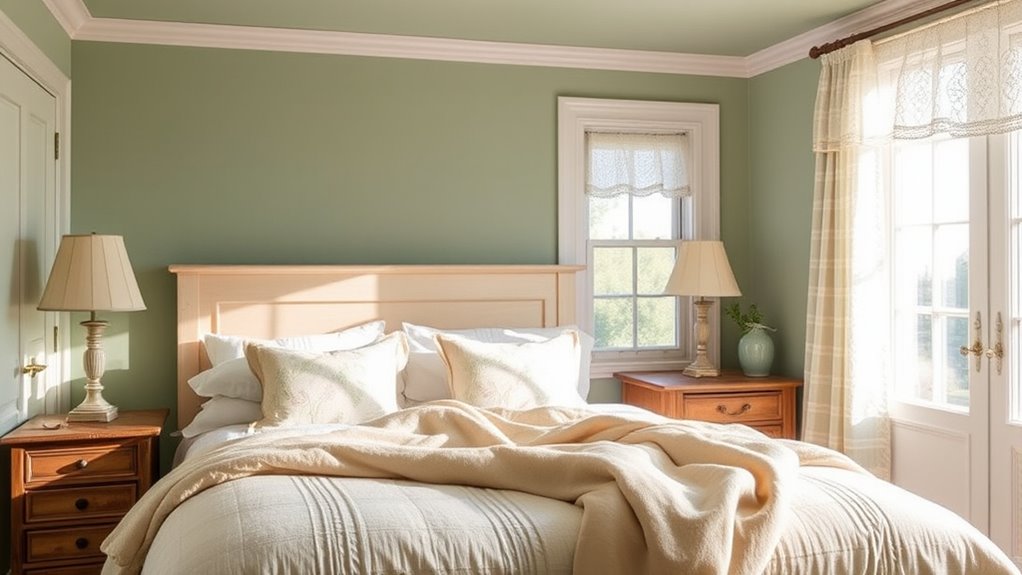
Color psychology explores how colors influence your emotions, behaviors, and perceptions. When you’re choosing paint shades for a restful country bedroom, understanding these psychological effects can help you create a calming retreat. Each color carries specific associations that can evoke certain feelings, so selecting the right hues is essential for fostering relaxation and comfort. For instance, soft blues and gentle greens are often linked with tranquility and serenity, making them ideal choices for a space meant to unwind. These colors are associated with nature’s calming elements—like the sky and lush foliage—which can subconsciously promote peace and reduce stress as soon as you step into the room.
Your subconscious mind responds to color associations, influencing how you feel even without realizing it. Light, muted shades tend to produce a soothing atmosphere, helping you disconnect from daily worries. Pale blue, for example, is known for its psychological effects of lowering blood pressure and calming the mind. Similarly, warm neutrals like beige or light taupe evoke feelings of coziness and stability, creating an inviting environment that encourages rest. When you pick these shades, you’re not just decorating; you’re intentionally shaping your emotional experience within the space. Additionally, understanding the types of tiny houses can inspire you to incorporate elements of simplicity and natural materials into your bedroom decor for a more authentic country feel.
The psychological effects of color extend beyond just calming influences. Soft shades with good color associations can also help improve your sleep quality by establishing a peaceful ambiance. A bedroom painted in pastel tones or subtle earth colors can make your space feel more spacious and harmonious, which enhances your overall sense of well-being. You’ll find that these hues don’t overwhelm or overstimulate your senses but instead gently lull you into relaxation. This is especially important in a country-style bedroom, where a cozy, unpretentious vibe is key.
Choosing colors based on their psychological effects and color associations means you’re crafting a room tailored to your emotional needs. You want a space that signals restfulness and comfort, so steer clear of bold or overly vibrant shades that can energize or distract. Instead, opt for soft, muted tones that foster a sense of calm. By understanding how colors influence your mood and what they symbolize, you can create a restful sanctuary that feels both inviting and peaceful—perfect for unwinding after a long day. Your color choices, grounded in these principles, become powerful tools for shaping a tranquil country bedroom that truly feels like a retreat.
Frequently Asked Questions
How Do Natural Light Levels Affect Paint Color Choices?
Natural sunlight greatly impacts your paint color choices by influencing how colors reflect and appear in your space. If your room gets abundant natural light, lighter shades can enhance the airy feel, while darker colors may make the space feel cozy. Conversely, limited sunlight means you should choose lighter, reflective colors to brighten the room. Understanding how natural sunlight and light reflection interact helps you select shades that create a calming, restful environment.
Are There Specific Shades That Promote Better Sleep?
Imagine a lullaby for your eyes—certain shades can truly influence your sleep. You should opt for soothing color palettes like soft blues, gentle greens, or warm neutrals. These sleep-promoting hues create a calming environment, helping you unwind after a long day. By choosing tranquil shades, you turn your bedroom into a restful haven, making it easier to relax and drift into peaceful sleep each night.
How Can I Balance Color Preferences With Psychological Effects?
You can balance your color preferences with psychological effects by focusing on color preference compatibility and psychological color harmony. Choose shades you love but also consider their calming properties, like soft blues or greens. Experiment with subtle variations to find a harmonious blend that aligns with your taste while promoting relaxation. This way, your bedroom feels both personally appealing and psychologically soothing, creating the perfect restful environment.
Do Wall Textures Influence Perceived Color Calmness?
When it comes to wall textures, don’t judge a book by its cover—you might find that textured walls can soften or intensify perceived color calmness. Rough textures add depth, making paint colors seem warmer, while smooth surfaces promote serenity. Keep in mind, wall texture also influences paint durability, so choose wisely. Your goal is harmony, where texture and color work hand in hand to create a peaceful retreat.
What Are the Best Paint Finishes for a Calming Bedroom Environment?
When choosing paint finishes for a calming bedroom, you want to contemplate paint sheen options like matte or eggshell, which diffuse light and create a soft, soothing atmosphere. Avoid high-gloss finishes that reflect too much light. Use color contrast techniques subtly, pairing gentle hues with low-sheen finishes to enhance tranquility. This combination helps foster a restful space where you can unwind and relax effortlessly.
Conclusion
Choosing the right paint shades can transform your country bedroom into a restful retreat. Did you know that 62% of people find that calming colors markedly improve their sleep quality? By selecting soothing hues like soft blues or gentle greens, you create a peaceful environment that promotes relaxation. Remember, your color choices directly impact your mood and comfort. So, trust your instincts and pick shades that make you feel calm and at ease every time you walk in.