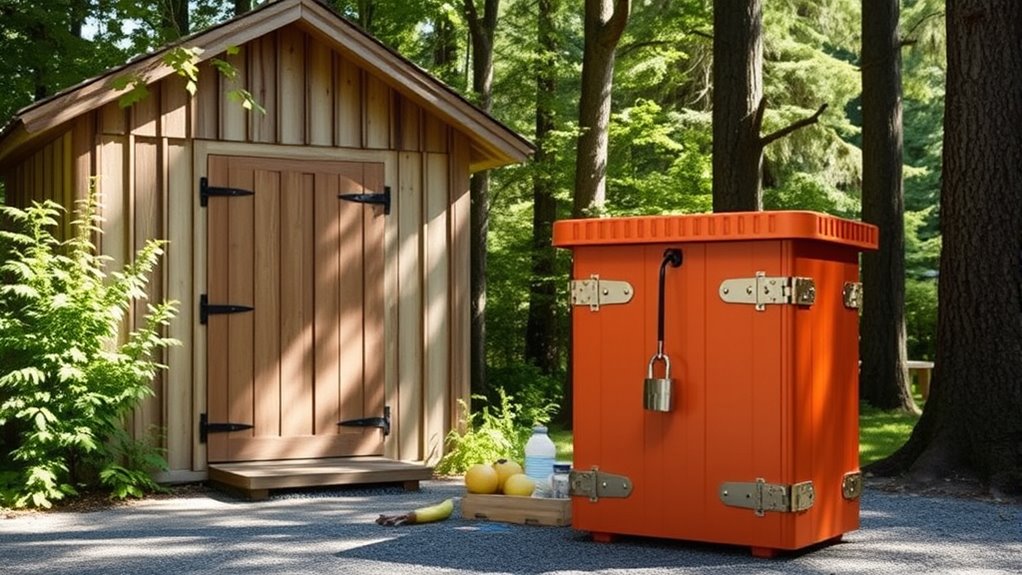

To keep bears away, store food in sturdy, bear-resistant containers or secure outbuildings made of reinforced materials like steel. Place these structures at least 100 yards from your living or camping areas, in open spots with clear visibility. Regularly check and maintain locks, seals, and repairs to prevent bear entry. Awareness of bear behavior helps you avoid attracting them, reducing risks. Staying vigilant and following these tips can make a big difference—explore further to learn more.
Key Takeaways
- Use sturdy, bear-resistant materials and secure locks when constructing outbuildings for food storage.
- Place outbuildings at least 100 yards from campsites or dwellings in open, visible areas.
- Elevate structures and seal all openings to prevent bears from climbing or entering.
- Regularly inspect and maintain outbuildings to repair any damage or tampering.
- Store food and scented items away from human activity zones to prevent bears from linking structures to food sources.

When camping or living in bear country, storing food properly isn’t just a good idea—it’s essential for safety. Bears are naturally curious and highly driven by the smell of food, which can lead to dangerous bear encounters if food isn’t secured correctly. Proper food storage minimizes the risk of bears approaching your campsite or property, helping to protect both you and the animals. One vital aspect is how you handle outbuilding construction. Building an outbuilding designed for food storage requires careful planning to prevent bears from gaining access. Use sturdy, bear-resistant materials like reinforced steel or heavy-duty locks to secure doors and windows. Avoid using soft wood or flimsy materials that bears can easily tear through. Elevate the structure off the ground if possible, as this adds an extra layer of difficulty for bears trying to claw or climb inside. Seal all gaps, vents, and openings tightly, because even small entry points can become a bear’s way in. When constructing or modifying outbuildings, keep in mind that bears are excellent at scent detection, so the building should be located at a safe distance from your living or camping areas, ideally at least 100 yards away. This reduces the chances of scent spillover and reduces the likelihood of a bear wandering into your vicinity. Additionally, it’s important to think about the placement of your outbuilding. Situate it in an open area with good visibility, so you can spot any bear activity from a distance. Avoid placing it near dense brush or trees, which provide cover for bears trying to approach unnoticed. When it comes to the construction itself, incorporate features like bear-proof latches or locks that require specialized keys or combinations, making it difficult for bears to open. Regularly inspect your outbuilding for any signs of tampering or damage, and repair weaknesses immediately. Remember, the goal isn’t just to keep food safe from bears but also to prevent bears from associating human structures with easy food sources, which can lead to problematic behavior down the line. Understanding bear behavior can help you design more effective safety measures and reduce the likelihood of conflict.
Frequently Asked Questions
What Are the Best Materials for Bear-Proof Storage Containers?
You should choose bear-proof storage containers made from sturdy, durable materials like heavy-duty plastic or steel. Make sure they feature bear-proof lids and tamper-resistant locks to prevent bears from opening them. These materials and features are essential for keeping food secure and safe from bears. Always double-check that the locks are secure and that the lids are designed to withstand the strength of a bear, ensuring your food stays protected.
How Often Should Outbuildings Be Inspected for Bear Access?
You should inspect your outbuildings at least once a month during peak bear activity months, which are typically spring and fall. Regular inspections help you spot signs of bear activity and prevent potential breaches. Incorporate bear activity monitoring and follow seasonal inspection schedules to stay ahead. Did you know that bears can tear through some materials in seconds? Consistent checks are your best defense to keep bears out and protect your property.
Are There Specific Design Features to Prevent Bear Entry?
You should incorporate specific design features like bear-proof locks and sealing entry points to prevent bear entry. Install sturdy, bear-resistant locks on doors and windows, ensuring they can’t be easily tampered with. Seal all gaps, cracks, and holes around vents and utility lines to eliminate access points. Using durable materials and proper sealing helps keep bears out and protects your belongings effectively. Regularly check and maintain these features for continued safety.
Can Electric Fencing Be Effectively Used Around Food Storage Areas?
Think of an electric fence as a force field protecting your treasure. You can absolutely use electric fencing around food storage areas; proper electric fence installation guarantees it’s effective as a bear deterrent technology. When installed correctly, it creates an invisible barrier that discourages bears from approaching. Regular maintenance and energizer checks keep the system reliable, making your storage less inviting and helping you keep bears at bay effortlessly.
What Signage Helps Deter Bears From Approaching Outbuildings?
You should use clear wildlife deterrent signage that warns of bears and other animals, which helps deter bears from approaching your outbuildings. Place signs prominently at all entry points, pathways, and surrounding the area to maximize visibility. Effective signage combined with proper food storage and fencing sends a strong message that bears are unwelcome, reducing their curiosity and risk of approaching your property. Regularly check and maintain signs for effectiveness.
Conclusion
By using bear-safe food storage and properly securing your outbuildings, you considerably reduce the risk of attracting bears to your property. Some might think it’s too much hassle or unnecessary, but the safety of both you and the wildlife depends on responsible practices. Taking simple steps now can prevent dangerous encounters later. Remember, a little effort goes a long way in keeping everyone safe and preserving the natural beauty of your surroundings.