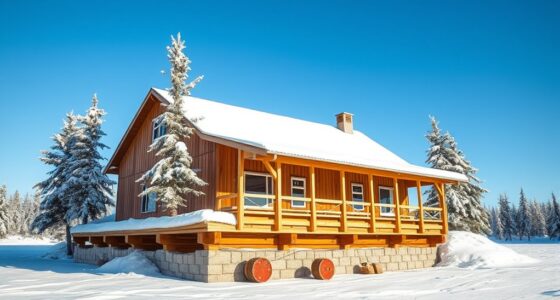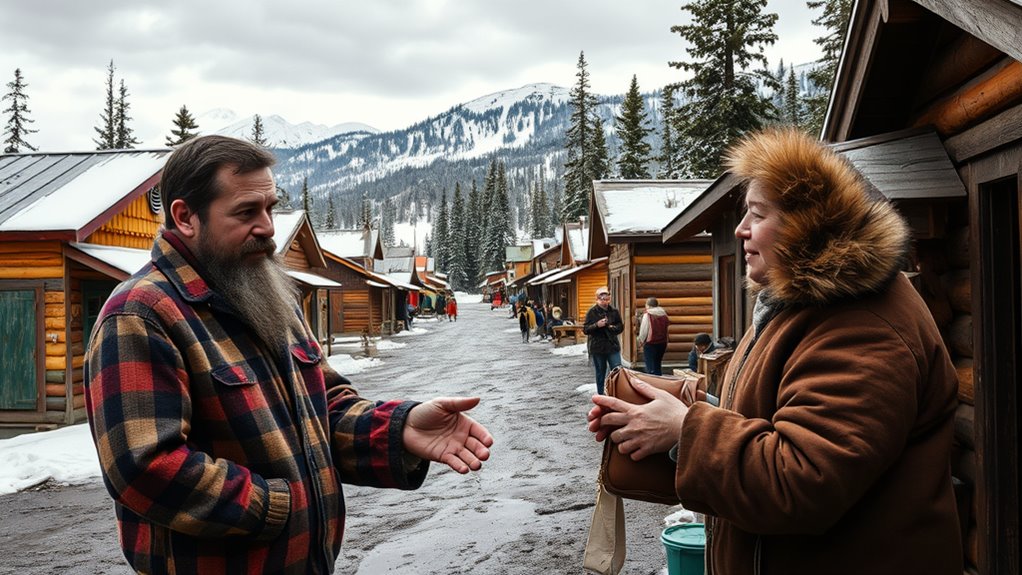

In remote Alaskan towns, barter networks play a vital role in helping you exchange goods and services. These systems reduce your dependence on distant markets and cash, making resource sharing more efficient. Using local currencies or trade credits, residents support each other through collective effort and resource pooling. This strengthens community bonds and keeps essential supplies circulating. If you continue exploring, you’ll discover more about how these networks sustain life in isolated areas.
Key Takeaways
- Barter networks enable remote Alaskan communities to exchange goods and services without relying heavily on cash or distant markets.
- Local currency systems like trade credits help track exchanges and ensure fairness within community barter activities.
- Resource sharing, such as pooling tools and supplies, strengthens community resilience and reduces vulnerability during harsh winters.
- Mutual support through resource exchange fosters trust, social bonds, and collective effort among residents.
- These networks sustain community cohesion and resource circulation, vital for remote areas with limited market access.
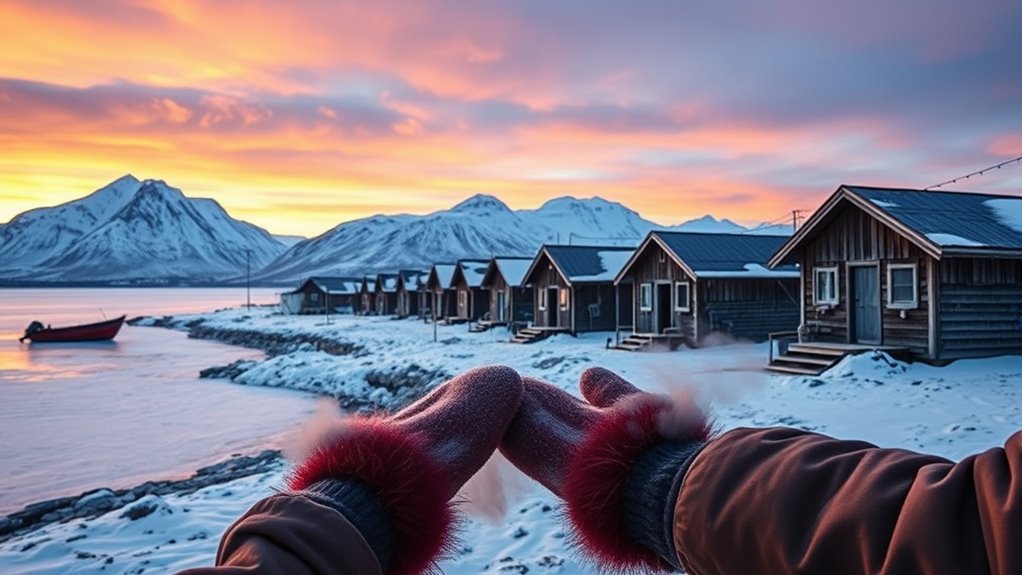
In remote Alaskan towns where access to traditional markets is limited, barter networks have become essential for residents to exchange goods and services. These networks often rely on local currency systems that facilitate trade without the need for cash, making it easier for community members to participate. Instead of relying solely on money, you can trade skills, produce, or supplies directly with neighbors, which keeps resources circulating within the community. This approach reduces dependence on distant markets and helps residents meet their needs more efficiently.
You’ll find that community resource sharing is at the heart of these barter networks. Whether it’s trading fresh fish for firewood or offering carpentry work in exchange for canned goods, sharing resources keeps everyone better prepared for the unpredictable Alaskan climate. These exchanges strengthen bonds among residents because they foster a sense of mutual support and trust. When you actively participate, you’re not just exchanging goods—you’re reinforcing the social fabric that holds these isolated communities together.
Community sharing of resources fosters trust and support amid Alaska’s unpredictable climate.
The local currency systems used in these barter networks often take the form of trade credits or tokens, which serve as a record of exchanges. These systems help keep track of who owes what, preventing misunderstandings and ensuring fairness. For example, if you provide a service now, you accrue credits that you can later use to obtain goods or services from someone else in the community. This flexibility makes barter more organized and accessible, especially when cash flow is limited or inconsistent. Additionally, utilizing specialized tools or equipment can enhance the efficiency of exchanges and resource sharing within the community.
Community resource sharing also involves collective efforts to stockpile essentials, especially before harsh winter months. Residents pool their resources, share tools, and coordinate supplies to ensure everyone’s needs are met. These practices create a safety net, reducing vulnerability and fostering resilience. When you’re part of this system, you gain access to a broader range of resources than you could on your own, making life in these remote areas more sustainable.

Coop Smart WiFi Chicken Camera – iOS Only, 1080p HD, Night Vision, AI Predator Alerts, Battery + Solar Option, Outdoor Waterproof Security Cam Monitoring & Egg Watch
🐔 Purpose-Built for Backyard Poultry: The only smart security camera trained to monitor chickens—not just motion. Catch predators,...
As an affiliate, we earn on qualifying purchases.
Frequently Asked Questions
How Do Barter Networks Handle Disputes Between Members?
When disputes arise, you handle them through a clear dispute resolution process that emphasizes member accountability. You’re encouraged to communicate openly and honestly, addressing issues quickly. If needed, a designated mediator or group consensus helps resolve conflicts fairly. This system guarantees everyone stays responsible for their commitments, maintaining trust and cooperation within the barter network, so members can continue exchanging goods and services smoothly.
Are There Digital Platforms Supporting Barter Exchanges in Remote Areas?
Did you know that over 60% of remote communities now use digital platforms for barter exchanges? These platforms are increasingly supported by remote connectivity solutions that address challenges like limited internet access. They enable residents to trade goods and services efficiently, even in isolated areas. You’ll find that innovative tech helps overcome digital platform challenges, making barter networks more accessible and reliable for those in remote Alaskan towns.
What Types of Goods and Services Are Most Commonly Traded?
You’ll find that common goods traded in barter networks include food, fuel, tools, and clothing, often within barter limits set by local trade regulations. Services like carpentry, medical assistance, and babysitting also frequently exchange hands. To avoid issues, you should stay aware of trade regulations and barter limits, ensuring your exchanges remain legal and fair. This way, your barter activities stay smooth and beneficial for everyone involved.
How Do Barter Networks Impact Local Economies Over Time?
You might not realize it, but barter networks boost community resilience by reducing reliance on cash, with some towns trading up to 60% of goods locally. Over time, they foster economic diversification, helping residents access essential services and goods without traditional currency. This strengthens local economies, making communities more adaptable during economic downturns, and encourages cooperation, ensuring everyone can thrive regardless of external financial challenges.
What Are the Legal Considerations for Barter Transactions in Alaska?
You need to take into account tax implications and licensing requirements for barter transactions in Alaska. The state requires you to report barter income on your tax return, just like cash income, and failure to do so could lead to penalties. Additionally, make sure you comply with any licensing rules, especially if you’re engaging in substantial barter activities or operating a formal network, to avoid legal issues and stay within Alaska’s regulations.

Equine Eye Voyager - Wireless Horse Trailer Camera – Live Video to Your Mobile with Night Vision, Audio - 8 Hours Battery Life - No Cell Signal Needed - Compatible with iPhone & Android Devices
Wireless Horse Trailer Camera: Enjoy hassle-free installation with the wireless Equine Eye Camera. Magnetic mounts allow you to...
As an affiliate, we earn on qualifying purchases.
Conclusion
You might think barter networks are outdated, but in remote Alaskan towns, they’re essential. These systems help residents access goods and services without relying on scarce cash, strengthening community bonds and resilience. Don’t dismiss barter as primitive—it’s a smart, sustainable solution that keeps these towns thriving. By supporting these networks, you help preserve their unique way of life and ensure they can face future challenges together.

NomadEye Wireless Horse Trailer Camera | 4K Ultra HD, Magnetic Mount, 15H Battery, Night Vision, 2-Way Talk for Hitching Livestock Trailer, Gooseneck, RV, Camper, WiFi Connection, iOS&Android App
Wireless 4K Horse Trailer Camera:Install in seconds with a strong magnetic base—no drilling or wiring required. Ideal for...
As an affiliate, we earn on qualifying purchases.

Defender PHOENIXM2 Non-WiFi Plug-in Power Security Cameras- for Home & Business Surveillance Indoor & Outdoor Bullet Cameras with 7 Inch LCD Display Monitor (2 Cameras)
OUTDOOR SECURITY CAMERA: The PhoenixM2 wireless outdoor security camera combines ease of use with a professional-quality video to...
As an affiliate, we earn on qualifying purchases.